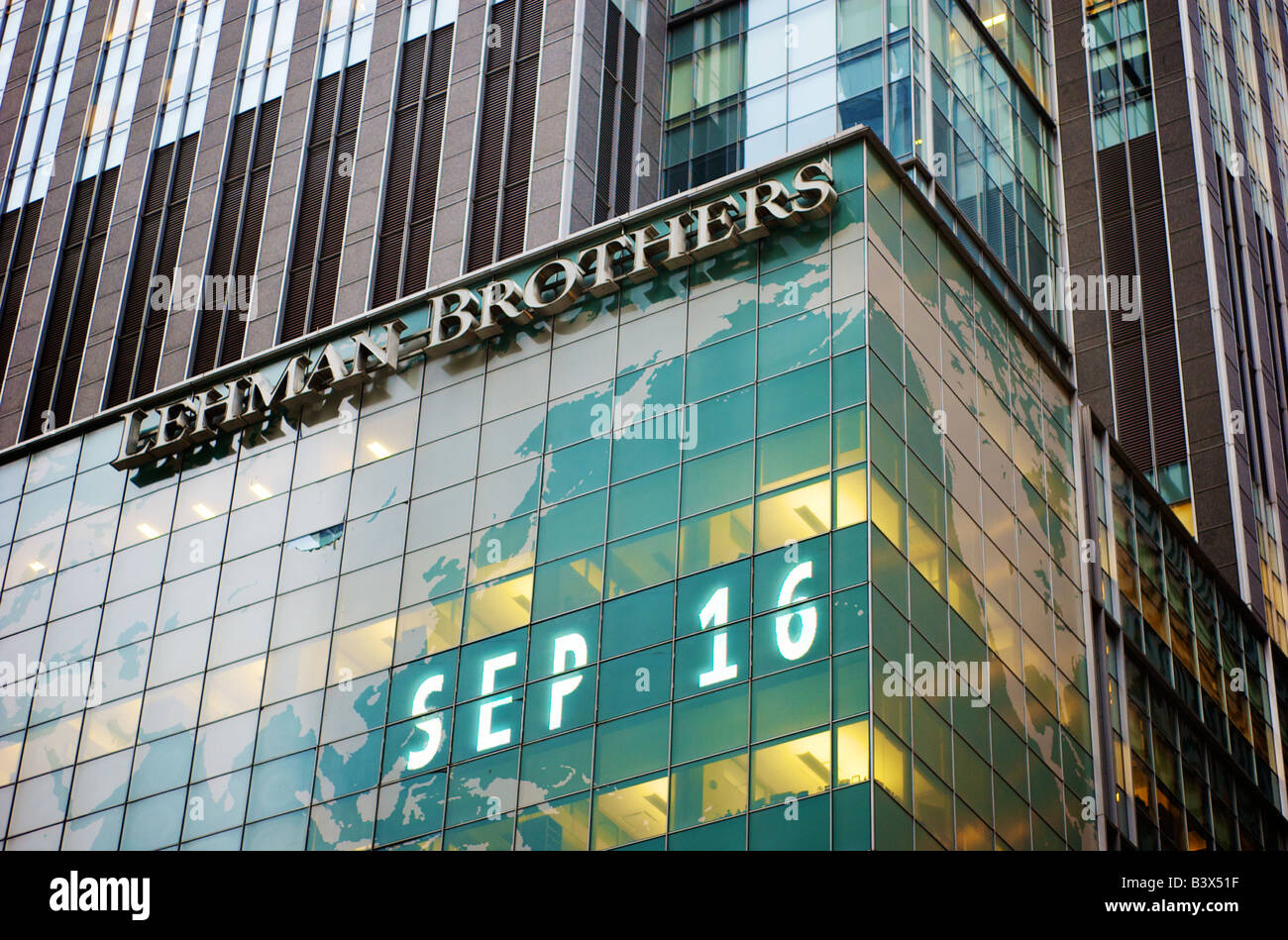
A Dynasty Built on Cotton — Then Crushed by Concrete
It began in Alabama. In 1844, a young German immigrant named Henry Lehman arrived in Montgomery and opened a small dry-goods store. His brothers Emanuel and Mayer followed, and together they pivoted from selling fabric to trading cotton — becoming middlemen between Southern plantation owners and Northern buyers. By 1850, Lehman Brothers was born.
Over the next century and a half, the firm survived the American Civil War, two World Wars, the Great Depression, and the dot-com crash. It survived being acquired by Shearson/American Express in 1984 for $360 million, and it survived the IPO that spun it back out in 1994, raising over $3 billion in new capital. For 158 years, Lehman Brothers seemed indestructible.
By January 2008, it was the fourth-largest investment bank in America, behind Goldman Sachs, Morgan Stanley, and Merrill Lynch. Its shares hit a record high of $86 in February 2007, giving the company a market capitalisation of roughly $60 billion. CEO Richard "Dick" Fuld — nicknamed "The Gorilla of Wall Street" for his aggressive, combative style — had run the firm since 1994. He believed Lehman was untouchable.
He was catastrophically wrong.
Screw Warren Buffett — we will stand strong and eat Goldman Sachs's lunch.— Dick Fuld, CEO, Lehman Brothers (2008)
Chasing the American Dream — Into a Swamp of Toxic Debt
The story of Lehman's collapse is really the story of the American housing bubble. From the early 2000s, the US government actively pushed homeownership — even for people who couldn't realistically afford it. Banks responded by inventing a product called the subprime mortgage: loans given to borrowers with poor credit, low income, and sometimes no documentation at all. The pitch was simple — house prices only go up.
Lehman didn't just participate in this market. It became the market. Between 2003 and 2006, it acquired five major mortgage lenders, including BNC Mortgage and Aurora Loan Services — both pioneers in subprime lending. It then bundled thousands of these toxic loans together into financial instruments called Mortgage-Backed Securities (MBS) and Collateralised Debt Obligations (CDOs), slapped investment-grade ratings on them with the help of compliant credit agencies, and sold them around the world.
By 2007, Lehman Brothers was the single largest holder of MBS on Earth. Its property unit was responsible for roughly 20% of the firm's $4 billion annual profit. Many on Wall Street joked that Lehman had stopped being a bank and become a real estate hedge fund. Nobody was laughing in 2008.
The hidden bomb inside the bonds
The problem was structural and devastating. When packaging mortgages into MBS bundles for onward sale, Lehman sold the best mortgages to investors and kept the worst on its own books. This meant that when the housing market slowed even slightly — and even a mild slowdown was enough — defaults cascaded through the portfolio at terrifying speed. Lehman held over $100 billion in real estate assets and securities by late 2007. And they were turning worthless.
The cracks began to show in February 2007 when the company admitted that defaults in its securitised mortgage portfolio "could impact profits" — an understatement that would become legendary for its inadequacy. In August 2007, Lehman closed BNC Mortgage, firing 1,200 employees. The stated damage: a $50 million impairment charge. The real damage: far, far more.
Peak Arrogance
Lehman stock hits record $86/share. Market cap reaches $60 billion. Dick Fuld declares the firm untouchable.
First Casualties
BNC Mortgage closed; 1,200 jobs cut. French bank BNP Paribas freezes funds tied to US mortgage securities — an early tremor of what's coming.
Bear Stearns Falls
Rival Bear Stearns collapses and is sold to JP Morgan Chase for $2/share. The market immediately bets Lehman is next. Its share price halves overnight.
The Bleeding Accelerates
Lehman reports $2.8 billion quarterly loss — its first since 1994. Raises $6 billion from investors and tries to shed $150 billion in assets.
The Last Weekend
Emergency talks with Bank of America and Barclays fail. Treasury Secretary Hank Paulson refuses a government bailout. The firm is down to its last $1 billion in cash. 25,000 employees are told nothing.
Chapter 11 Filed
At 1:45 AM, Lehman Brothers Holdings files for bankruptcy — $619 billion in debt, the largest corporate bankruptcy in US history. Stock falls 93% to $0.21. Markets open to chaos.
The Last Weekend — 48 Hours That Ended a Century
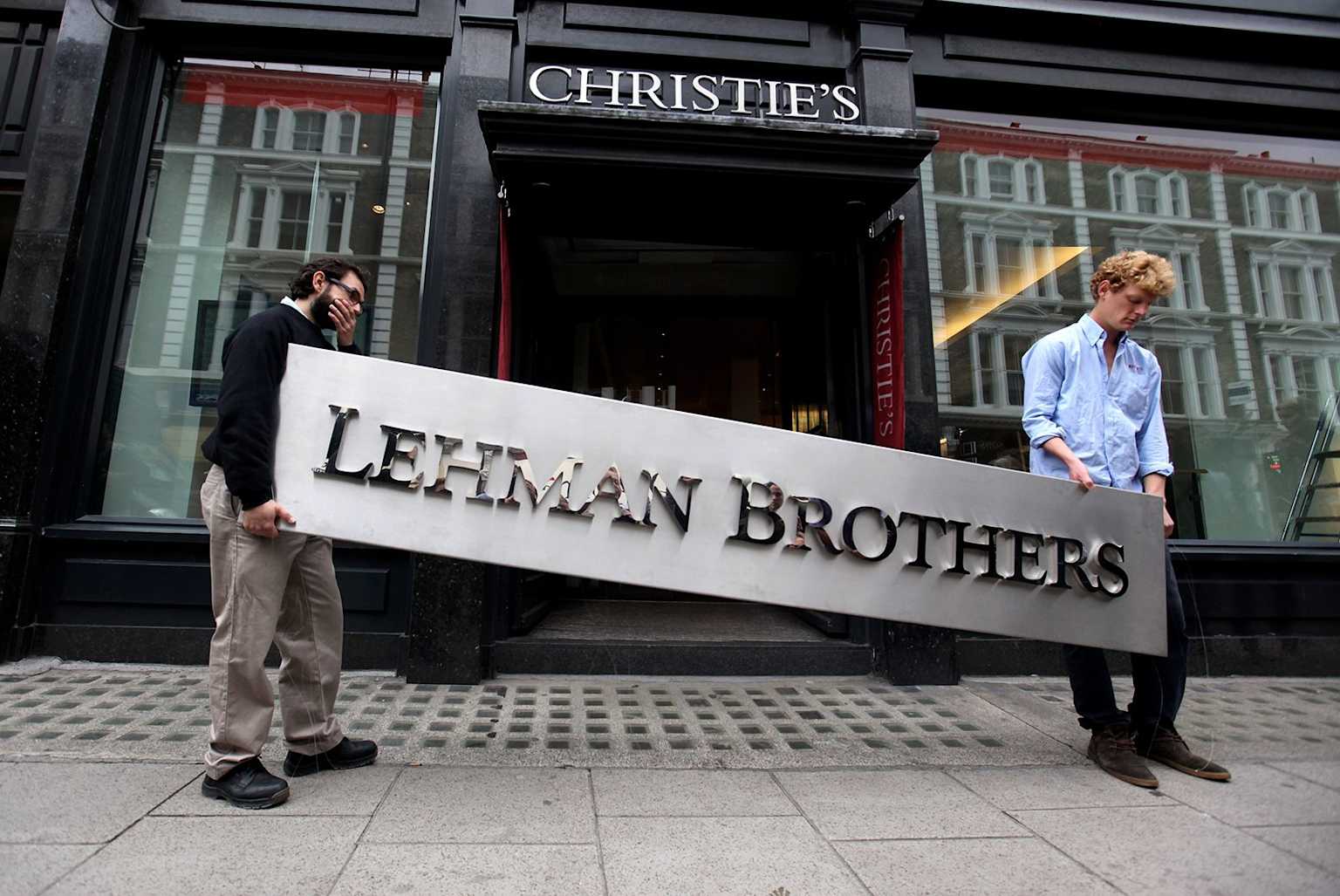
The final days of Lehman Brothers played out like a slow-motion catastrophe that everyone could see coming but nobody could stop. By early September 2008, Lehman had lost $5.6 billion in toxic asset write-downs and was reporting another $4 billion quarterly loss. Its stock had fallen 77% in the first seven days of September alone. Credit default swaps on Lehman's debt — essentially insurance bets that the firm would default — were surging.
Dick Fuld tried everything. He attempted a partial spin-off of commercial real estate assets. He sought buyers — South Korea's Development Bank looked, then walked. Singapore's Temasek considered a stake. HSBC, Chinese banks, and others all kicked the tyres and drove away. By September 12, Lehman was desperately searching for a white knight.
The Emergency Meeting That Failed
On the weekend of September 13–14, 2008, Treasury Secretary Hank Paulson and New York Federal Reserve President Tim Geithner gathered the heads of Wall Street's biggest banks — Goldman Sachs, Morgan Stanley, JP Morgan, Citigroup — in a single room and essentially told them: find a buyer, or Lehman dies. No government bailout. This was a deliberate policy choice, made partly to avoid the moral hazard of bailing out every reckless bank on Wall Street.
Barclays was willing to buy — but UK regulators refused to approve the deal without a shareholder vote, which would take weeks Lehman didn't have. Bank of America wanted Lehman's profitable investment banking operations but not its toxic real estate portfolio. Without someone to absorb the losses, there was no deal.
Everyone left the meeting knowing Lehman was dead. On Sunday night, September 14, employees began arriving at Lehman's Times Square headquarters with cardboard boxes. Nobody had told them to come. They just knew.
The Repo 105 Scandal
What made Lehman's collapse even more scandalous was the revelation that the firm had been using an accounting trick called "Repo 105" to hide approximately $50 billion in liabilities from its quarterly balance sheets. Under this scheme, Lehman would temporarily transfer assets off its books before reporting dates, making the firm appear less leveraged than it actually was. When investigators discovered this practice after the bankruptcy, it became one of the most damning examples of financial fraud in the 2008 crisis — yet Dick Fuld never faced criminal charges and walked away with an estimated $529 million in compensation.
At 1:45 AM on September 15, 2008, Lehman Brothers Holdings Inc. filed for Chapter 11 bankruptcy protection. When Wall Street opened that morning, the Dow Jones fell more than 500 points — its largest single-day drop since September 11, 2001. AIG, which had insured billions of dollars of CDOs against default, went into freefall. The global financial system was on fire.
The Gulf in the Storm — How the UAE's Banks Felt the Shock
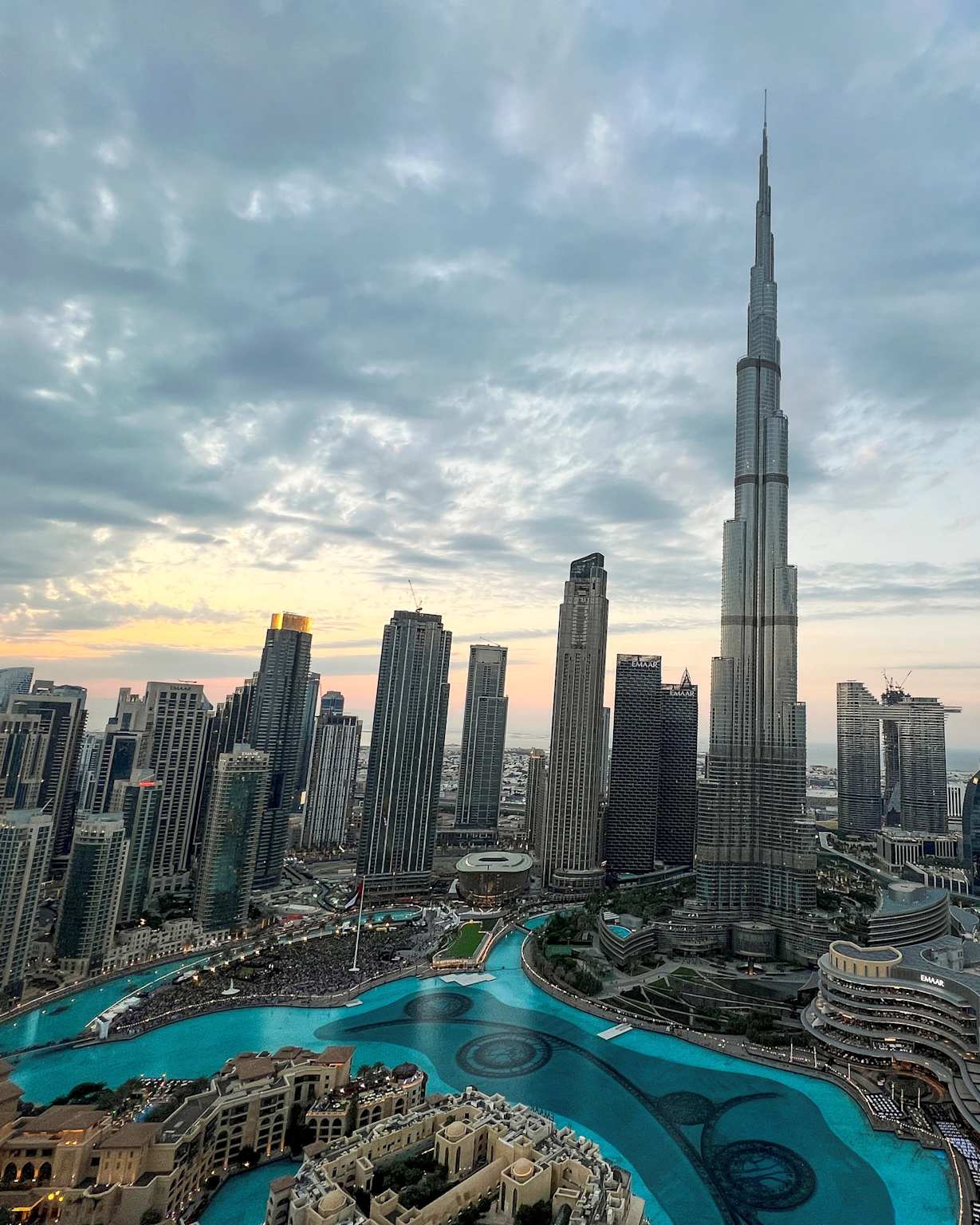
When Lehman collapsed, the UAE's immediate public posture was confident: "Our banks have virtually no exposure to Lehman Brothers," declared the UAE Central Bank. Abu Dhabi Commercial Bank (ADCB) issued a statement saying it had no direct exposure to Lehman. On paper, the UAE's regulatory framework had prevented local banks from loading up on the toxic subprime securities that doomed their Western counterparts.
But the reality was more complicated — and more painful. The UAE's vulnerabilities were not in subprime mortgage bonds. They were in real estate, liquidity, and confidence.
The Real Estate Mirror
Dubai had been running its own property bubble in parallel with America's. Fuelled by cheap global capital, speculative buying, and the same intoxicating logic — "property prices only go up" — Dubai's real estate market had soared. When Lehman fell and global credit markets froze overnight, the capital that had been flowing into Dubai property simply stopped. Projects were cancelled. Buyers vanished. Property values began to fall sharply.
UAE banks that had been aggressively lending to real estate developers and government-related entities (GREs) suddenly found themselves holding non-performing loans on a massive scale. Emirates NBD, the UAE's largest bank by assets, saw its shares fall 3.4% in the days after Lehman's collapse. First Gulf Bank slid 6.6%. The broader DFM General Index lost enormous ground as Gulf markets priced in the new reality.
The indirect damage was severe. Global interbank lending had frozen. UAE banks, which relied on international wholesale funding markets to supplement local deposits, suddenly found those markets closed. A liquidity crisis — not a solvency crisis — threatened the entire sector.
The Government Rescue
The UAE government moved swiftly. In October 2008, the Cabinet announced that it would guarantee all deposits at UAE-licensed banks for three years — one of the first such guarantees in the world. The UAE Central Bank then unleashed a series of emergency facilities:
An AED 50 billion overdraft facility was made available to banks through their central bank accounts. Banks were permitted to use 100% of their Central Bank Certificate of Deposit holdings to borrow dirham and dollar funds. Bonds and sukuks issued by local governments could be used as collateral. And the Ministry of Finance injected an additional AED 70 billion into national banks in three tranches to strengthen their capital bases. Together, the Central Bank and Ministry of Finance packages totalled a combined Dh120 billion — an extraordinary intervention that ultimately stabilised the system.
The Abu Dhabi Government separately pumped Dh16 billion to recapitalise its five largest banks. In March 2009, the Central Bank discounted $10 billion in Dubai Government bonds to provide additional support. By April 2009, the liquidity situation had measurably improved.
Dubai World — The Delayed Aftershock
The full weight of the crisis hit Dubai with a time delay. By end of 2008, Dubai World — the emirate's largest holding company — had accumulated liabilities exceeding $59 billion, more than Dubai's entire GDP. In November 2009, it triggered a global panic when it requested a debt repayment standstill on $26 billion in obligations. This was the delayed echo of Lehman: the moment when the real estate debt had to be confronted. The eventual restructuring, completed through a $9.5 billion government injection and creditor negotiations, took years and consumed enormous political and financial capital. The Gulf News aptly called it the "Lehman-handling of the global economy."
| UAE Institution / Sector | Type of Impact | Severity | Government Response |
|---|---|---|---|
| Emirates NBD | Share price decline, liquidity pressure | Moderate | AED 70B Ministry of Finance injection |
| Abu Dhabi Commercial Bank | No direct Lehman exposure; indirect market risk | Low–Moderate | Dh16B Abu Dhabi recapitalisation |
| First Gulf Bank | 6.6% stock drop; minimal indirect exposure | Moderate | Deposit guarantee scheme |
| UAE Real Estate Sector | Severe: capital flight, project cancellations | Severe | Mortgage lenders Amlak & Tamweel suspended |
| Dubai World (GRE) | $59B in liabilities, standstill request Nov 2009 | Critical | $9.5B govt injection; creditor restructuring |
| UAE Banking System (Overall) | Liquidity freeze; NPL spike; funding markets closed | Significant | Dh120B combined emergency package |
The Man Who Saw It Coming — Michael Burry and the $800 Million Bet
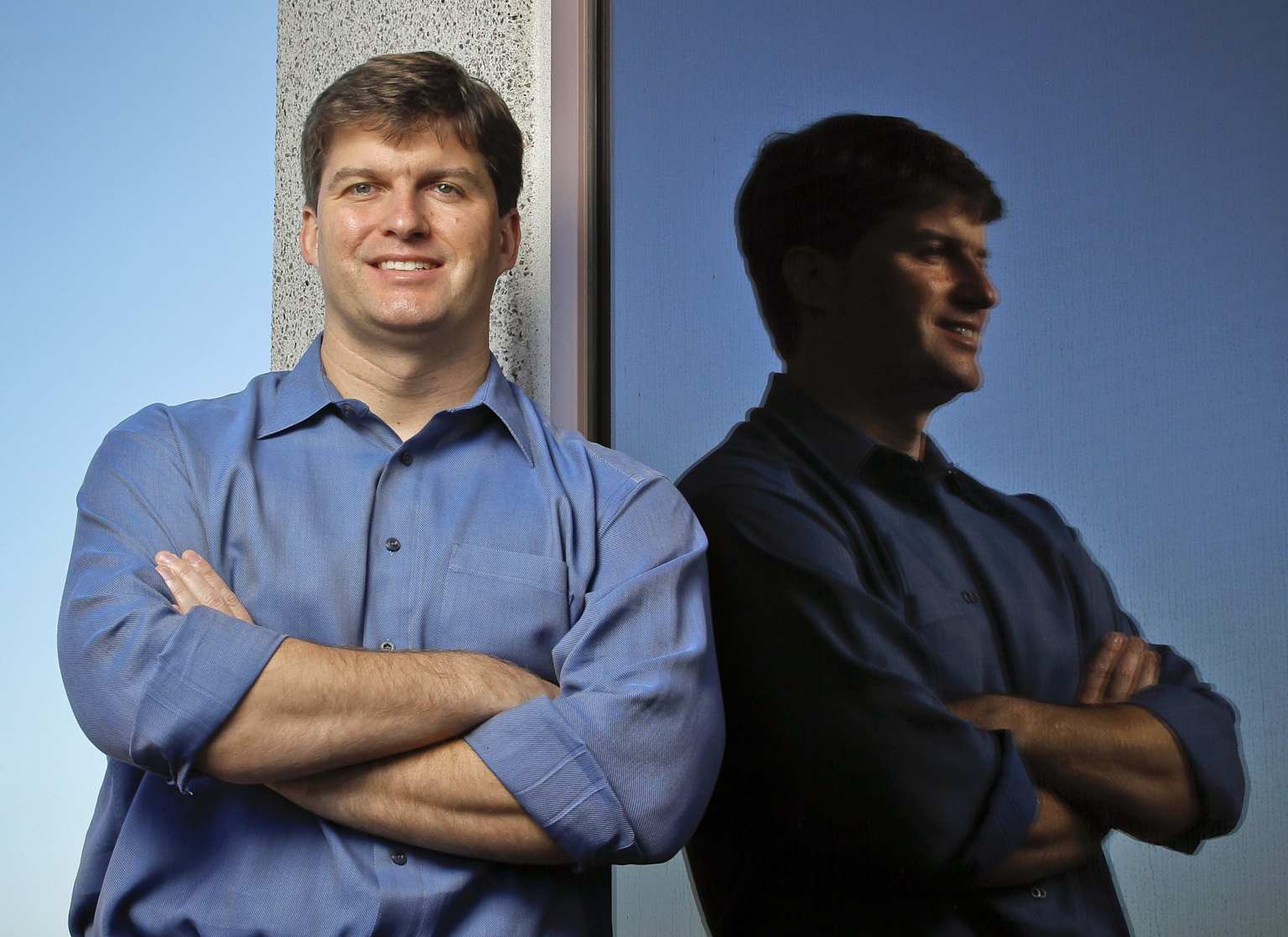
While Dick Fuld was loading Lehman Brothers with toxic mortgage debt and telling the world the housing market was infallible, a one-eyed, former neurologist operating a small hedge fund out of a converted Cupertino office was quietly reading the fine print on every mortgage bond he could find. His name was Dr. Michael Burry. His fund was called Scion Capital. And in 2005, he concluded — with mathematical certainty — that the entire US housing market was a fraud.
On May 19, 2005, Burry sent an email to his analyst Joe Sipley instructing him to analyse a list of mortgage-backed securities and identify "the best 2005 shorts." He called out two subprime lenders — New Century and Novastar — noting their "documentation stinks." Both later collapsed. Burry's method was simple but radical: he actually read the individual mortgages inside the bonds, something Wall Street's salespeople, ratings agencies, and institutional buyers hadn't bothered to do.
What he found was staggering. The bonds rated AAA — the highest possible safety rating, implying near-zero risk of default — were packed with loans given to people who had no income, no jobs, and no assets. NINJA loans, as they became known. The ratings were fiction. The entire edifice was built on sand.
The Trade That Made History
Burry's solution was to buy credit default swaps (CDS) — essentially insurance contracts against the mortgage bonds defaulting. If the bonds failed, his CDS would pay out massively. If they didn't fail, he would pay ongoing premiums and lose money slowly. The problem was that no CDS instruments existed yet for the mortgage bond market. Burry had to convince Goldman Sachs, Deutsche Bank, and other banks to create them specifically for him.
They thought he was insane. They sold him the swaps readily because they couldn't imagine a scenario where the US housing market would collapse. By 2006, Burry had invested more than $1 billion of his investors' money in CDS on the weakest mortgage bonds. His investors were furious — they were paying ongoing premiums while watching the housing market continue to rise. Many threatened to withdraw their capital. One client sued him. Burry locked the fund to prevent redemptions.
He was vindicated in 2007 and 2008 as the housing market collapsed exactly as he had predicted. Scion Capital recorded total returns of 489.34% (net of fees) between its November 2000 inception and June 2008 — during a period when the S&P 500 returned barely 3%. Burry personally made $100 million. His remaining investors received profits of over $700 million. Total: nearly $800 million from one contrarian bet.
In 2006 and 2007, as Burry's CDS positions bled premium payments and housing prices kept rising, his investors staged an intervention. They accused him of abandoning his mandate — Scion was supposed to be a value stock fund, not a mortgage derivatives operation. Many demanded their money back. Some sent threatening letters.
Burry's response was to impose a gate — a provision that allowed him to restrict redemptions — preventing investors from withdrawing. It was a legally defensible but commercially brutal move. Several investors sued. The relationships were permanently damaged.
Then the market crashed. Every single investor who stayed made a fortune. Every investor who left missed the greatest trade of the decade. Burry was right, and he knew it the entire time. He later said the experience taught him that "being right" and "being believed" are two entirely different things in finance.
Hollywood's Take — The Films That Explained a Crisis to the World
The 2008 financial crisis was so complex — so deliberately obscured in jargon by the banks that caused it — that most people still didn't understand what had happened years later. Three films tried to change that, each from a different angle.
The Big Short (2015) — The Bettors
Director Adam McKay — better known for Anchorman — made an audacious decision: turn the most complicated financial scandal in history into a dark comedy. Based on Michael Lewis's bestselling book, the film follows the handful of investors who saw the collapse coming and bet against the market. Christian Bale plays Michael Burry with unsettling accuracy — shaved head, glass eye, heavy metal played at maximum volume while reading mortgage prospectuses. Steve Carell plays Mark Baum (based on real-life hedge fund manager Steve Eisman), the most morally conflicted of the shorts. Ryan Gosling plays Jared Vennett (based on Greg Lippmann of Deutsche Bank), the slick narrator who connects the dots. Brad Pitt plays Ben Rickert, a retired trader who provides the moral conscience of the film.
The film won the Academy Award for Best Adapted Screenplay in 2016 and was nominated for Best Picture. Its signature technique — having celebrities like Margot Robbie and Anthony Bourdain break the fourth wall to explain financial instruments — made concepts like CDOs and credit default swaps accessible to general audiences. Michael Lewis called Christian Bale's portrayal of Burry "borderline creepy" in its accuracy. Bale later said he wore Burry's actual cargo shorts and T-shirt during filming, and hoped Burry would "punch him in the face" at the premiere for getting too close to the truth.
Too Big to Fail (2011) — The Bureaucrats
HBO's dramatisation of Andrew Ross Sorkin's book of the same name takes the opposite perspective — the view from inside the Treasury and the Fed as they scramble to prevent total systemic collapse. William Hurt plays Treasury Secretary Hank Paulson as a conflicted but well-intentioned technocrat. Paul Giamatti plays Fed Chairman Ben Bernanke. James Woods plays Dick Fuld in a performance that captures both Fuld's arrogance and his dawning awareness that he has been outmanoeuvred by forces beyond his control. The film follows the desperate last weekend of Lehman's life — the emergency meetings, the failed deals, the final decision not to bail out the firm. Directed by Curtis Hanson, it is a procedural thriller in which everyone already knows the ending.
Margin Call (2011) — The Night It Begins
Perhaps the most intellectually honest of the three, Margin Call is a fictional drama set in a single unnamed investment bank over the course of one night in 2008 — the night a junior analyst (played by Zachary Quinto) realises the firm is holding assets that are worth far less than anyone admits. Jeremy Irons plays the CEO John Tuld — a name that is almost certainly a deliberate fusion of Dick Fuld and Merrill Lynch CEO John Thain — who makes the decision to dump all the toxic assets on the market before dawn, knowing it will ignite the crisis but save the firm. Kevin Spacey plays a weary sales manager who understands exactly what is being asked of him and does it anyway. Director J.C. Chandor has denied the film is specifically about Lehman, but the evidence strongly suggests otherwise — and the New York Times called it "the best movie ever made about Wall Street."
The Legacy — What Lehman Left Behind
The collapse of Lehman Brothers triggered the most severe global recession since the Great Depression. Within six months of September 15, 2008, global stock markets had lost more than 50% of their value. Unemployment in the United States reached 10%. In the UAE, real estate prices fell by up to 50% from their 2008 peaks. Dubai's extraordinary debt restructuring became a defining episode in Gulf financial history.
The regulatory response was sweeping. In the United States, the Dodd-Frank Wall Street Reform and Consumer Protection Act of 2010 restricted derivatives trading, prohibited interest-only loans, and introduced strict new capital requirements for systemically important financial institutions — the "too big to fail" banks. In the UAE, the crisis prompted a tightening of mortgage lending standards and a more rigorous approach to bank supervision.
Lehman Brothers itself took 14 years to fully wind down. It completed mandated payments to its creditors on September 28, 2022 — returning $115 billion. Dick Fuld was never criminally charged. Barclays acquired Lehman's North American investment banking operations and its iconic Times Square headquarters. Nomura Holdings purchased the European and Asian operations. The brand disappeared entirely.
Michael Burry closed Scion Capital in 2008, telling investors the scrutiny from government investigators — who subpoenaed his records in the wake of the crisis — had made the environment unworkable. He re-opened the fund in 2013. As of 2026, he remains one of the most closely watched investors in the world, having since warned about the meme-stock bubble, cryptocurrency speculation, and artificial intelligence valuations with the same data-driven contrarianism that made him famous. Wall Street has never quite learned to listen to him.
The greatest lesson of Lehman Brothers is not about complex derivatives or regulatory failure. It is simpler and more universal: institutions can survive wars, depressions, and market crashes — but they cannot survive the decision to abandon basic honesty. Lehman Brothers knew its assets were worthless. It kept buying more anyway, hiding the losses with accounting tricks, and silencing the doubters within. When reality finally asserted itself, 25,000 people lost their jobs in a single morning — and the world spent the next decade paying the bill.
Lehman's failure had lasting negative effects on global markets and became a symbol of the chaos of the financial crisis. Within six months, the market had lost more than 50% of its value.— Encyclopaedia Britannica, on the Lehman Brothers bankruptcy