
Acknowledgements
I would like to thank my professors for their guidance in helping me figure how to proceed with this project. I would like to particularly thank Professor Aliya for entertaining my untimely requests regarding my thesis, and Professor Chang for giving me a fresh perspective on how to tackle this project. I would like to thank my family and relatives for sharing knowledge on the subject and for pointing me towards helpful sources. Lastly, I would like to thank some friends who have pushed me to be bring this project to its culmination.
Abstract
This research aims to explore the identity formation of the Delhiwala community after their migration to Pakistan from Delhi, India at Partition, and the subsequent socio-political use of this identity henceforth. It unravels the origins and history of this community back in Delhi and their present-day conditions in Karachi. This research also explores the reasoning behind the formation and use of such identities: what underlying traditions are responsible for it and the thought process behind that. Comparison with relevant communities, with a similar history, is also discussed to better understand the identity formation of the Delhiwala community, before a conclusive statement can be made about the use of their identity sociopolitically. Keywords: Delhiwala, migration, identity formation
Introduction
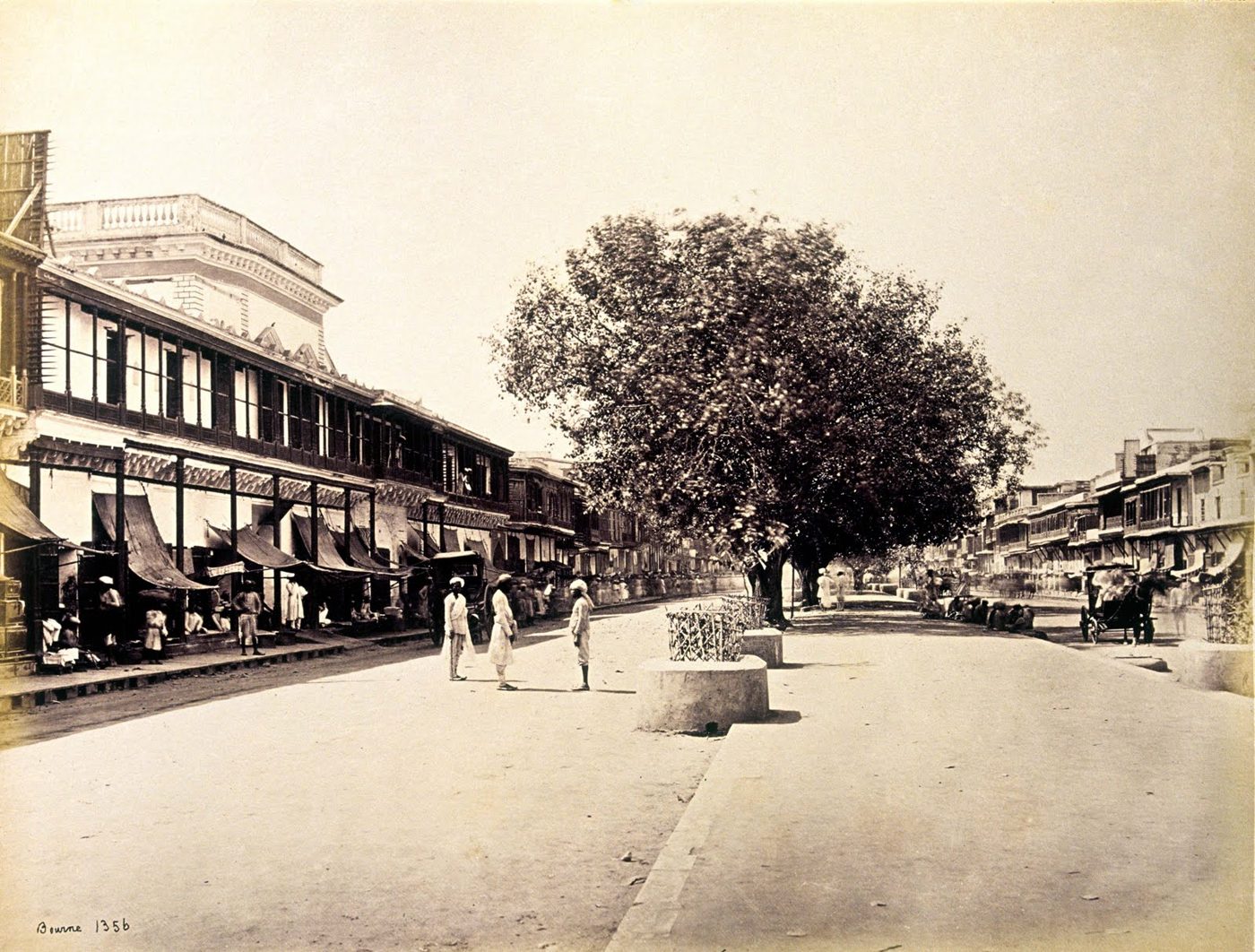
The Delhiwala community, as the name suggests, is a community of people who used to live in Delhi in pre-Partition India, who migrated to Pakistan at the time of Partition settling predominantly in Karachi. The community, however, originally hails from and around the city of Sargodha in Punjab. People of this community were merchants and they had migrated to Delhi, settling there during the reign of the Mughal Emperor, Shah Jehan in the 17th Century in search of economic opportunities. Being merchants, their trade network would spread to other parts of India where some of them would settle although their base would remain in Delhi for the next few centuries. While in India they were referred to as Qoum-e-Punjabian, since they hailed from Punjab and as the Shamsi Biradri, in association with the name of the Saint who had converted the community to Islam centuries earlier. The patron saint whose descendant is believed to have converted the small population of Punjabi Khatris to Islam as early as the 13th Century went by the name Shamsuddin Sabzwari, who had migrated from Sabzwar, Iran. In his association, the community would be referred to as the Shamsi Biradri not just in Delhi but in their Punjabi homelands before that. Moreover, certain clans would even take Shamsi as part of their surname, a practice the results of which are manifested in the community to date.1
When Partition was announced, most of the community would migrate to this side of the border, settling in Karachi primarily while a few members of the community chose to stay back in Delhi. The people from the community who reached Karachi had to leave a lot of their property back in India and would have to start from scratch here. Contrary to popular imagination, migration at the time of Partition was not just the widespread influx of refugees after independence was announced, but would continue for a few years after independence, even a decade. A reason behind this was the changing dynamics of the country (India) after a large Muslim population had moved away, rendering those who stayed behind insecure. Within the community, the experience of migration was very different and is of particular interest to me. The obvious reasons are economic, but in the desperate times of Partition, even wealth could not guarantee safe passage across the border. More importantly, most of their wealth was in the form of properties and land, which could not be transferred or sold at such short notice, meaning they would have to migrate empty-handed leaving almost everything behind. Migration would therefore represent a changing destiny for certain people within the community, whose lives would never be the same again. And this was not something exclusive to the Delhiwala community, but to many other different communities as well who would embark on the migration journey at Partition. There would be the loss of hundreds of lives and the lasting trauma that would bring to their families.
The sizeable community who migrated from Delhi would settle down here in Karachi were referred to as Delhiwalas since they had just migrated from Delhi, just like other communities were being referred to in reference to where they had come from. While Delhiwala would become the most referred to name for the community, the elders of the community devised a more formal official name, which would give reference to the community’s roots. The name they came up with was ‘Punjabi Saudagaran e Delhi’, with each aspect of the name giving more information about the community: Punjabi to refer to the community’s roots in Punjab, Saudagaran which is the Urdu translation for ‘merchants' and is to address the community’s past and thereby present as business-minded people and Delhi to signify where they resided in India before Partition. Not only just for the name, the Delhiwala community was and still is a very business-minded community with great acumen and skills for trade. Whilst in Delhi, the merchants would trade all over the Indian subcontinent, with business hubs as far as Dhaka, at the other end of India. Having assets across India would turn out to be a huge concern when they would have to leave everything behind and leave at such notice for the journey across the border.
When the community migrated to Karachi, they had to leave pretty much everything behind. Those who came to Karachi and settled here, were either allocated those homes which the fleeing Hindus and Parsis had vacated, or they had to make do with make-shift tills in a distant space (Delhi Colony) from the existing civilization in Saddar. With the incoming numbers of refugees so huge, only a few would be allocated those vacated homes whereas many others would have to make do in those make-shift tills. A segregation would thereby occur here which would separate, or rather, create the rich and the poor of the community, the poor most of whom were not poor back in India but had lost everything in the migration and were left with nothing. It is interesting to observe how the migration which happened at the time of Partition three-quarters of a century ago and the subsequent settlement process, still has projections today in the economic conditions for some within the community.
The Use of Identity?
Another aspect that I am particularly concerned with is, whether there is a deeper political significance behind the use of the verbiage in the official name of the community, in the use of the word Punjabi rather than simply giving homage to their roots from centuries prior. It is an open secret that the most privileged identity in Pakistan is that of the Punjabi, Sunni Muslim male. This identity is the one that faces the least discrimination in Pakistan and is thereby one identity that often makes it to higher echelons of power in the country. My argument pertaining to this is that the Delhiwala community was cognizant of the currency of the Punjabi card in relation to this identity, and therefore felt it was too good an opportunity to not cash on their Punjabi ancestry to gain socio-political currency in the new country. It is important to highlight that the Delhiwalas are only Punjabi in name today; they had migrated to Delhi centuries earlier and would lose contact with people in their places of origin back in Punjab as generations passed, so that their culture, linguistics, and tradition become quite different from what would be associated with that of those in Punjab. Therefore, in essence, they were no longer Punjabis but referred so in reference from where they came from before setting in Delhi. In the same way, once the community would migrate from Delhi to Pakistan, and Karachi specifically they should only have been referred to in reference to their migration from Delhi and not because of the migration of their forefathers centuries earlier – an identity which could still be cherished in historical records but not as socio-political currency for the present and future. The reason it was not let go of and only reinforced brings me to the second part of my argument.
The other reason as to why the Punjabi aspect of the identity is kept alive is to depict that the community originally hailed from the part of Punjab now in Pakistan. The Delhiwala, being an endogamous community, originally hailing from the Punjab, would therefore be perceived as ‘sons of the soil’ when they migrated from Delhi, or more aptly migrated back to the land of Pakistan. In the years after Partition, this would have given them more sociopolitical leverage as compared to other migrant communities from India, and separate them from the larger Muhajir identity, who despite having made a lot of sacrifices for the creation of Pakistan were victims to discrimination in the new country. It is no surprise that when the Muhajir identity was cashed upon by the formation of the Mohajir Qaumi Movement (MQM), the Delhiwalas were not quite part of it. The case of the Delhiwalas is similar to that of the Memon community, who while originally hailing from Sindh would migrate to different parts of the Gujrat peninsula in India due to religious tensions in Sindh at the time, staying there for a few centuries before returning back at the time of Partition.2 They are therefore able to claim their right to this land, and distinguish themselves from other migrants who left their homes to come behind to come settle in an alien land. The aspect of being originally from this land would allow them greater claim to it and enable them to have greater agency in the new country.
It is therefore quite interesting to identify the deep-rooted linguistic connotations behind the official name of the Delhiwala community, and if it has provided socio-political currency for the community after Partition, and to a lesser extent, even today. Generallyspeaking linguistic usage very often has deep political connotations attached to it, and in that light, a closer inspection of when the community took on this official name is required to decipher if the same is the case here as well.
Research Question
For the purpose of this thesis, I have delved into the contemporary history of the Delhiwala community to find the answers to certain questions; the answers to which serve the end-goals of this thesis project. The research questions I was interested in are about the identity formation and use of that identity for the Delhiwala community today, the first one being, ‘Is there a political use of the Punjabi aspect in the official name of the Delhiwala community, and what purposes has it served in its usage since migration?’.
I was also particularly interested about the migration journey of the community at the time of Partition to understand how Partition affected their communal identity, particularly how it shaped their identity for those who migrated and those who stayed put. I looked forward to decipher if the identity of the community remains consistent across the border, or whether circumstances of Partition have had contrasting long-term projections, the effects of which are observable to date. While dissecting the identity formation post-migration of the Delhiwala community, I also wanted to address the question of identity formation of various other communities who migrated to Pakistan and if their identity formation was similar to that of the Delhiwala community. Communities whose migration histories I have gone through to answer this question are the Kutchi Memons, Bhoris, Bihari and Lucknowi (also including the broader region of Uttar Pradesh) communities. The reason for including these particular communities (other than Bihari) is primarily because of their proximity to Delhi, which would suggest similar migration journeys and experiences. Also, with the Lucknow community, there is the common aspect for the Delhiwalas of a shared language in Urdu whereas with the Kutchi Memons there is a similar origin story, about hailing from a certain part of what is now Pakistan before migrating to a certain part of what is now India.
It was deemed necessary to understand in great depth the identity formation of these various communities before I could tackle any notion about the ‘use’ of these identities over the few decades since Partition to date.
Rationale and Relevance
The rationale behind undertaking this specific project has its roots in there being lack of knowledge in migrant communities in South Asia about their origins and the identity formation of these communities. Part of the reason is that such aspects were never recorded and were more so based on oral traditions, which have been lost with time. However, a more obvious and politically correct reason would be that migration at the time of Partition, for most was an abrupt and traumatic experience that would change their lives forever. Most of them had to leave everything behind, not just tangible, material objects, but parts of their identity and who they were. While some of them tried to maintain a connection with their roots post-migration, others under the desperate circumstances they were in, could not keep that part of their identity alive. Therefore, I feel there is a lack of in-depth knowledge about our ancestries, and where we come from. There is tremendous work being done in the West in the fields of genetics, with haplotype DNA testing used to understand the histories of communities, and their roots, however, there is no conception of any such thing here. Because of this, we do not quite know the realities of our roots, and how authentic what little we know about it is. Therefore, it is the need of the hour to revisit the histories of such communities before a few more years pass on and we lose the thread of a connection we have with our past. While there is a general need to study migrations in the subcontinent, my special focus on the Delhiwala community is merited because little work has been done on the community’s history, which is not very accessible either. There is a genuine need to bring the Delhiwala history to light in academic circles. The few works that record the origins of the community are not common knowledge among the elders of the community; there is, therefore, a need to revisit that recorded history with the more resources and technology we have in the present day. Moreover, specific aspects of the community’s history need to be highlighted, for instance, the patron saint, Shamsuddin Sabzwari, whose descendant is credited with having brought the forefathers of the community into the folds of Islam, belonged to the Ismaili Shia faith, which might not go well with the largely-Sunni community present today. Another very interesting aspect to look into would be if the community adhered to Shiaism first, what circumstances contributed to converting them to the Sunni version of Islam, which could be the Sunni revival movements happening in close vicinity of Delhi in the 18th Century.
Now, coming to the specific knowledge and pertaining questions I aimed to address for this project namely the migration experience and the formation and use of identity of the Delhiwala community, the rationale behind them is that no specific works have been done to address both these sub-topics. Migration at the time of Partition, in works that have been done on the topic, address migration in the larger context, treating migration of all communities together. Migration of individual communities is not addressed sufficiently, and in the case of the Delhiwalas there is hardly any academic work on that. Therefore, it is of tremendous importance to address this gap in knowledge at the earliest. It is pertinent to do it now when there are still people around who were witness to first-hand accounts of those who migrated and settled here. Unfortunately, we cannot hear and record the experiences of those who migrated themselves, but what was narrated and passed on to the next generation is of insurmountable importance here. This project needs to be done as soon as possible before we lose connection with those who were witness to these narrations of the experiences of migration and then settlement in Karachi.
Theoretical Framework and Existing Scholarship
As I have illustrated prior, while there exists significant literature on the migration of 1947, it is concerned with the migration of all the people who migrated and not with specific communities and their experiences of migration. Even with the Delhiwala community itself, we do not find sufficient literature addressing the community’s migration in as much detail as is desired. Moreover, it certainly does not address the points of concern I have highlighted pertaining to my research. A work that extensively documents the migration of the community, with an in-depth detail about which people migrated, what was it like for them back in Delhi, how instinctive was the decision to migrate, how was the migration experience itself, what was the settlement process in Karachi like, did the economic condition of the migrants in the new country make them regret migrating and what became of those who consciously decided to stay back in India, is very essential for the migration history of any community, not just the Delhiwalas. And if there is a lack of recording about such aspects of a community’s history, it will only result in the loss of identity further down the line. Prominent works on the topic of migration at Partition I have gone over are Vazira Zamindar’s The Long Partition and Making of Modern South Asia: Refugees, Boundaries, Histories which gives a very interesting take on the events of migration. This book was particularly useful because it has specific chapters on the Muslim exodus from Delhi and the Hindu exodus from Karachi, covering both cities which I am concerned with for my thesis. In this regard, this has been a very useful resource for my project. Sara Ansari’s take on the settlement process after Partition in her book, Life after Partition: Migration, community, and strife in Sindh, 1947-1962 was an invaluable resource to understand the events which followed the migration itself, the settlement of millions of refugees in a territory which did not have the developmental capacity to house them all. For a basic understanding of the numbers as far as Partition is concerned, K. Davis’s book India and Pakistan: The Demography of Partition sets the ground before I undertake the more precise case of the Delhiwala community and the demographics involved therein. As for specific works on the migration of the Delhiwala community I have across, they are far and few in between. Most of them are very inaccessible, and mostly being in Urdu they are not part of contemporary academic circles and discussions. One of the recent works I have come across is by the author Najma Shamsi called Jasmine and Journeys: The Life Quest of a South Asian Woman, which touches upon the identity of the community and its contemporary history. As it is written with a specific purpose in mind, it does not quite go in as much detail about the Delhiwala migration at the time of Partition to understand the dynamics of migration in the community, which results in a knowledge gap that I aim to address with the help of this thesis. Lately, I was introduced to two more introductory works about the community, Naseem A. Baghpati’s Mukhtasir aur Ibtidai Tareekh Qaum Punjabian Delhi wa UP and At̤ā urraḥmān Shamsī’s Dillī ke Panjābī Saudāgarān, which were able to give some perspective about the community’s early origins and their life in Delhi.
Methodology
The methodology I have made use of to conduct this project hinges on interviews primarily. As I have mentioned earlier, I will make use of the accounts, or oral histories passed on by the Delhiwala migrants from Partition, which they have passed on to the next generation. The next generation I have referred to will be in their late age of life today, which means they would have been narrated first-hand accounts of migration very early on; this makes those accounts more accurate and authentic. Moreover, these elders would also have observed some of the long-term effects of migration here, in the form of the segregation of the migrant Delhiwala community, for instance, and how the community was able to organize itself in Pakistan after Partition.
These interviews form the base structure for my thesis. I listened to migration experiences of their families, and what stories they have been told about it. I paid special attention to what the family would do in Delhi, which part of the social strata they belonged to, how did they come to migrate, if migration was an impulsive or a thought-out decision, what they had to leave behind, what were the logistics of the migration journey itself, how was the settlement process here, what areas were they settled here and how did their lives really get going here. These interviews will shed valuable light on the identity formation of the community in India and if it changed in any way after migration to Pakistan. My final questions aimed to understand the use of this identity post-migration. Obviously, these interviews, in all likelihood, did not answer all these questions, granted the people themselves did not migrate, or if they did, they were too young to be conscious of it. For the interview process, I did preliminary interviews of quite a few elders of the community and based on what I could gather from their accounts, and how authentic they sounded, I made use of these interviews to incorporate for my thesis.
Due to the lack of recorded history of the community on the specific subject of migration at Partition, there are also questions about how many people from the community settled into Karachi. While examining the figures is something beyond the scope of this thesis, or even its feasibility, given our timely distance from Partition, I still made use of census records to see if there are any useful numbers therein. The official census used for this was the Census of British India 1941 for Delhi, to provide any details about the community, and some figures regarding their numerical strength. I also went over the Census of Pakistan 1951 for Karachi and see if I could find any population figures for the community, which would provide me with a better perspective of how many people migrated to Karachi from the community. I also looked at Partition records at the Citizens Archive of Pakistan and the 1947 Partition Archive to inspect if they have a record of the community, of the number of migrants or any useful details for this project.
This prior research covers the migration aspect of the Delhiwala community, which was to build my knowledge before I addressed the research questions for this thesis. Along the same lines, I read up on the migration experience of other communities, such as the Kutchi Memon, Bohri and Lucknowi (those from Uttar Pradesh) communities, to understand their identity formation as communities. I also consulted relevant literature from the respective communities, access to which I was able to get through their community centers (in the case of the first two). Where I felt the need, I also interviewed an elder of these communities for the same purpose. This information helped me understand the identity formation of these various communities, which allowed me a gist on how these identities are used.
Having built my base knowledge and after understanding the nuances of the topic concerned, I was able to tackle my research question, the methodology for which I have so far not directly addressed, about the use of identity, more specifically the namely use of Punjabi in the official name of the community, and the political ramifications of that. I used the same interviews of the Delhiwala community I had conducted earlier to address this question. Moreover, I also made use of the literature and interviews accessed from the aforementioned communities to compare their identity formation and the use of political identity, to see if there was a similar pattern with the Delhiwala community, or the whole migrant community at large. Lastly, I read Western theoretical literature to understand the conception of communal identities, and their fluid usage for political purposes in society.
Chapter 1: An Introduction to the Delhiwala community
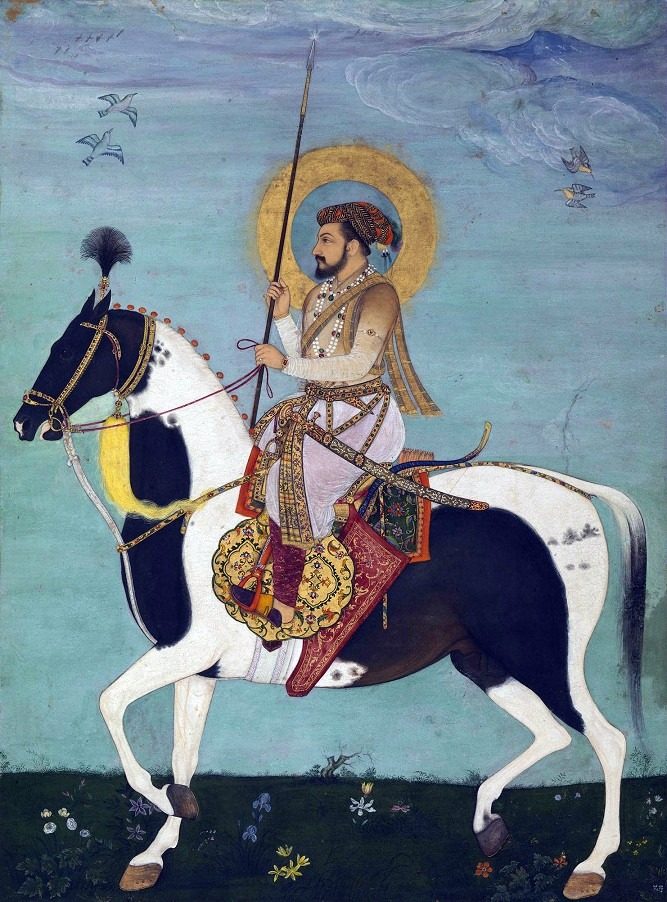
The Delhiwala community, as the name suggests, is a community of people who used to live in Delhi in pre-Partition India, who migrated to Pakistan at the time of Partition settling predominantly in Karachi and to a lesser extent in Lahore. The community, however, originally hails from the region of western Punjab, in today’s Pakistan, more specifically from the districts of Khushab, Sargodha, Chiniot and Bhera.3 People of this community were merchants and had migrated to Delhi, settling there during the reign of the Mughal Emperor, Shah Jehan in the 17th Century in search of economic opportunities.4 They belonged to the merchant community, and historically would indulge in commerce in these aforementioned towns, which were along the rivers flowing through the Punjnad valley. In fact the valley itself is named so courtesy of the ‘five rivers’ flowing through it, namely the Indus, Jhelum, Chenab, Ravi and Sutlej.
As the safest and most feasible means of commute at the time was by sailing upstream on these rivers (particularly Jhelum, Chenab and Ravi), the towns along these rivers really prospered and the various communities settled there would gain benefit.5 This would, however, change when Sher Shah Suri defeated the Mughal Emperor Humayun (1540). During Sher Shah Suri’s short reign, he had the Grand Trunk Road reconstructed which would stretch all the way from Kabul at one end of the subcontinent to Chittagong at the other. He also ensured that the length of this road was pitted with resting places called caravanserais6, for travellers and would have patrolling troops along the length of the road to ensure it was safe from dacoits, whose fear had inhibited land trade in the region Punjnad region previously. These towns which had enjoyed such prosperity courtesy of trade via rivers would no longer have same hustle and bustle after the construction of the G.T Road.7 Moreover, the communities in these districts would see their economic fortunes decline and see economic hardship over the next century. The economic situation of the communities in this region would become so distressed that members of these communities would look to venture away from these lands in search of better economic opportunities.
During the reign of Shah Jehan, an opportunity to settle in the prosperous locale of Delhi, the new capital of India, would arise. Shah Jehan, after his accession to the throne, decided to move the capital to Delhi from Agra, and had the city rebuilt. The new city did not have a large Muslim population, but what really forced his hand was the plague that hit Delhi during his reign, decimating majority of the population of the city. Shah Jehan then asked his prime minister, Nawab Saadullah Khan who hailed from the Punjnad region to arrange for rehabituating the city from his region. On the instruction and guarantee of the premier, a sizeable population, consisting of 64 families of the aforementioned districts, would leave their ancestral homes to settle in Delhi, where they would engage in the merchandizing profession. The migrating community would face prosperous times in Delhi, with their population growing with further migrations from their ancestral towns back in Punjab.8
Being merchants, their trade network would spread to other parts of India where some of them would settle although their base would remain in Delhi for the next few centuries. While in India they were referred to as Qoum-e-Punjabian 9, since they hailed from Punjab and as the Shamsi Biradri, in association with the name of the Saint whose descendant had converted the community to Islam centuries earlier. The patron saint, whose descendant is believed to have converted the small population of Hindu Punjabi Khatris to Islam as early as the 13th Century went by the name Shamsuddin Sabzwari, who had migrated from Sabzwar, Iran. In his association, the community would be referred to as the Shamsi Biradri not just in Delhi but in their Punjabi homelands before that. Moreover, certain clans would even take Shamsi as part of their surname, a practice the results of which are manifested in the community to date.10
Prior to their conversion to Islam, the community would be Hindus of the Punjabi Khatri ethnicity. (The name Khatri is believed to have been derived from the Hindu caste of Kshatriyas or warriors, therefore the descendants of the community are believed to have settled down and become merchants, in times of peace). The Khatris, along with their sister communities, Arora and Lohanas, are believed to have shared common origins11, tracing their origins to the Hindu mythological figure, Rama, with Lohana being derived from the name of Rama’s son Lau while Khatris’ ancestry is claimed to be from his other son, Kush.12
These communities had settled along the rivers of the western subcontinent, or more appropriately the regions of the Indus Valley civilization, which was historically given the name of Sapasta Sindu (land of seven rivers) by the Aryans of old. This region encompasses the Punjnad valley of today consisting of five rivers of Punjab, along with the Beas river in India and the now-dried Sarasvati river in the desert region of Thar/Rajasthan.13 These communities would settle along these rivers and engage in trade via the rivers. The Punjabi Khatris of the districts of Khushab, Chiniot, Sargodha and Bhera were therefore only continuing the practice of their ancestors as merchants. In fact, the trade networks of these Khatri merchants were so widespread that they had access to the markets of central Asia where they performed an influential role as moneylenders (banias), driving the economy of the entire region.14
In 1907, their communal bonding of the migrant community would be formalized after being enshrined in the Morley-Minto Reforms, gathering the community under the institution by the name of Anjuman Qoum e Wakeel Punjabian15, further formalizing their given name Qoum e Punjabian. Members of the community would play an active role in the fight for independence from the British.
When Partition was announced, the majority of the community would migrate to this side of the border, settling in Karachi primarily while a few members of the community chose to stay back in Delhi. The migration process in 1947 was anything but organic. After the population exchange agreement between the nascent states of India and Pakistan, concerning the population of the divided state of Punjab. When Punjab was partitioned in 1947 as per the Radcliffe Award, the Pakistani West Punjab had a sizeable population of Hindus and Sikhs, whereas the Indian East Punjab had a sizeable population of Muslims. To cater to this issue of large minority populations in a closely proximal region, the two nations agreed on a transfer of population with Hindus and Sikhs going to Indian Punjab with Muslims coming over to Pakistani Punjab. This transfer of population in Punjab was an exception as such an official transfer of population did not happen anywhere else in the subcontinent.16
The transfer of population on either side of the border, however, was not appropriate to each other. This transfer would cause a lot of problems on either side of the border in the immediate aftermath of Partition. This is because the accommodation was not wellanticipated by either of the receiving governments. Many of the arriving Sikh and Hindu migrants instead of settling in the districts of East Punjab which the Muslims had emigrated from, made their way to Delhi, which being adjacent to East Punjab, was also the capital city of India, attracted hordes of migrants. The Indian government did little to stop the trains of non-Muslim migrants coming to Delhi.
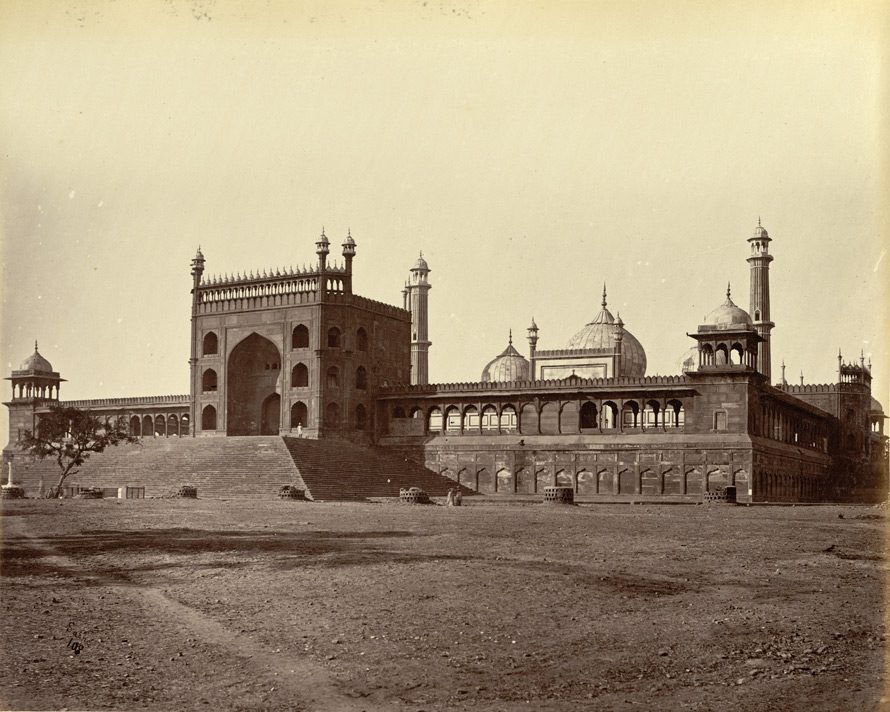
The Muslim communities of Delhi, inclusive of the Qoum e Punjabian community had, for the majority not decided on migrating to Pakistan as it had not been encouraged in the first place. The transfer of population was only for Punjab and the minorities of every other region were supposed to stay put. But with the influx of so many non-Muslim immigrants with barely any houses to place them in, violence erupted against the Muslim population of Delhi whose houses were occupied, inhabitants evicted and some even killed. In this environment of bloodshed and insecurity, many Muslim inhabitants would leave their homes for the safety of their lives, hoping to return once the violence subsided. This was particularly the case for all Muslims whose houses were outside the few Muslim majority quarters of the city, they would be forced to take refuge in camps at places like Humayun’s Tomb, Purana Qila and Jama Masjid where thousands of Muslims, scared for their lives would take emergency shelter.17
When the violence would subside, these Muslims would find out their houses and property were seized by the incoming non-Muslim refugees, and they could do nothing to evict them from it. This was reinforced by the evacuee property legislation, passed for emergency refugee rehabilitation by the state of India, which granted incoming non-Muslim refugees coming to Delhi who had taken over the houses of Muslims the right to stay in these houses on a temporary basis. The situation had become so dire with even law enforcement turning partisan, that even Muslim individuals in the police force would desert and join the camps, in fear for their lives. Having lost their right to their houses and property and no reversal in sight in the immediate future, these dejected individuals of the Muslim community would board the train across the border where more misfortune would await them on their initial arrival.
As per the transfer of population agreement for the state of Punjab between the states of India and Pakistan, Pakistani West Punjab was to receive Muslim immigrants in return for those non-Muslims leaving. But the number of people coming in was greater than those leaving. This was because the number of Sikhs and Hindus leaving West Punjab was smaller than the number of Muslims coming in; this was because there was not just the Muslim population from East Punjab coming in, but also the Muslims of Delhi who had been forced out with their houses seized. There was a housing problem in the province of West Punjab and it was deliberated between the provinces of the state of Pakistan regarding how to deal with this large refugee problem. It was decided that Punjab could only host a sizeable chunk of the incoming Muslim population, mostly in the rural space of the province which was where most of the departing non-Muslim population were settled before their migration. Most of the remaining immigrants were diverted to Sindh, under the expectation they would be housed all over the districts of Sindh. But with very little outflow from the rural districts of Sindh, they could not be housed there (without disturbing the pre-Partition population density metric).18
With nowhere else to go, the majority of the population would make their way to Karachi which was little more than a port at the time. Karachi housed a sizeable, wealthy population of Hindus and Parsis, both of whom were the driving force behind the prosperity of the small port city. Moreover, since there was no violence in the immediate aftermath of Partition (like that in Delhi), they were happy to stay put. Even the government leadership of Sindh wanted them to continue their stay, as their wealth was a source of prosperity for the region. With the incoming large number of Muslims and very limited options to house them, this would create a problem. They would be forced to stay on the streets, and in dozens of refugee camps made around the old city area. Some were lucky to be allotted houses that had been left behind by the Parsis who were the first to leave.
There was growing discontent against the Hindus amongst the Muslim population as they felt they had been on the wrong end of the bargain both in Delhi and now in Karachi in comparison to their non-Muslim compatriots. The Hindus would eventually leave the city at the invitation of the Indian government, who were able to reinforce in them the that they did not have a long-term future in the Muslim-majority state, despite the guarantees of the Pakistani and Sindh government. With the departure of the Hindus, the Muslim refugee accommodation issue eased a little, but they still faced discrimination as they had to pay up large sums upfront as rent money to Sindhi landlords under the pagari system. Naturally, as most of the migrants had left everything behind and arrived empty-handed, they could not afford this. Their plight would continue as they would have no choice but to survive in refugee camps or build make-shift homes from scratch outside the main city area.19
The people from the Delhiwala community who made their way to Karachi were not generationally poor; they had to leave a lot of their property back in India and would have to start from scratch here. Contrary to popular imagination, migration at the time of Partition was not just the widespread influx of refugees after independence was announced, but would continue for a few years after independence, even a decade. A reason behind this was the changing dynamics of the country (India) after a large Muslim population had moved away, rendering those who stayed behind insecure. Within the community, the experience of migration was very different and that is of particular interest to me. The obvious reasons are economic, but in the desperate times of Partition, even wealth could not guarantee safe passage across the border. More importantly, most of their wealth was in the form of properties and land, which could not be transferred or sold at such short notice, meaning they would have to migrate empty-handed leaving almost everything behind. Migration would therefore represent a changing destiny for certain people within the community, whose lives would never be the same again. And this was not something exclusive to the Delhiwala community, but to many other different communities as well who would embark on the migration journey at Partition. There would be the loss of hundreds of lives and the lasting trauma that would bring to their families.
The sizeable community who migrated from Delhi would settle down here in Karachi were referred to as Delhiwalas since they had just migrated from Delhi, just like other communities were being referred to in reference to where they had come from. While Delhiwala would become the most referred to name for the community, the elders of the community devised a more formal official name, which would give reference to the community’s roots. The name they came up with was ‘Punjabi Saudagaran e Delhi’, with each aspect of the name giving more information about the community: Punjabi to refer to the community’s roots in Punjab, Saudagaran which is the Urdu translation for ‘merchants' and is to address the community’s past and thereby present as business-minded people and Delhi to signify where they resided in India before Partition. Not only just for the name, the Delhiwala community was and still is a very business-minded community with great acumen and skills for trade. Whilst in Delhi, the merchants would trade all over the Indian subcontinent, with business hubs as far as Dhaka, at the other end of India. Having assets across India would turn out to be a huge concern when they would have to leave everything behind and leave at such short notice for the journey across the border.
When the community migrated to Karachi, they had to leave pretty much everything behind. Those who came to Karachi and settled here, were either allocated those homes which the fleeing Hindus and Parsis had vacated, or they had to make do with make-shift tills in a distant space (Delhi Colony) from the existing civilization in Saddar. With the incoming numbers of refugees so huge, only a few would be allocated those vacated homes whereas many others would have to make do in those make-shift tills. A segregation would thereby occur here which would separate, or rather, create the rich and the poor of the community, the poor most of whom were not poor back in India but had lost everything in the migration and were left with nothing. It is interesting to observe how the migration which happened at the time of Partition three-quarters of a century ago and the subsequent settlement process, still has projections today in the economic conditions for some within the community.
A peculiar distinction of the Delhiwala community, worth mentioning, is their use of occupational surnames, something which is believed to be associated with them only. Examples of these surnames include Kapraywala, Sheeshawala and Cigarettewala among countless others. Upon closer inspection, we come to find out that the use of occupational surnames is not exclusive to the Delhiwala community, certain communities who migrated from the Gujrat peninsula also use them, like the Memons (Balagamwala) and Bohris (Bandukwala, Mansawala). Even within the community itself, there are exceptions to the occupational surname, with Allahwala and Nainitalwala (from Nainital, in Uttarkhand, India) being notable exceptions. As far as the notion about the use of occupational surnames is concerned by the Delhiwala and some other proximal communities, this is in a fact a very common phenomenon. In Punjab, whole tribes are known by the occupation of their forefathers, like the Arains and Jutts. More importantly, many of the names (and to a greater extent surnames) in use in the West have occupational roots. Examples of this include the name Smith (and its linguistic variants: Schmitt, Ferrari in Italian, Ferreira in Portuguese, Ferrer in Spain, Kovacs in Hungarian), Miller (and its linguistic variants: Mueller in German, Moller in the Scandinavian countries, Molina in Spanish).20
A more interesting aspect is how these names came about given most of the people who use them have no connection to those occupations today. The obvious explanation of this notion is that their forefathers were involved in those occupations, adding their occupations to their names, with those names having tagged along with them ever since, and by extension for their family. An interesting aspect to note about this would be if the use of these occupational surnames was as common in Delhi as here or if there was a reinforcement in their usage after Partition after settlement in the new country where hundreds of thousands of migrants had come in, who did not know each other and what occupational background each of them had. A deeper inspection of primary accounts and sources will be able to shed light on this.
Chapter 2: The use of identity
As I have previously introduced the official name of the Delhiwala community is the Delhi Punjabi Saudagar community (biradri). The name signifies that they are a community hailing from Delhi, who ethnically identify as Punjabi as their ancestors are from Punjab and are a mercantile community by profession. While growing up I would come across this official name quite often, maybe more than any other child of my age in a normal household of the community would come across it; the reason being my paternal grandfather was associated with the community center of this community. While I was told so and understood that the community and my ancestors had migrated from Delhi, hence were called Delhiwala or that they had the reference to Delhi in their name. I also remember my father explaining to me that Saudagar was the Urdu word for merchant when I was too young to know the translation. I do not remember ever asking about the Punjabi part in the name, what was the significance of it and if there was a particular reason behind it. I would only think about this only recently when I began to acknowledge my interest in the subjects of history, migration, and the evolution of races, and to better sum it up, the intersection of the three.
Around the time when I again came across this name, this time the Punjabi aspect caught my attention. When I quizzed around, I was told that this is because the community, before their settlement in Delhi, was originally from or around the region of Sargodha. I would use a map to locate Sargodha: a city in the west of the Punjab province. It seemed intriguing as to what connection there was for a community in Karachi, who were settled in Delhi Pre-Partition, have with Sargodha, a small city or town, hundreds of kilometers away, across the breadth of not just Pakistani Punjab but also Indian Punjab from Delhi. I, unfortunately, could not get more information about the Sargodha or Punjab connection from my relatives I quizzed, or maybe I was not looking at the right place, or was not persistent enough. Anyhow for quite some time, I would not be able to get any further insight on the topic until I finally reached a breakthrough a year later, and would get access to literature and individuals, through which I would be able to learn more about the background and history of this community.
After reading a few books and having some fruitful conversations, I was able to get valuable insight and greater details about the community, with which I could visualize them. I was able to gain knowledge about the community’s past in Delhi, where they lived and worked in the city and how did Partition and the subsequent migration unfold for them. Thankfully I was able to connect with members of the community across the border, still residing in Delhi. I was able to understand their perspective of the migration, how have things unfolded for the community still residing in Delhi, and whether any signs remain of the community’s past pre-Partition. Moreover, I was able to ask them about the community’s origins and compare them with those versions I had heard about on this side of the border, and thereby gauge the consistency of these shared traditions. I was told that the community’s roots are from Punjab, the part now in Pakistan, and more specifically the towns of Khushab and Sargodha, which are adjacent to each other. The timeline of the migration and the conversion stories from my Indian interviewees did not exactly match with what I had learnt on this side of the border. These differences, albeit minor in the bigger picture (whether the people of the community migrated during the reign of Shah Jehan or in that of his greatgrandson) and likely due to the lack of exchange of literature across the border, prompted me to research this in greater detail, and with some scepticism.
The difference in the conversion stories across the border also put quite a few questions in my mind. In the version of the conversion story I had come across this side of the border, conversion was voluntary and predated migration, whereas my sources on the other side of the border claimed that conversion was only after migration and was forced in the sense that the migrating individuals (having migrated out of economic distress) were allowed to settle in the vicinity of Delhi on conversion. Although the second version does seem fallacious provided the era we are referring to is of Mughal rule, and the Mughals are not known for forcefully converting the population of India to Islam. Anyhow, these differences sowed seeds in my mind about how the states, in which the two fragments of the same community resided may each be influenced by their respective state ideologies. What I am trying to suggest here is that Delhiwalas in Pakistan would not bring up their supposed forced conversion, even if it were the case, because it would not do them any favours in a Muslim country to which they migrated in the first place. On the contrary, being forcibly converted to Islam rather than being Muslim immigrants to India, with the latter drawing connection with many Muslim invaders who came to India and settled there, makes the former more appropriate with the state ideology of India, and how generally Muslims are treated there today.
The idea about how two fragments of the same community, having a shared origin, may differ in how they look at their past because of their current circumstances, stems from what ‘tradition’ they ought to keep alive. Tradition refers to those fragments of the past that you keep alive (or you imagine) and project them onto your present. Tradition keeps connection with the past (history), and does not have to necessarily be logically justified, unlike custom and convention, which are technical and logically sound. Traditions are often invented to serve a purpose; history is ‘created’ to support a claim, which might be beneficial for the present; an alternate past is forged to influence the present.21 Therefore, the above example where two segments of the same community keep a different version of the past alive illustrates how traditions are imagined and kept alive. We can view this notion of the imagined forced conversion of the community (in India) through the lens of invented tradition.
These differences, whether true or imagined, put more questions in my mind about the identity of communities, whether they are moulded to serve a specific purpose, whether a certain identity could leverage any social benefit, or even have political influence. Pondering about this, I was able to look around me at communities proximal to me, and whether they faced any disadvantages due to them being from a particular community or any advantages for being from one. As a resident of the multi-ethnic and multiracial city of Karachi, I could observe discrimination on ethnic grounds, and read about ethnic troubles the city has witnessed in its past and continues to in smaller skirmishes to date. The more I read, the more I felt the need to read even more, and would stumble upon the history and origin stories of various ethno-racial communities, and broadly their evolution as races in history.
Coming back closer to home to the Delhiwala community. While I understood the Punjabi reference in their official name and where it was coming from, I still had my reservations about perceiving the community as Punjabi, given how different they were in outlook, linguistics, and culture from the Punjabis of today. It felt strange but it was not something I would lose sleep over, until I read more about the Memon community’s history and origin story, where I could see some parallels in where they would trace their origins, and how they would identify themselves in context of their ancestral roots. This intrigued me to look at the Punjabi aspect of the Delhiwala identity more critically, if there was a conscious purpose behind it, and whether this identity served any benefit to the community.
The Punjabi aspect of the community’s identity really intrigued me, and I became particularly concerned with if there was a deeper political significance behind the use of the verbiage in the official name of the community, in the use of the word Punjabi rather than simply giving homage to their roots from centuries prior. The premise which made me consider this was when I was able to observe the role of ethnic identity in Pakistan. It is an open secret the most privileged identity in Pakistan is that of the Punjabi, Sunni male. This identity is the one that faces the least discrimination in Pakistan and is thereby one identity that often makes it to higher echelons of power in the country. My induction pertaining to this is that the Delhiwala community was cognizant of the currency of the Punjabi card in relation to this identity, and therefore felt it was too good an opportunity to not cash on their Punjabi ancestry to gain socio-political currency in the new country.
There is the case of Punjabi dominance in Pakistan; the reason behind it does not necessarily have to stem from any malicious design, rather it can be seen as the result of demographics. Punjab is the largest province of the country in terms of population,22 with more than half of the population of Pakistan today. Naturally, with so many people in the country hailing from Punjab, it is only natural that Punjabis are dominant in every sector. Still, their dominance in the more crucial spheres of influence in the country, notably in the military23 and active politics, does raise eyebrows, as does the discrimination faced by the other provinces and their people, which paints a rather negative picture of the Punjabis and their supposed stronghold of the country. Further, being in a position of influence and power, there is also the case of hegemony, where their dominant position wields even more influence, and consolidates even more power.
With Punjabis in such a dominant position in the country and not victims of any discrimination like those faced by migrant communities, it is understandable why people would want to associate themselves with them, and thereby gain socio-political advantage while at the same time distance them from any discrimination they would face. Cases of crafting and even faking identity exist in history. The case of the Syed community comes to mind where many of the Syeds in the subcontinent have no real claim to the lineage of the Prophet PBUH, but have taken up the name due to the socio-political advantages association with the Prophet PBUH brought the actual Syeds in the subcontinent.24 Therefore, tradition may be invented to link oneself to a revered figure in the past, association with whom may create a better present and future, despite the fact there is no truth to it. In other instances, it may involve tracing one’s roots to remember and cherish the past, which has been forgotten; distinguishing it will reinforce a strong identity and usher a better present out of nostalgia.25
Now, coming back to the Delhiwala community, whose reference to them being Punjabi is a tradition after all, and with different versions of history existing and the lack of surety that which version is factually correct, suggests that the Delhiwalas could be tapping into an identity which is not historical and factual, therefore using this lens, calling themselves Punjabis could be an invented tradition possibly. Having said that I do not question their Punjabi heritage, rather my critique is towards the maintenance and use of this identity till present day, despite the centuries-long gap in their association with the land of Punjab. Association with the dominant community certainly has its perks, even more so when that community is also the most populous community in the country. More so it would help dispel the negative connotations and prejudice associated with the Mohajir tag, which migrants, Delhiwalas included were to face after Partition.
It is still important to highlight that the Delhiwalas are only Punjabi in name today; they had migrated to Delhi centuries earlier and would lose contact with people in their places of origin back in Punjab as generations passed, so that their culture, linguistics, and tradition become quite different from what would be associated with that of those in Punjab. Therefore, in essence, they were no longer Punjabis but referred so in reference to where they came from before setting in Delhi. In the same way, once the community would migrate from Delhi to Pakistan, and Karachi specifically they should only have been referred to in reference to their migration from Delhi and not because of the migration of their forefathers centuries earlier – an identity which could still be cherished in historical records but not as socio-political currency for the present and future. The reason it was not let go of and only reinforced brings me to the second part of my argument.
The other reason why the Punjabi aspect of the identity might be kept alive is to depict that the community originally hailed from the part of Punjab now in Pakistan. The Delhiwala, being an endogamous community, originally hailing from the Punjab, would therefore be perceived as ‘sons of the soil’ when they migrated from Delhi, or more aptly migrated back to the land of Pakistan. In the years after Partition, this would have given them more socio-political leverage as compared to other migrant communities from India and separated them from the larger Muhajir (migrant) identity, who despite having made a lot of sacrifices for the creation of Pakistan were victims to discrimination in the new country. It is no surprise that when the Muhajir identity was cashed upon by the formation of the Mohajir Qaumi Movement (MQM), the Delhiwalas were not quite part of it. The case of the Delhiwalas is similar to that of the Memon community, who while originally hailing from Sindh would migrate to different parts of the Gujrat peninsula in India due to religious tensions in Sindh at the time, staying there for a few centuries before returning back at the time of Partition.26 They are therefore able to claim their right to this land and distinguish themselves from other migrants who left their homes behind to come settle in an alien land. The aspect of being originally from this land would allow them greater claim to it and enable them to have greater agency in the new country. I will henceforth proceed to discuss this in greater detail.
The case of the Memon community
In order to fully understand the similarity between the use of socio-political identity post-Partition by the Delhiwala community and the Memons as I have insinuated earlier, it will be necessary to briefly go over the history of the Memon community. The word ‘Memon’ I believed to be a disambiguation of the term ‘Momin’, the Islamic term which means ‘believer’ of faith. It is believed that the converted individuals of the Hindu tribes were called Momins to signify that they had entered the folds of Islam. And with time the name would get altered and disambiguated to become the word Memon we are familiar with today.
These people, Memons, were originally Hindu Lohanas (which incidentally is one of the races the Delhiwalas also trace their origin to) settled in Sindh, near modern-day Hyderabad, with their settlement called Lohana Desh or Lohana Puraganas. Historically Buddhist, they had come under the influence of Hindu teachings and converted to Hinduism over time. During the second millennium AD, when the Indian subcontinent was subject to invasion after invasion from Muslim conquerors coming via the land route from Central Asia, the Lohanas would first convert to Islam. A descendant of Shaykh Abdul Qadir Jilani of Baghdad (the founder of the Qadariyya Sufi tradition), Abu Zakarria Yahya Yusufuddin is recorded to have migrated to Sindh in the year 1422 AD, and after toiling for over a decade, he was successful in converting a sizeable population of 700 Lohana families to Islam.27 To distinguish this small community from the larger Lohana population, these converted people would be referred to as Momins (believers of God).
As is the case even today, religion often becomes a source of discontent between communities who do not share a common religion, and this communal friction often leads to bloodshed, which in some cases people or communities must move elsewhere for their own safety. The newly converted Memon community also faced some similar issues as their conversion to Islam did not bode well with the larger Lohana population who they were part of, and conflict would be brewing between the two. On the advice of their saint converter, these 700 families would migrate elsewhere to lower parts of Sindh, before splitting and migrating to different parts of the Gujrat region, predominantly in the Rann of Kutch and the Kathiawar peninsula, where they would settle down, and work primarily as merchants considering the booming trade at the time in the Gujrat region, courtesy of the port of Surat. They would settle there permanently and come to identify themselves with the places they lived, for instance, with Halai Memons and Kutchi Memons as the larger groups corresponding to larger regions, and numerous smaller ones (Okhai, Bantva Memon) with association to a village or town. Some of them would migrate further into the Indian subcontinent, but the majority would stay there till Partition.
When Partition was announced, these Memon communities in the Gujrat region, being Muslims, found themselves on the wrong side of the border. Gujrat, a Hindu-majority area was supposed to become part of India and these Muslims decided it would be better for them to migrate to Pakistan. Of course, their decision-making was influenced by geographical factors, given how they were to this new border (which was created), with Sindh being so geographically close to them. Moreover, since there was not a border fence or check post at the time which could control or inhibit their passing through, they were able to migrate unrestricted. Thus, they would migrate to Sindh, primarily to the port town of Karachi, given their merchandising ambitions. Given that very large numbers would migrate to Karachi, they were able to settle in close vicinity and maintain their communal bonding and structure.
Whilst in Pakistan since Partition, the Memon community in Karachi has prospered over the years, yielding great influence in commercial activities, with their ties of significance even in political circles. The Memon community was able to organize itself in the form of various jamaats or associations which would look after the welfare of the individual communities within the Memon nation. Moreover, these different jamaats of the different Memon subgroups would interact with each other, which would serve in the interest of the greater Memon community, helping them resonate with each other and instilling a feeling of unity and a common identity, which I will proceed to discuss next.
It is pertinent to understand the identity of the Memon community. The Memons migrated to Sindh and specifically to Karachi at the time of Partition. There was a small group of Memons who resided in Sindh already, were involved in agriculture (unlike their immigrating counterparts) and were referred to as Sindhi Memons. Other than these Sindhi Memons, all Memons coming into Sindh from across the new to-be-established border were migrants. They would be coming from towns and villages in the Gujrat region, such as Bantva and Kuttiyana. They would come and settle in Karachi, and take up the name of their ancestral villages, which thereby would associate themselves with a history on the other side of the border, having had to migrate here. Migrants they were, however, they would distance themselves from the migrant or rather Mohajir identity.
This naturally felt startling when I found out about this during a conversation with a friend belonging to the Memon community. His grandparents had migrated from a village in Gujrat during Partition. But when quizzed how he would identify himself or his family as, the response was Memon. When asked further about his identity or the Memon community’s identity, in terms of broader identities associated with people of Pakistan, he would stop short of identifying as a Mohajir. This seemed strange but I imagined it to be his personal narrative. I made it a point though to interview more individuals from the Memon community about the identity of the Memon community and whether this identity would encapsulate being a Mohajir. The response I would get would be that Memons do not identify as Mohajir. I would question if they are not migrants, then should we refer to them as Sindhis? The response would not be a satisfactory one. It left me perplexed that this community would identify itself with a primary identity only, and distance itself from any other broader identity. I was curious as to why this was the case.
Having since read about the history of the Memon community, and come across their origin story, it helped give me perspective on what could be the reason behind this. As I have laid out earlier, the Memons being neo-Muslims, migrated or rather had little choice but to migrate from Sindh to the Gujrat region, during the 15th and 16th Centuries. Successive generations would pass before during Partition, many Memons, descendants of those who had migrated to Gujrat would migrate to Sindh. Or rather return to Sindh, the land of their ancestors. Because they would be arriving to a land that their ancestors once inhabited, they would have a claim to the land, that they were, therefore ‘sons of the soil’ and not any outsiders, who should be deemed as unwelcome. They, therefore, would keep their distance from the migrant or Mohajir tag and identify themselves as Memon.
Moreover, distancing themselves from the Mohajir tag or identity was a conscious choice of the Memon community, stemming from the conditions of the Mohajirs (migrants) who had made their way to Karachi. Prior to Partition, Muslims from all over India had strived for an independent Muslim homeland, and even the perception sold was that this Muslim homeland would be for the Muslims of the entire subcontinent. When Partition was announced, the Muslim homeland would be carved from the smaller parts on the east and west ends of the larger Indian subcontinent, which had a larger Muslim population. These parts were to become the Muslim homeland, Pakistan. The Muslim population was spread all over India, albeit as a minority other than in the areas that became Pakistan. Even though the impression had been given previously that Pakistan would be for the Muslims of the entire subcontinent, now the official state policy was to discourage Muslims from other parts of India to come to Pakistan.
But the ship had already sailed for these smaller Muslim minorities; they had put their all on the line in the fight for Partition, for a separate Muslim homeland and burnt numerous bridges to achieve this goal. The Muslims of North India, of Uttar Pradesh, particularly had been at the forefront of the independence movement, and the Muslim League itself. They however were the minority population of their province. Whilst they had after decades of struggle, accomplished the dream of a separate Muslim homeland in 1947, to say that they were unwelcome to the new country (since their home province would not become part of Pakistan) was uncalled for given the sacrifices they had given, even before Partition. More so their position now had become so precarious. Previously they were a Muslim minority in their region, however still belonging to the second-largest population of the entire subcontinent. Now a great part of this larger population would separate, and their position being a minority population would be compromised. More so with communal tensions arising, rioting and bloodshed occurring in areas, and likely to engulf their areas, these Muslims no longer felt safe. They had little choice but to migrate to protect their lives. Further, they were always given the impression that there would have a place in the Muslim homeland, otherwise, they would not have gone as far as they did in their fight for independence. Even the attitude of the Muslim-majority provinces was very welcoming to these Muslim minorities prior to Partition but this would change with Partition. These migrants when they arrived empty-handed would have to suffer in refugee camps, whereas many of the local population would cause more hindrance than any help.
The issue of the Mohajirs still persists today. The term was taken up to represent the migrants coming into Pakistan to draw inspiration from the original Mohajirs, the people of the Prophet PBUH, the early Muslims who migrated from Mecca to Madinah due to persecution at the hands of the infidels.28 Drawing inspiration from the companions of the Prophet, who did Hijrat (migration) for the sake of religion, the Muslims of the subcontinent also viewed their migration due to the persecutions they would face in India as a noble act, hence they took up the name as their identity. However, if they had imagined linking their migration to the migration of the Prophet PBUH and his companions would make the lives easier, and the inhabiting population in the host country welcoming, they were certainly mistaken.29 The Mohajir population (consisting of migrants from all over India who made their way to Pakistan) were so discriminated against that they would have to organize themselves as a political group to fight against this discrimination. The political group or rather party, Muhajir Qaumi Movement (MQM) was formed to give voice to these discriminated and marginalized migrants who would not have been wholeheartedly accepted and enfranchised even after close to four decades since Partition. Issues regarding their population count in the census and quota systems set up to disfavour them still exist to date. Worst of all, they must hear polemics from people of ethnicities rooted here pre-Partition that these people are the children of migrants, and they should accept being as secondary citizens, or better go back to where they came from.
The Memon community, arguably due to great foresight, can shy away from any such linguistic polemics as they do not consider themselves as part of the Muhajir identity. After Partition, they did not assimilate themselves with the larger Muhajir community. This may be because most of the Muhajirs were from North India, were Urdu speakers and were culturally very different to the Memons, who were from Gujrat, spoke Memoni and Gujrati (both closely related) and were very different from the other Muhajirs coming in. Moreover, their migration experiences were also very different, as the latter did not have to witness the atrocities of Partition during their journey as other migrants. Memons also had some connections with their sister Memon community in Sindh and commercial contacts in Karachi due to their commerce trade via sea through the port of Surat. Most importantly, they had prior links to the land of Sindh and were therefore not completely alien to it unlike most of the other migrants who could lay no claim to it. No wonder the Memons would not reduce their identity to the Muhajirs who after migration, found themselves in such compromising circumstances. Therefore, Memons would distance themselves from the Mohajir identity and play no role in the rise of MQM, which was orchestrated by migrants from Bihar and Uttar Pradesh. Being a very commerce-oriented group, they are not very involved in grassroot politics and do not have prominent political representation of the community in active politics, however being strongly positioned in the commerce circles of the country, and the economy itself, they hold sway in the power echelons of the country. The Memons, by keeping their own primary communal identity strong and unanimous, have fared a lot better than other communities who ventured into Pakistan after Partition.
As I have discussed above, the identity formation of the Memon community has been illustrated, and how they have chosen to keep a particular identity and chosen to distance themselves from a certain identity, what underlying reasons seem to be behind this choice, and finally how have they been able to use their socio-political identity because of it. I find their formation and use of an identity like that of the Delhi Punjabi Saudagar community, whose identity was crafted or at least kept alive in such a way that it would give them political currency in the new country. Tracing their heritage to Punjab, that too the part of Punjab in Pakistan, and not the part of Punjab in India, gives them a claim, a right to this land from where their roots are. This idea might seem backward, but it was crucial for migrant communities to have some sort of claim to this new country they found themselves deserted in, and being treated as outsiders, and unwelcome. Not having a connection to this alien land and a weak socio-political identity would mean alienation and misery for years to come for the migrant population. The proof of the pudding is in the treatment of Bengali refugees who came to Karachi after the fall of Dhaka, and even after half a century the community is still discriminated against; many of them have been denied their identification cards,30 and by extension, their very identity as citizens of this country.
The similarity between the Memon and Delhiwala communities in their use of identity is, therefore, not just interesting, but worthy of further research and comparison before we can establish the claim for certain although the parallels are there to be seen. More so, we can perceive the deep-rooted linguistic connotations behind the official name of the Delhiwala community, and the likelihood that it may have provided sociopolitical currency for the community after Partition, and a stronger standing than the rest of the migrant communities. As linguistic usage very often has deep political connotations attached to it and in that light, a closer inspection of the community’s name and the background behind it, has allowed us to shed more light on the deep-rooted political connotations behind it. However, establishing and proving this is the case is a bit more complicated as a stronger socio-political identity does not always translate to tangible benefits, therefore making the argument more difficult to prove without substantial evidence at this point in time. Further research is therefore required to substantiate the argument I have so far articulated.
Chapter 3: The other side of the picture
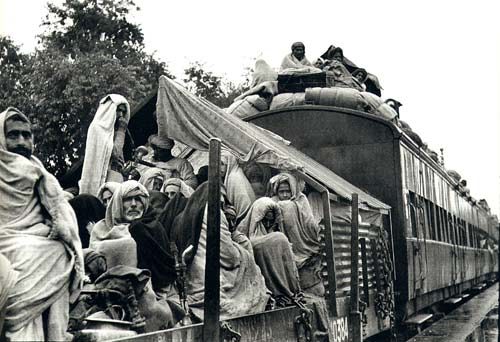
During my extensive months-long research about the community, I read multiple books and articles about the community and conducted countless impromptu interviews with members of the community, ranging from people who witnessed the tragic events of Partition with their very eyes to second and third-generation descendants (like myself) of those who migrated. In my impromptu interviews with different members of the community, I came across different stories about Partition and migration, about close escapes from being murdered in communal violence to witnessing the carnage in Delhi to experiences of the migration journey across the border, mostly by train, some by foot and a notable one by plane. Whilst the majority of the community migrated in the year of Partition, some of these migration experiences were not until a couple of years after Partition when the dust had settled down. Other experiences were punctuated with multiple migrations between India, East and West Pakistan. Each interview would bring something new to light, some aspect which I was previously not aware of.
I particularly found interesting the narration of those migration experiences from those second and third-generation descendants of those who migrated, and the stories they had heard from their elders, usually their grandparents. Whilst some of these interviews were incredibly detailed regarding the entire migration journey, others were very abrupt with only information about the family’s location in India, and if they are settled elsewhere immediately after migration. This dissociation with the past, as in the case of the latter, was the case of families who had very little connection left with their ancestral home in India (not necessarily Delhi because Delhiwalas had also settled elsewhere in search of better opportunities), usually because the entire extended family was able to migrate to Pakistan, with no one left behind. This was also true for those who had truly moved on from what they had lost during Partition and had left no stone unturned to recover from the dire state they found themselves this side of the border. Moreover, the recent environment of animosity between India and Pakistan, and the political jingoism had distanced them from any little association they would feel towards this part of their communal past.
Whereas those who were well-aware of these narrations were usually because someone from their extended families lived across the border, and or at least their parents had that living connection across the border. Having connections across the border would allow access to those remnants of their forefathers’ past: where they lived and worked, and if those areas have remained the same even after the passage of decades. The stories of what they had over there before tragedy struck and they had to leave everything behind, would be kept alive courtesy of these connections. Their association with their ancestral land would not extinguish. In fact, until the hostilities between the two countries beginning of the last decade, there was direct travel across the border with people coming to the other side of the border to reconnect with their extended families. However, with no direct flights available between the two countries, this connection across the border is waning even more so when Muslims in India, facing persecution recently, are more wary as information about their cross-border connections could put them in further jeopardy. This would mean that these cross-border connections, which were so crucial for research like this, might soon be a thing of the past.
While these interviews were able to provide any pertinent information about the community’s history in Delhi, barely any touched upon the community’s prearrival to Delhi. This is obviously because such a great amount of time has passed in three centuries that it would not be part of their social memories. Upon inquisition, it would become a point of irritation for some of those interviewed that how far back in the past does one want to unearth. Those who were cognizant to recognize the community’s official name were at least able to point out that they had some link to Punjab, but there was still some confusion about the background of it. A couple would mistake the reason being that since the community was based in Delhi, they might originally be from its close vicinity, with Indian Punjab being so close to Delhi; therefore, the community must be from the part of Punjab that would become part of India, and that they would dwell in Delhi for some time before migrating to Pakistan at Partition. This seemed a logical inference when I first came across this idea as I was at the very early stage of my research and had not been able to access sufficient literature as far. From a logistical point of view, it would make sense that these people were Punjabi by ancestry, they would at least be from the part of Punjab close to Delhi and not the furthest part of Punjab from Delhi, which is why when I first heard someone mention places like Khushab and Sargodha as their ancestral homes, I was a bit astounded. This astonishment would extinguish when I would come across literature about the community, which was not easily accessible.
Moreover, a couple of individuals interviewed would even question if they can really be of Punjabi origin, since they did not necessarily have the phenotype characteristics or the cultural and linguistic norms associated with Punjabis of today. Of course, a gap of three centuries in this association with their Punjabi homeland, and with little connection, if any, would change everything about their outlook, but this would still reinforce the question in my mind if the community really had Punjabi origins in the first place, or if there was a political use of the Punjabi identity at play here.
Given the little awareness of the current generation about the Punjabi roots, it pointed me towards the elders of the community, those who were around when the community was named so. The official name of the community ‘Punjabi Saudagaran-e-Delhi’ was introduced here after Partition. Upon inspection from elders who were witness to this and further research to compliment, it turns out that this name, or at least the individual components of this name were a continuation of that in Delhi. The name for the community in Delhi was Qoum e Punjabian of course, and there were associated legal names like the Anjuman e Wakil Qoum e Punajabian, which are proof of the notion that the community does have Punjabi ancestral background, and the premise of Punjabi ethnic dominance that we witness in Pakistan does not quite qualify for pre-Partition times. Having said that it has never been the goal of this thesis to challenge or dispute the Punjabi ancestry of the Delhiwala community, but rather to critique and decipher if this Punjabi lineage, ever-present and reinforced in their official name, was kept alive for political purposes in the aftermath of Partition and continuing till date.
Whilst in Delhi, the name of the community would serve more purposes than just identifying their geographical homeland. It would be a source of nostalgia for those people who were the early migrants, and a reminder that they had not forsaken their roots. Their name would reinforce where they were originally from, lest they forget it or they get indulged in an identity crisis. For the generations that followed it had some nostalgia attached to it about knowing their ancestors’ history, but it was more a source of communal bonding. People originally from the same area, living in the same vicinity in Delhi, having the same genotype and phenotype characteristics, would serve themselves well in having communal bonding with each other. All the more for being a sizeable community in Delhi, the capital of India, a metropolis of the time, having multitudes of people from all over India, having different castes and religions. Being an endogamous community to begin with, this sort of communal bonding was especially required to continue the practice of marriage within the biraadri. The need to keep the community alive through intermarriage is because the Punjabi community were not the only Muslims in the city, after all the ruling elite were Muslim, and were in no way related to this community. Therefore, communal identity was of great importance, and was to be sustained.
Now moving to Partition and the migration of the community to Pakistan, predominantly Karachi, and the evolution and use of their name here. If not for political purposes like I have discussed in prior chapters, what other reasons could there be for keeping their Punjabi linkage alive? Well, just as I have illustrated above, the nostalgia factor of where your roots are from was of consideration just like it had been for those earlier in Delhi, and what better way to keep them alive in essence than to incorporate them in your very name. This would ensure that while upcoming generations would become dissociated from their ancestral history (like I found in my interviews with the present-day generation), they would not be able to completely forget it, and part of it would be kept alive in spirit. With majority of the community displaced in Partition, with some still in Delhi, some in Karachi and some in other parts of Pakistan, including East Pakistan where a sizeable chunk would migrate, communal efficacy was the need of the hour. In the upheaval of migration, people lost contact with their neighbours, their relatives and pretty much everyone they would spend their days with back in Delhi; they would not know if those who they had lived with were able to escape and stay safe from the atrocities of Partition, and even if they had survived they would not get to see them ever again, and for those they did it would be years before they could reconnect once the dust of Partition had settled down.
In such circumstances, in a foreign land (for those who migrated) with almost everyone alien to them, they would look towards those with whom they had the most meagre of kinship ties. In this way, they were able to able to form a community, an extension of the one in Delhi, and experience the communal efficacy like they had previously been accustomed to in Delhi; of course, this time it was not as organic as back in Delhi. With the deepening of such ties, a community of individuals, who, having shared a common ancestry, found themselves in similar circumstances, and could work together for the betterment of their own lives, and those close to them. This communal feeling would truly reflect in the relief and rehabilitation efforts carried out by those richer members of the community, who were well-established and had relatively lost little during Partition, in favour of those who had to leave everything behind back in India and start from scratch on this side of the border. In this way, it was natural for the community to keep its name to reflect the community’s past in Delhi, and cast itself as a continuation of the community in Delhi itself.
Moreover, during my research on the community, and in conversation with someone knowledgeable about the community’s history, I come across a very startling revelation that quite literally changes the scope of my research, that the Delhiwala community is not exactly synonymous with the Delhi Punjabi Saudagar community. Rather because of being one of the largest Muslim communities in Delhi, and after migration as a point of reference to their past abode, they would begin to be referred to as Delhiwalas, particularly amongst the community itself. The name Delhiwala also stuck on as linguistic jargon because the official name of the community was too long and specific to be used for everyday verbiage. It is also likely that being the largest group of Muslims coming in from the city of Delhi, the coined term Delhiwalas may have been hijacked, even though it would originally have meant to refer to anyone who had roots in or migrated from Delhi. Anyhow the fact of the matter is that there are other Delhiwalas not part of the Delhi Punjabi Saudagar community, although their numbers are a lot smaller than the former. But to be fair to the Delhi Punjabi Saudagar community, they have maintained their distinguished identity, and have not in any way reduced their identity to just Delhiwalas. That name only became popular due to its simplicity and due to its denotation of where the community migrated from, which also presents another reasonable argument. The use of the word Delhiwala itself gives away that the person(s) hails from Delhi, a migrant in the context of Pakistan, without going into the ethnic identity details. More often than not, this is more than sufficient information about where a person is from or where his roots lie, without giving away any ethnic information which is not asked or of interest to the conversation. Therefore, being a Delhiwala is part of the identity of someone from the Delhi Punjabi Saudagar community, although the two should not be mistaken as synonymous.
As I have mentioned above that there do exist other Delhiwalas in Karachi, Pakistan that do not belong to the Delhi Punjabi Saudagar community. After being enlightened to distinguish between Delhiwala and Delhi Punjabi Saudagar, I deemed it essential to interview a couple of people from the ‘other’ Delhiwalas. I interviewed a Delhiwala, a Syed by ethnic identity, to learn more about these other Delhiwalas and their relation to the Delhi Punjabi Saudagar community. In this interview, I sensed some animosity for the DPS community between the lines from the person interviewed. Listening to him made me self-realise both the rationale behind individuals from the Delhi Punjabi Saudagar community communalizing as the same, and not primarily within the larger Delhiwala identity on arrival to Karachi, and where this individual was coming from in feeling negativity towards the DPS community. Individuals from the DPS community looked to communalize with those they had very meagre kinship ties, but with whom they had a common ancestral linkage, a similar past in Delhi, occupational similarity and cultural uniformity. The other individuals, or even groups of individuals, coming in from Delhi, albeit were Muslims, were likely as fluent in Urdu as the DPS, may have belonged to the same class, and have some degree of cultural assimilation with the DPS, but they were still somewhat different as compared to other members of the DPS. Moreover, these individuals or groups were not part of the DPS community circle in Delhi and therefore would have limited interaction with the community. No wonder that on arrival to Karachi, these individuals would not assimilate with the DPS to form a primary larger identity, as most would be interacting only then. Individuals from the DPS, to no surprise, would communalize on the basis of their communal linkages back in Delhi to form their primary ethnic and communal identity after Partition.
Individuals from the DPS community were able to communalize soon after Partition, particularly in Karachi. They would be housed in the vicinity of each other, prominently in Delhi Colony, and later in housing societies when Karachi expanded to cater to the growing population of DPS, therefore their communal bonding would grow stronger, the biraadri would grow closer. This communalisation was of great benefit to the individuals of the community. Firstly, it kept their connection with Delhi alive. But more importantly, this communal feeling helped them leave the atrocities of Partition behind and move on with their lives. They might have had to start again from scratch, but many individuals from the community were able to pick themselves back up and rebuild their fortunes. They were not only able to improve their own conditions but also of those who had not been so fortunate in rebuilding their lives. In this way, the community, as a whole, was able to prosper and gain prominence in Karachi after the turbulent period of Partition.
As for those other individuals and smaller communities from Delhi who came to Pakistan, and more specifically to Karachi, they would also look to rebuild their lives in the new country. They, however, would not have the communal support of such a large community behind them, who would look out for the interests of the individuals of the community. This may also explain why they would not be able to organize themselves (both as a community and more importantly in various organizations looking to serve the community) as well as the DPS. In this way, these other Delhiwalas would remain in the periphery, and not enjoy the same prominence as the DPS. In fact, people would not realize there exist other Delhiwalas other besides the DPS, such was the prominence of the latter than they would unknowingly hijack the Delhiwala identity even though they do not primarily identify as that. And the very few who would be cognizant of the difference would divide the Delhiwalas into two categories, the DPS and the others, “Konse Dehliwale? Punjabi Saudagar ya doosre”, as one person I spoke to responded when asked about the Delhiwalas.
In this regard, I did not find it hard to understand the negative feelings I felt in my conversation with the non-DPS Delhiwala, having since understood where he was coming from, and why would he as an individual from a community not feel positively about a community, with whom his forefathers shared history with, living in the same city (Delhi). But this conversation was very unexpected and shocking, to say the least. It, however, provided me with some valuable insight into how communities function, and the intricacies behind their structure as a whole.
Now to come back to the question of whether the Delhi Punjabi Saudagar community’s identity was kept alive for political purposes, but also if it was kept exclusive as we have seen above for the same end-goal. As I have illustrated previously, the name of the community was adopted in homage to, and more so as a continuation of the community’s past in Delhi. The reasons behind the adoption of this name were nostalgic rather than political. Moreover, the name was supposed to keep the community exclusive after Partition just like they had been in pre-Partition Delhi, so not just to distinguish it from other Muslim communities hailing from different socio-ethnic backgrounds, but also to increase the communal bonding within the community. More so the claim of the political use of the Punjabi card I have made initially would fall on its head, given the name of the community came up within a few years of Partition whereas Punjabi hegemony we see in Pakistan today is a much later phenomenon, which can be traced around (or likely after) the time the capital of the country was shifted from Karachi to Islamabad, concentrating the hold of power in Punjab; this places the timeline for the start of the Punjabi dominancy closer to 1971 than to 1947. Therefore, as discussed previously, and here again, we can absolve the Delhi Punjabi Saudagar community of not keeping its name just so as so to get any political currency due to their perceived Punjabi ancestry. As for if they have maintained the name since then, particularly post-1971, just for nostalgic and identification reasons, and not for any ulterior political motives, this remains far more complicated to distinguish, as it is difficult to trace what exactly has gone the community’s way due to their Punjabi linkages, but when compared with other migrant communities from Delhi, it gives away a subtle hint to the fact of the matter. Having said that even if it were the case that the Punjabi heritage was kept alive for political motives, it might have been the case prior but it does not resonate anymore today given how unaware the current generation is about their roots.
Conclusion
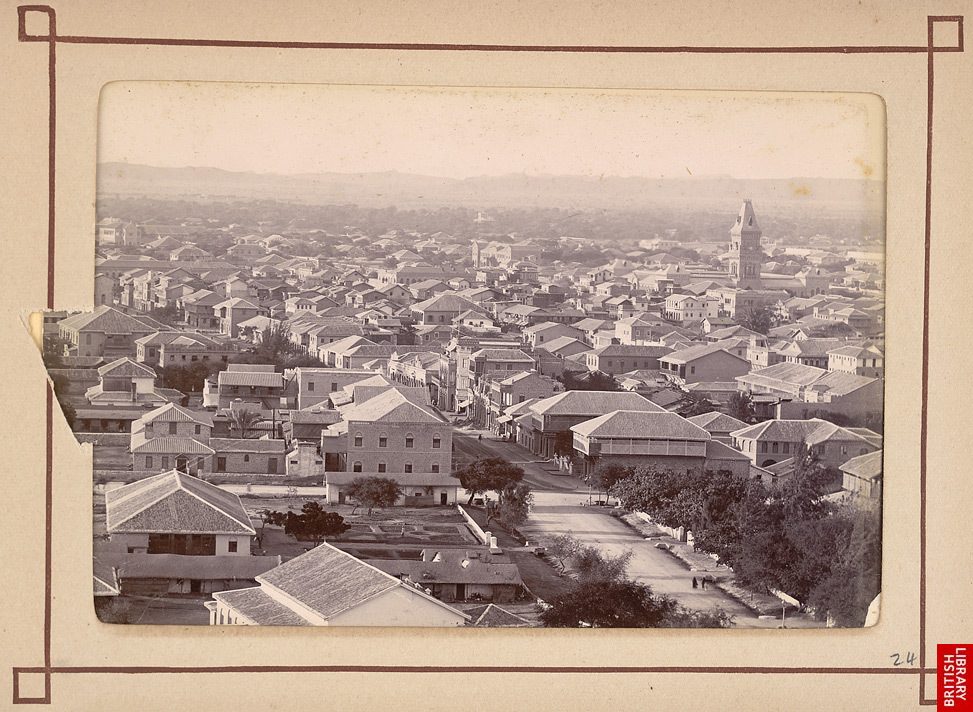
In this thesis, I have tried to unravel the identity formation of the Delhiwala, or more appropriately, the Delhi Punjabi Saudagar community, and critique their use of identity. I have tried to unearth their Punjabi roots, and whether this Punjabi linkage becomes more prominent after their migration to Pakistan, or if it a continuation of the tradition in Delhi. I have explored whether the Delhiwalas’ use of Punjabi heritage is an invented tradition and if it were so, why would it be the case and what purpose it could serve. I have highlighted how a sense of affiliation to the alien country was desired by the migrant communities, who found themselves in terrible circumstances at Partition. Moreover, I have shed light on what peril the migrants would continue to face and how the Muhajir identity would become associated with more trouble than good, and how certain communities would keep their distance from the Muhajir tag.
I have also explored other reasons why the Delhiwala community may have stuck with their Punjabi name, and what communal benefits it could entail. I have conducted interviews with various members of the community to understand what other reasons there could be if not political. I have been able to understand how communal identity functions, and how desirous it is sometimes for communities to keep their distinctiveness. I have seen how linguistics carry other than political connotations.
To sum it up, this idea of the formation of identity and tradition is more complicated than I had previously imagined, not because one cannot decipher if there is a case of invented tradition or not, but because one cannot ascertain for sure, due to the lack of tangible evidence, how a certain identity benefits someone, and if invented, when does it stop being reinforced out of a conscious effort rather than mere continuity. Further research with tangible evidence, may be able to shed better light on the formation and use of identity.
Footnotes
- Najma Shamsi, Jasmine and Journeys: The Life Quest of a South Asian Woman (2017), 5.
- Anwar Motan, A History of Memons (2006), 35.
- Naseem A. Baghpati, Mukhtasir aur Ibtidai Tareekh Qaum Punjabian Delhi wa UP (1997), 34.
- Baghpati, Ibtidai Tareekh, 36.
- At̤ā urraḥmān Shamsī, Dillī ke Panjābī Saudāgarān (1984), 44.
- Scott C. Levi, Caravans: Punjabi Khatri Merchants on the Silk Road (2016), 13.
- Shamsī, Dillī , 63.
- Baghpati, Ibtidai Tareekh, 42.
- Baghpati, Ibtidai Tareekh, 37.
- Shamsi, Jasmine and Journeys, 5.
- Sir Denzil Ibbetson. Panjab Castes. Lahore, Punjab, Pakistan; India: Lahore, (1916). 247. https://jstor.org/stable/saoa.crl.26783970.
- Baghpati, Ibtidai Tareekh , 5.
- Shamsī, Dillī , 27.
- Levi, Caravans, 46.
- Shamsī, Dillī , 87.
- Vazira F. Zamindar, The Long Partition and the Making of Modern South Asia: Refugees, Boundaries, Histories (New York: Columbia University Press, 2010), 7.
- Zamindar, The Long Partition, 34.
- Zamindar, The Long Partition, 68-69.
- Zamindar, The Long Partition, 59
- Frank Jacobs, "How the Smiths Took over Europe," Big Think, last modified April 19, 2022, https://bigthink.com/strange-maps/most-popular-last-name-europe/.
- Hobsbawm Eric, The Invention of Tradition (Cambridge: Cambridge University Press, 1992), 2-4.
- Theodore P. Wright, "Center-Periphery Relations and Ethnic Conflict in Pakistan: Sindhis, Muhajirs, and Punjabis," Comparative Politics 23, no. 3 (1991): 299, doi:10.2307/422088.
- Wright, "Center-Periphery," 299.
- Elise M. Belle et al.,"Y chromosomes of self-identified Syeds from the Indian subcontinent show evidence of elevated Arab ancestry but not of a recent common patrilineal origin," Archaeological and Anthropological Sciences 2, no. 3 (2010): xx, doi:10.1007/s12520-010- 0040-1.
- This was the case of the Welsh, who suffered from a loss of identity in England, but were able to trace their past to the majestic Celt tribes, and this would usher a sense of identity in them (Eric, Invention, 67)
- Motan, Memons, 35.
- Motan, Memons, 35.
- Zamindar, The Long Partition, 60
- Zamindar, The Long Partition, 61
- Hajira Maryam, "Stateless and Helpless: The Plight of Ethnic Bengalis in Pakistan," Al Jazeera.com, last modified September 29, 2021, https://www.aljazeera.com/features/2021/9/29/stateless-ethnic-bengalis-pakistan.
Bibliography
- Zamindar, Vazira F. The Long Partition and the Making of Modern South Asia: Refugees, Boundaries, Histories. New York: Columbia University Press, 2010.
- Ansari, Sara F. Life after partition: Migration, community and strife in Sindh, 1947-1962. 2005.
- Shamsī, At̤ā urraḥmān. Dillī ke Panjābī saudāgarān. 1984.
- Baghpati, Naseem Ahmad. Mukhtasir aur Ibtidai Tareekh Qaum Punjabian Delhi wa UP. 1997.
- Shamsi, Najma. Jasmine and Journeys: The Life Quest of a South Asian Woman. 2017.
- Motan, Anwar. A History of Memons. 2006.
- Levi, Scott C. Caravans: Punjabi Khatri Merchants on the Silk Road. 2016.
- Jacobs, Frank. "How the Smiths Took over Europe." Big Think. Last modified April 19, 2022. https://bigthink.com/strange-maps/most-popular-last-name-europe/
- Maryam, Hajira. "Stateless and Helpless: The Plight of Ethnic Bengalis in Pakistan." Al Jazeera.com. Last modified September 29, 2021. https://www.aljazeera.com/features/2021/9/29/stateless-ethnic-bengalis-pakistan
- Belle, Elise M., Saima Shah, Tudor Parfitt, and Mark G. Thomas. "Y chromosomes of self- identified Syeds from the Indian subcontinent show evidence of elevated Arab ancestry but not of a recent common patrilineal origin." Archaeological and Anthropological Sciences 2, no. 3 (2010), 217-224. doi:10.1007/s12520-010-0040-1
- Denzil Ibbetson, Sir. Panjab Castes. Lahore, Punjab, Pakistan; India: Lahore, Printed by the Superintendent, Government Printing, Punjab, 1916., 1916. https://jstor.org/stable/saoa.crl.26783970
- Wright, Theodore P. "Center-Periphery Relations and Ethnic Conflict in Pakistan: Sindhis, Muhajirs, and Punjabis." Comparative Politics 23, no. 3 (1991), 299. doi:10.2307/422088
- Eric, Hobsbawm. The Invention of Tradition. Cambridge: Cambridge University Press, 1992.
- Davis, Kingsley. “India and Pakistan: The Demography of Partition.” Pacific Affairs 22, no. 3 (1949): 254–64. https://doi.org/10.2307/2751797
- Afzal, Mohammad. “1972 Census: Population—Expected and Actual.” The Pakistan Development Review 12, no. 2 (1973): 123–34. http://www.jstor.org/stable/41258477.
- India. Census Commissioner. Census of India, 1941. Vol. 1, India. (1941). Retrieved October 1, 2022, from https://jstor.org/stable/10.2307/saoa.crl.28215532
- India. Census Commissioner. Census of India, 1941. Vol. 12, Sind. (1941). Retrieved October 1, 2022, from https://jstor.org/stable/10.2307/saoa.crl.28215545
- India. Census Commissioner. Census of India, 1941. Vol. 16, Delhi. (1941) Retrieved October 1, 2022, from https://jstor.org/stable/10.2307/saoa.crl.28215549
- Census Organization (Pakistan). Census of Pakistan, 1951: Census bulletin. Karachi. (1951)
Reproduced in full from the original paper. Recommended citation: Zubair, S. (2022). The Delhiwala community: formation and use of identity after migration to Karachi at Partition (Unpublished undergraduate project). Institute of Business Administration, Pakistan. Retrieved from https://ir.iba.edu.pk/sslace/174
Download the full paper (PDF) ↓