STAGE 1
Forming
- In the room
- Polite, careful, everyone watching you instead of each other. Long pauses.
- Your move
- Structure hard. State the aim, set the rules, run a low-risk opening round.
Practice guide · Dubai
Everything needed to design and run your first group: which format to pick, how the ninety minutes are spent, what the group does to you in week three, and who to screen out before it starts.
01 · Choose the shape
These are not interchangeable. The format sets the group size, the length of the series, how much clinical risk you carry, and how much of the talking you do. Start at the top and move down as your supervision and experience build.
You teach one clearly bounded topic. Exam stress, sleep, parenting a teenager, anxiety at work. Members learn material and practise a little, and personal disclosure stays shallow by design.
Best first group. Lowest risk, easiest to fill, and a good funnel into your one-to-one practice.
One skill per week, taught then rehearsed in the room, with a task to take away. Built on CBT, DBT or ACT material. The homework matters more than the teaching does.
Pick this when you want measurable change. Score members at session one and at the end.
Members share one situation: bereavement, caring for a parent, a new diagnosis, first year of motherhood. You hold the frame and keep it safe. The members carry the content.
Recruit through a hospital, a school or a community centre rather than open advertising.
The group itself is the material. What happens between members in the room, as it happens, is the work. Deepest format and the hardest to hold.
Not a first group. It needs specific group training, weekly supervision, and ideally a co-facilitator.
02 · The session
Write the plan before session one and keep it the same every week. The repetition is doing work. Members settle faster when they know the shape, and that leaves their attention free for the material.
One round, one sentence each, no discussion yet. It moves people from the car park into the room and shows you who arrived heavy today.
“One word for how you have arrived this evening.”
Thirty seconds on confidentiality, then name what this session covers. Short, and never skipped, because it is what makes the room safe enough to use.
“Same agreement as always. Tonight we are working on the thoughts that show up before sleep.”
One idea, twenty minutes, concrete examples. No more than that. If you need a second idea, it belongs in a second session.
“This is the pattern. Watch where it starts.”
Members apply the idea to their own material in small groups. Move between the pairs, listen, say very little. The room gets loud and that is the sign it is working.
“In threes. Ten minutes each way. I will call the time.”
Take what surfaced in the pairs and work it in front of everyone. Watch airtime here. The same two people will fill it if you let them.
“Who found something they did not expect? Anyone who has not spoken yet.”
One sentence each on what they are taking. Then one small task for the week, written down before they leave, not sent by message afterwards.
“Write the task on the card now. Bring the card back next week.”
Go round once and close the room. The point is to check nobody is walking out still opened up. If someone is, hold them back for two minutes.
“One word to close. Sameera, stay behind a moment.”
03 · The arc
Tuckman mapped this in 1965 and it still holds. Week three feels like failure to new facilitators. It is not failure, it is storming, and a group that never storms never gets to the useful part.
04 · Safety
Read the six rules aloud in session one and put them on the consent form. The screening call is fifteen minutes per person and it is the single thing standing between you and a group that falls apart in week two.
Read aloud, session one. Signed on the consent form.
Fifteen minutes, one to one, before anyone pays.
Confirm with your regulator that your licence covers group work and confirm which title you are allowed to use in the advert. Community and school settings sit with the Community Development Authority, clinical practice inside a health facility sits with the health authority for your emirate. Rules differ by emirate and they change, so verify it directly rather than copying what another practice does. Carry professional indemnity cover for group work specifically.
05 · The mechanism
Yalom named the forces doing the work. Knowing them changes how you run the room, because your job is to set these up rather than to deliver content.
"I thought it was only me." The single most common thing members report from session one.
Somebody four weeks ahead of them is visibly doing better. No explanation from you beats that.
Belonging to the group is itself the treatment. Protect it and attendance holds.
Helping another member rebuilds self-worth faster than being helped does.
Members repeat their outside patterns in the room, where you get to work with them live.
Plain teaching, delivered once, to twelve people. The most efficient hour in your week.
06 · Fill the room
A first group fails on numbers, not on skill. Fill it from people who already trust you, and set the money up so the group survives one drop-out.
Your own past clients, two GPs, a school counsellor, one HR contact. Six warm referrals beat sixty flyer views.
Who it is for in one line, the six dates, the price, how to apply. Test it on a colleague. If they cannot say who it is for in five seconds, rewrite it.
Open applications first. Announce the start date only once you hold eight screened names. This is what stops you launching with four.
Closed series, paid up front, one price. It sets the commitment, and it makes the drop-out maths work.
Room cost for the whole series plus your supervision, divided by six members. That is the floor. Price above it, so the group still stands if two people leave.
Take it at the screening call. Refund it only if you decline them.
Two to write and test the flyer, two to collect applications, two for screening calls. Book the room on day one.
07 · Hard moments
Every one of these turns up in the first two series. None of them is a sign the group is failing. Each has a move, and the move is the same every time.
08 · Measure it
Two forms and a sentence. Score at session one and at the last session. It takes five minutes, and it is the difference between “people seemed to like it” and a result you can show a referrer.
GAD-7 for anxiety, PHQ-9 for low mood. Both are free and both take two minutes. Pick one, not both.
The short Warwick-Edinburgh scale, seven items, catches change the symptom scales miss. Check its licence terms before you print it.
The four-line Session Rating Scale at the door. A drop of two points tells you before the drop-out does.
“What is different now, compared with week one?” Written, not spoken. Keep them. With permission, they become your next flyer.
Average change on the symptom scale, attendance rate, and how many finished. That is your outcome letter to whoever referred.
A member who scores low at session one has nowhere to fall. Treat their wellbeing score as the measure instead.
09 · A worked series
A sample skills group, so you can see the whole shape before you write your own. One idea a week, taught then rehearsed, with a task to carry out of the room. Swap the topic and the skeleton still holds.
Trigger, thought, body, action. Each member draws their own loop on one page.
Task: Log three episodes this week.Breathing at six breaths a minute, grounding, and the ninety second rule for adrenaline.
Task: Two minutes, twice a day.Catch it, write it, weigh it. The evidence table, done in pairs.
Task: One thought record a day.What each member has stopped doing, ranked. The first step up the ladder.
Task: Do step one. Report back.What the anxiety is guarding. One value-driven action for the week.
Task: Do it, and write down what happened.Each member writes their own relapse plan on one page. Closing round, feedback forms, referrals for anyone who needs more.
Task: Keep the plan somewhere you will see it.10 · Two in the room
Past ten members you need a second pair of eyes. And once the group moves online, the room you were holding is now six kitchens and a car. Both need their own rules.
One leads the content, one watches the room.
Screens tire people faster than rooms.
11 · Launch
Work down the list. On the web page your ticks are saved in this browser, so close it and come back. On paper, tick with a pen.
12 · Watch it done
Reading about a group only gets you so far. These are free to watch, and every link was checked on 19 September 2026. Start with the filmed Yalom groups, then the skills videos, then the theory.
 Outpatient group psychotherapy, filmedPsychotherapyNetA real outpatient group with Yalom. The closest thing to sitting in the room.
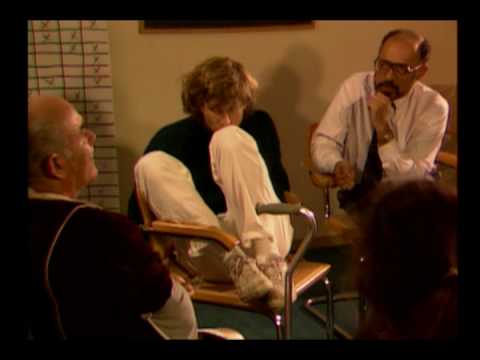 Inpatient group psychotherapy, filmedPsychotherapyNetThe inpatient version, where the membership changes every day.
 Understanding group therapy: interview with Irvin YalomPsychotherapyNetYalom on why a group reaches what one to one cannot. Pairs with section 05.
 11 therapeutic factors in group therapyDr Scott GiacomucciThe factors in section 05, taken one at a time.
 Ten therapeutic factors, from Yalom and LeszczSean WatersA walk through the book every training list puts first.
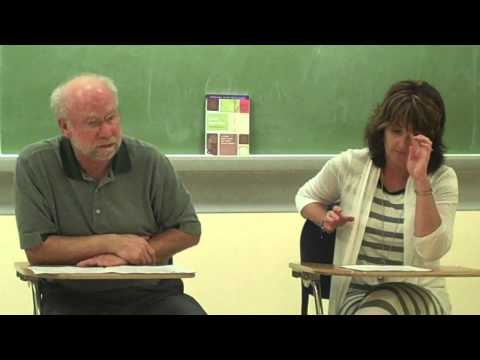 Introduction to group counseling and Impact TherapyImpact TherapyEd Jacobs and Chris Schimmel, authors of the standard group skills text.
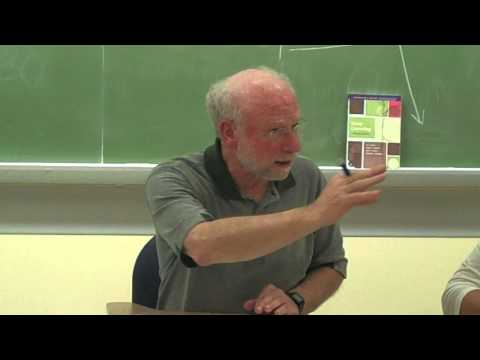 Group counseling: leadership skillsImpact TherapyCutting off, drawing out, holding the focus. The moves section 07 asks for.
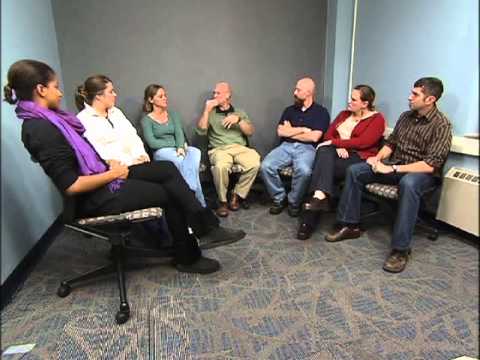 Group counselling demonstrationElizabeth ThompsonA training demonstration group. Watch one before you run one.
 Group counseling in addiction treatmentDr Jen JoyceWhat changes when members are sent rather than choosing to come.
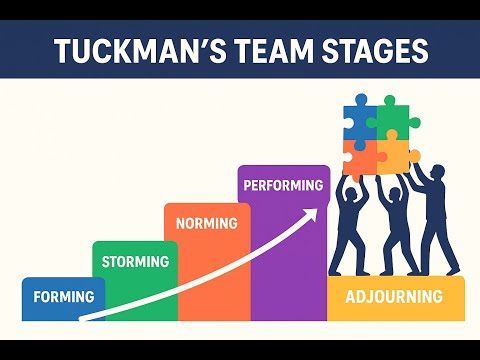 Tuckman's five stages of group developmentLearn MedicineSection 03 in a few minutes.
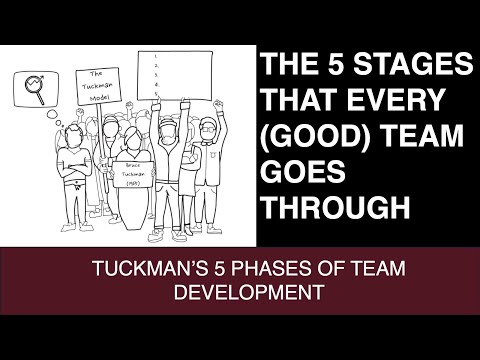 Forming, storming, norming, performingThe Right QuestionsThe same model, aimed at anyone leading a group.
 Getting help: psychotherapyCrashCourseWhere group and family therapy sit among the rest. Good for students.
 MPCE-021 counselling psychology, live sessionIGNOU RC VijayawadaA full university counselling session, free to watch.
 MPCE-023: insight as a counselling methodPsychologist Priya BhargavaFollows the IGNOU MAPC syllabus. Useful for UGC NET too.
 Guidance and counselling: meaning and aspectsInculcate LearningAimed at B.Ed, M.Ed and UGC NET Education candidates.
 Guidance and counselling: types and objectivesR2 Study PointWhere group guidance sits inside the B.Ed syllabus.
 The counselling process, explained in HindiRuchika GargThe process end to end, in Hindi.
 What is therapy and counselling? In HindiMANSA Mental Health & WellnessShort and plain. Good to send members before session one.
YouTube links open in a new tab. In the PDF, tap the title.
13 · Where to train
Training bodies, university routes and free courses. The first list takes you from an introductory weekend to a qualification. The second is India, where several of the best options cost nothing. Every link was checked on 19 September 2026.
A certificate is not a licence. Whatever you train in, confirm separately with the regulator in your own emirate, state or country that your qualification lets you advertise and charge for a group, and that you may use the title you plan to print on the flyer.
The guide prints to 23 A4 pages with the dashboard links live inside the PDF. The checklist is one page, made to be printed and ticked with a pen.