● Faith · Quran reflection · Full notes · 29 Oct 2026
Adam and Isa: six parallels and a matching count
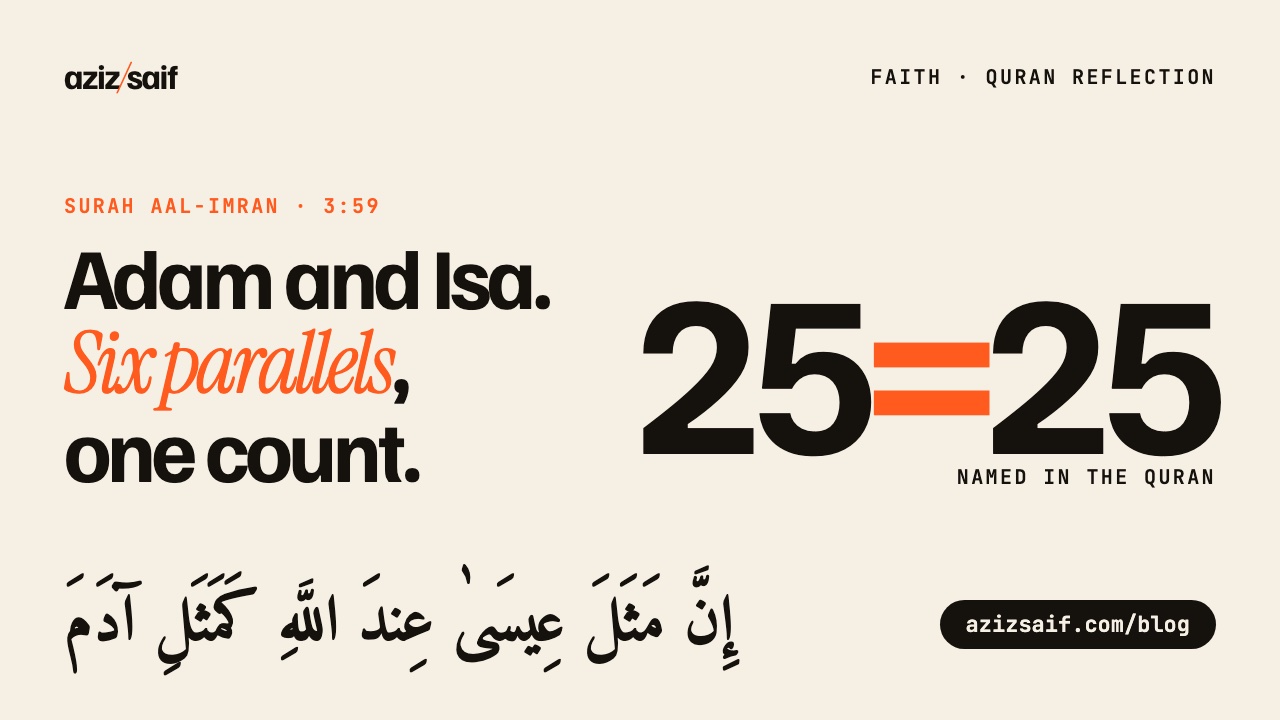
The Quran does not only tell us that Prophet Adam and Prophet Isa, peace be upon them, are alike. It shows it, point by point, and it even names them the same number of times. These notes walk through each parallel with its verse, then the reason the verse came down.
Aal-Imran 3:59
إِنَّ مَثَلَ عِيسَىٰ عِندَ اللَّهِ كَمَثَلِ آدَمَ ۖ خَلَقَهُ مِن تُرَابٍ ثُمَّ قَالَ لَهُ كُن فَيَكُونُ
"Indeed, the example of Isa with Allah is like the example of Adam. He created him from dust, then said to him 'Be', and he was."
The six parallels
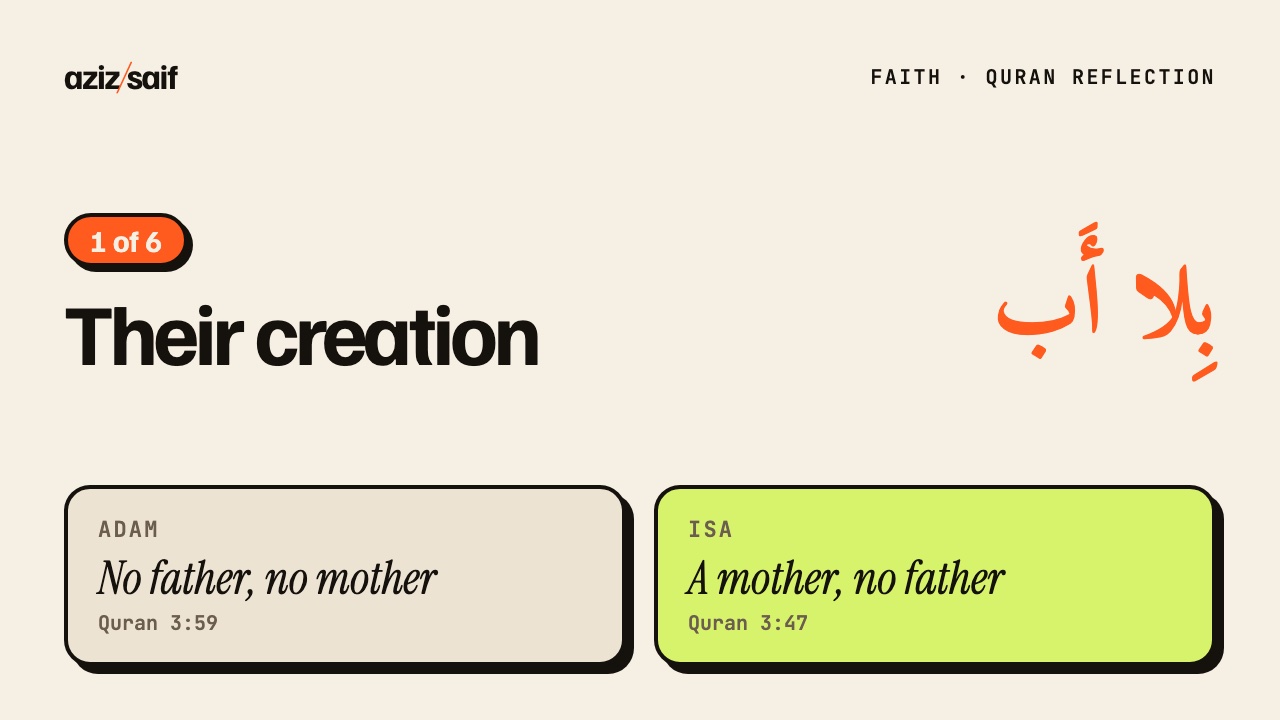
1 · Their creation
Both were made by a miracle. Adam had no father and no mother. Isa had a mother, Maryam, and no father. When the angels gave her the news, she asked how she could have a child when no man had touched her.
Adam · 3:59خَلَقَهُ مِن تُرَابٍ"He created him from dust"
Isa · 3:47وَلَمْ يَمْسَسْنِي بَشَرٌ"No man has touched me"
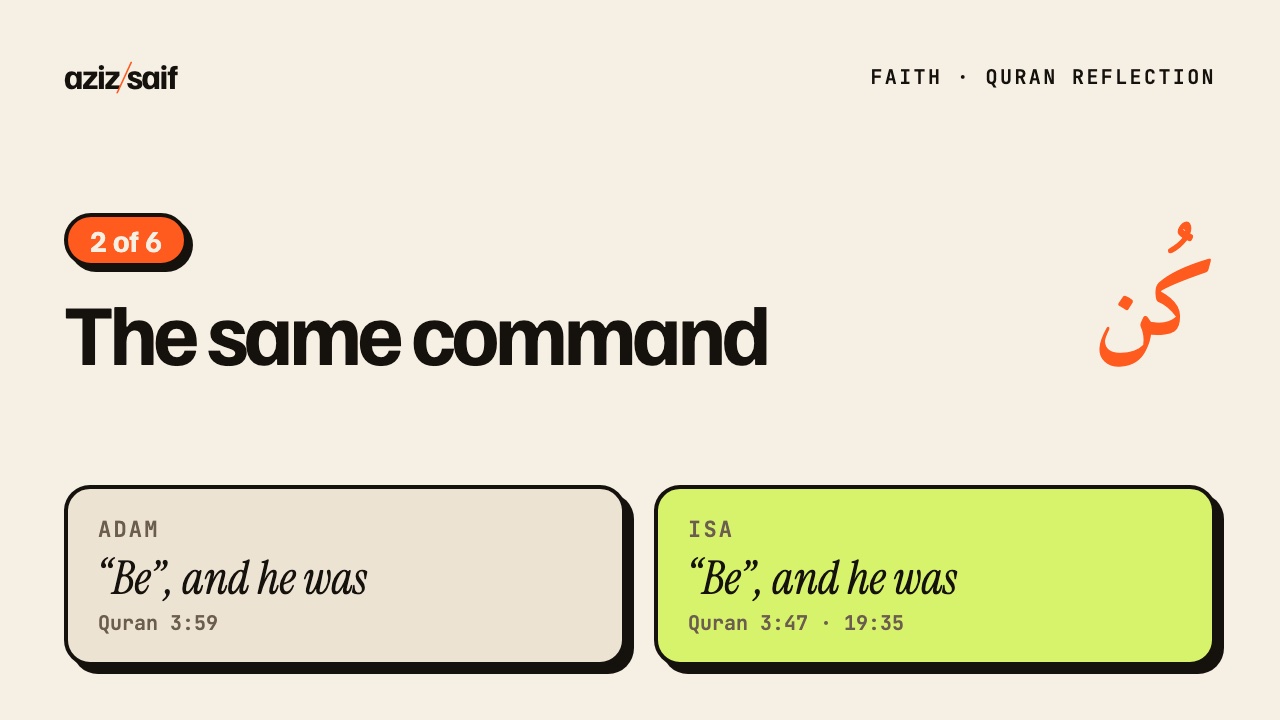
2 · The same command
The Quran uses the exact same phrase for both. Allah says "Be", and it is. For Adam it closes the very verse that compares them. For Isa it is the answer the angels give Maryam.
Adam · 3:59كُن فَيَكُونُ"Be, and he was"
Isa · 3:47 · 19:35كُن فَيَكُونُ"Be, and it is"
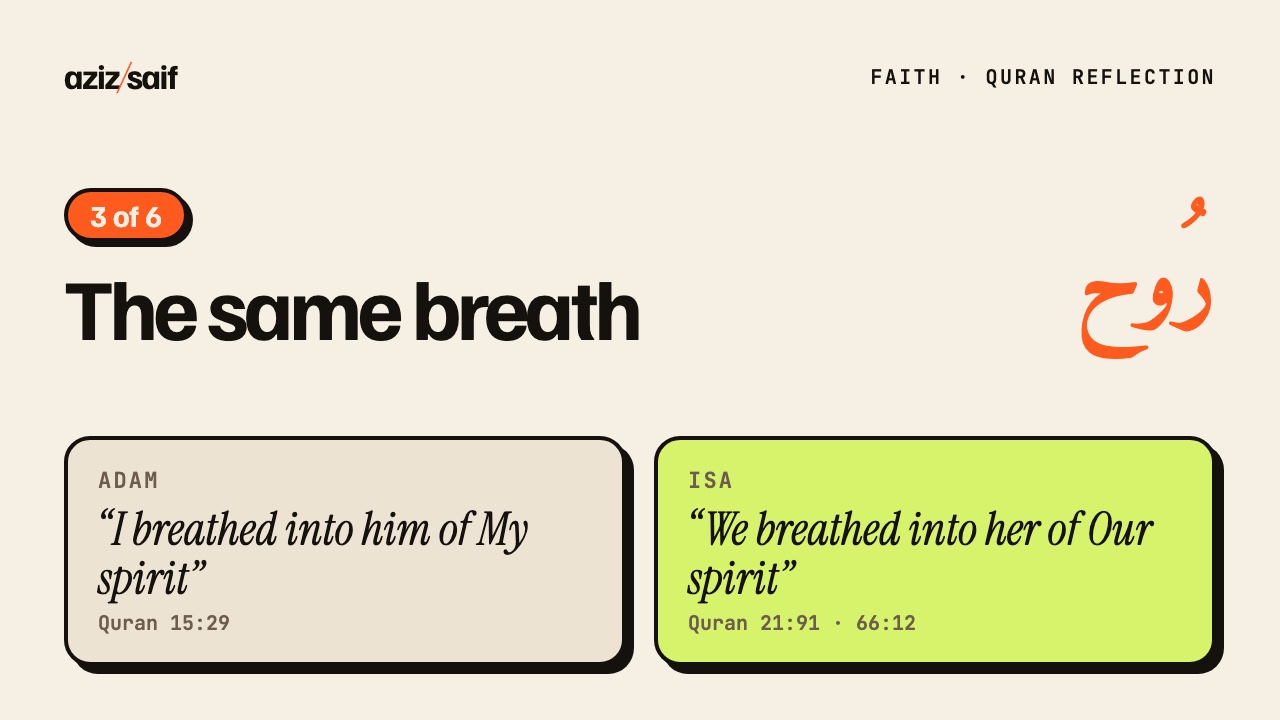
3 · The same breath
Both received their soul directly from Allah. The same verb, nafakha (to breathe), is used in both accounts.
Adam · 15:29 · 38:72وَنَفَخْتُ فِيهِ مِن رُّوحِي"I breathed into him of My spirit"
Isa · 21:91 · 66:12فَنَفَخْنَا فِيهَا مِن رُّوحِنَا"We breathed into her of Our spirit"
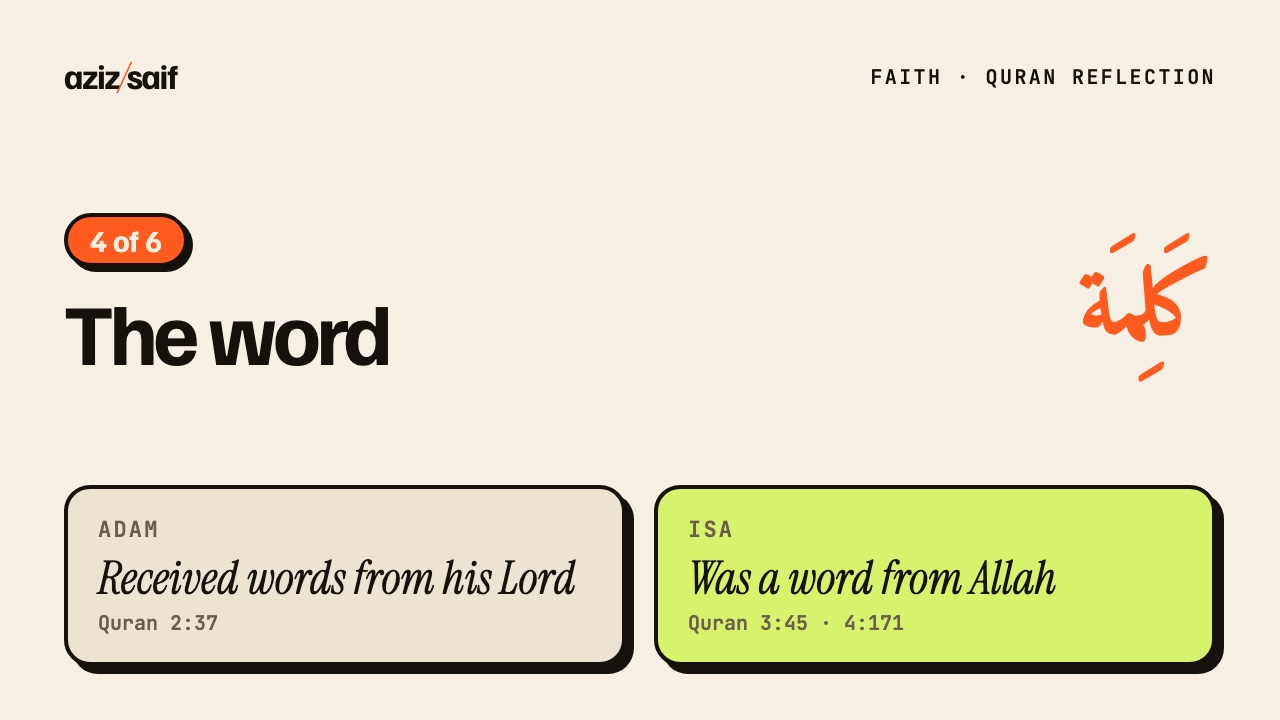
4 · The word
Adam received words from his Lord, the words of repentance he was forgiven by. Isa is himself called a word from Allah. One received words. One was a word.
Adam · 2:37فَتَلَقَّىٰ آدَمُ مِن رَّبِّهِ كَلِمَاتٍ"Adam received words from his Lord"
Isa · 3:45 · 4:171بِكَلِمَةٍ مِّنْهُ"of a word from Him"
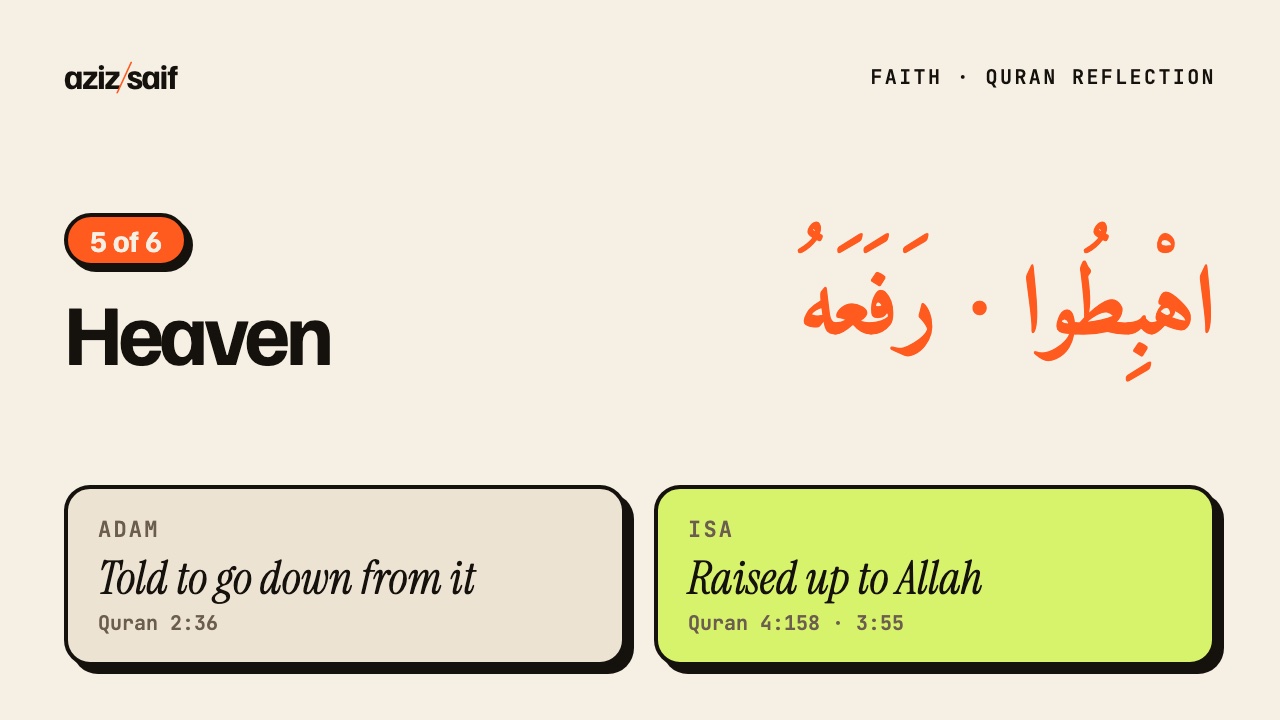
5 · Heaven
The two journeys mirror each other. Adam was told to go down from the Garden. Isa was raised up to Allah. One came down. One went up.
Adam · 2:36وَقُلْنَا اهْبِطُوا"And We said, go down"
Isa · 4:158 · 3:55بَل رَّفَعَهُ اللَّهُ إِلَيْهِ"Rather, Allah raised him to Himself"
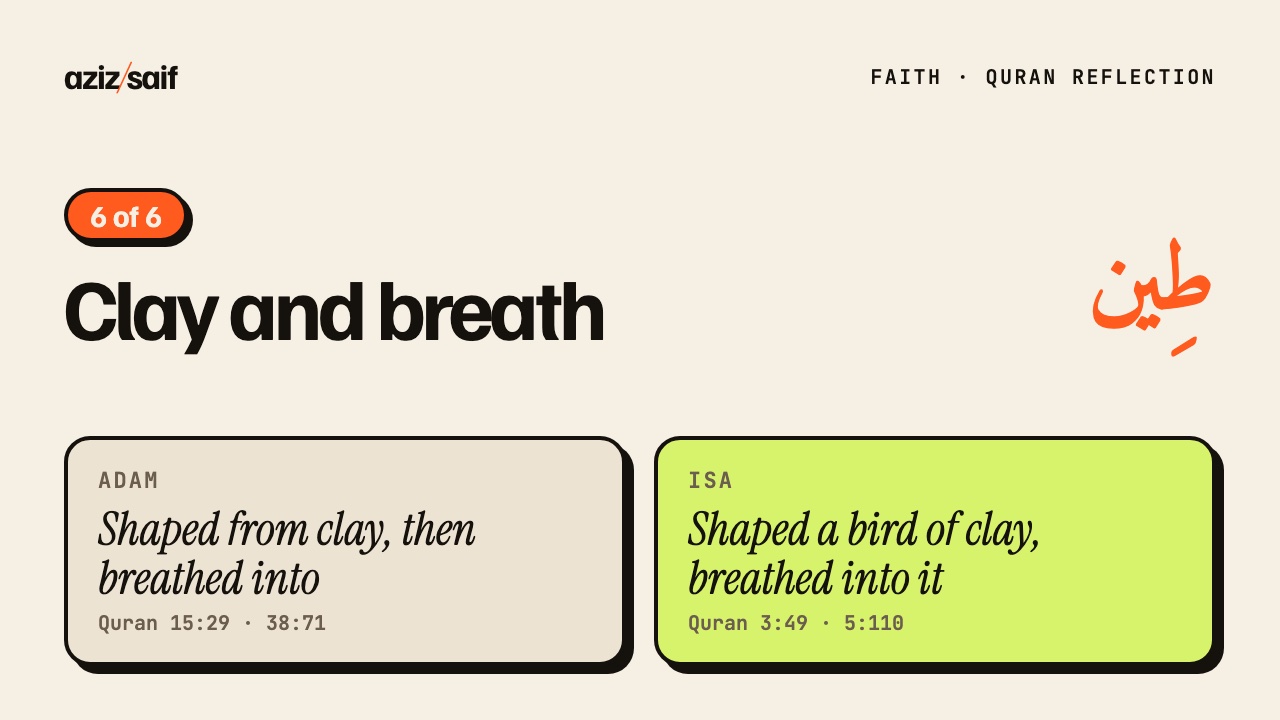
6 · Clay and breath
Adam was shaped from clay and then breathed into. One of Isa's miracles was to shape a bird from clay and breathe into it, and it became a bird by Allah's permission. Isa's miracle echoes the way Adam was made.
Adam · 38:71إِنِّي خَالِقٌ بَشَرًا مِّن طِينٍ"I am creating a human from clay"
Isa · 3:49 · 5:110فَأَنفُخُ فِيهِ فَيَكُونُ طَيْرًا بِإِذْنِ اللَّهِ"I breathe into it and it becomes a bird, by Allah's permission"
Even the count matches
Adam is named 25 times in the Quran. Isa is named 25 times. Two prophets the Quran sets side by side carry the same count. And the one place the two names stand together in a single verse is 3:59, the verse that draws the comparison.
The count is of the names themselves. Titles such as al-Masih (the Messiah) or "son of Maryam" used alone are counted separately.
Why the verse came down
The scholars of tafsir say this passage answered a Christian delegation from Najran, in the south of Arabia, who came to the Prophet ﷺ in Madinah. Their argument was simple. Isa had no father, so how could he be anything other than the son of God?
The Quran replies with one name: Adam. If having no father makes someone divine, then Adam, who had no father and no mother, would have a greater claim. No one calls Adam God. So Isa's birth proves nothing about divinity. It proves the power of the One who said "Kun", Be.
The next verses (3:60 to 3:61) continue the same exchange and end with the invitation to the mubahala, a mutual prayer between the two sides.
All six at a glance
| # | Parallel | Adam | Isa | Verses |
|---|
| 1 | Creation | No father, no mother | A mother, no father | 3:59 · 3:47 |
| 2 | Command | "Be", and he was | "Be", and he was | 3:59 · 19:35 |
| 3 | Breath | "I breathed into him" | "We breathed into her" | 15:29 · 21:91 |
| 4 | Word | Received words | Was a word from Allah | 2:37 · 3:45 |
| 5 | Heaven | Sent down | Raised up | 2:36 · 4:158 |
| 6 | Clay | Shaped from clay, breathed into | Shaped a clay bird, breathed into it | 38:71 · 3:49 |
All 7 thumbnails
Tap any image to open it full size. Free to share with family and friends.
Questions people ask
What does Quran 3:59 say?
The example of Isa with Allah is like the example of Adam. Allah created him from dust, then said to him "Be", and he was.
How many times are Adam and Isa named in the Quran?
25 times each. The only verse where both names appear together is 3:59.
Why was the verse revealed?
The tafsir scholars link it to the Christian delegation from Najran, who argued that Isa's birth without a father made him divine. The verse answers with Adam.
Does a birth without a father make Isa divine?
The Quran's answer is no. Adam had neither a father nor a mother, and no one calls him God. Both were created, and both were servants and prophets of Allah.
Where can I read the whole passage?
Read Surah Aal-Imran 3:33 to 3:63. It covers the family of Imran, the birth of Maryam, the news given to her, Isa's miracles, and the Najran exchange.