The 1 minute 54 that started this
Every photograph on this page is a real still lifted from this video, frame by frame — the lab bench, the jasmine, the blotter strips, the rickshaw, the Oxford Street facade.
“India’s Secret Perfume Brand Took Over London”
The Brand SAGA (@TheBrandSaga) · published 13 Aug 2026 · 1:54 · ~58,000 views, ~2,000 likes at time of writing
The clip tells it as a founder fable: India supplied the fragrance world’s raw material for generations, three friends spent eleven months learning perfumery, they bottled chai and rain and rickshaws, they drove a DJ-powered auto-rickshaw through London, and they ended up on a Selfridges shelf.
The fable checks out. What it does not do — because a Short cannot — is tell you whether the opportunity underneath it is worth capital. That is the rest of this page.
Photo note: the stills below are captured from the video above and are used here to narrate and critique it. The clip’s founder and boutique scenes are stylised / AI-assisted reconstructions rather than documentary press photography — treat them as illustration, not evidence. The verified facts are separated out in the timeline that follows.
What India always had
Jasmine from Tamil Nadu. Rose and vetiver from Kannauj, distilling on the Ganga since the Gupta era. Sandalwood from Mysore. Agarwood from the north-east. Over 300 small distilleries in one town alone, and a customer list that runs through every fine-fragrance house in Paris and every private label in the Gulf.



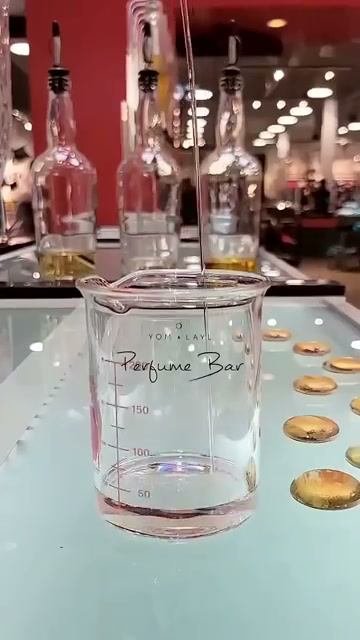
India exports the ingredient and imports the brand. A kilo of Indian jasmine absolute leaves the country at commodity price; the 50 ml bottle it ends up in sells in a European hall for the price of a return flight. The value is not in the field. It is on the label.
What three friends did about it
Sai Pogaru, Sachit Sood and Utkarsh Vijayvargiya — roughly two decades of friendship, careers at Meta, TikTok, BCG and in fintech, all three born in India and raised abroad. They founded Rahasya in 2024 and spent about eleven months learning perfumery before they let themselves make anything.


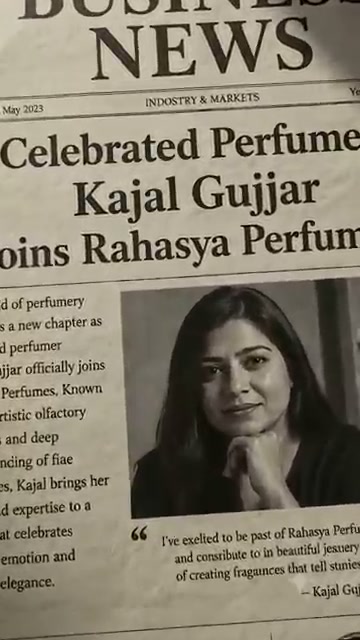
Then they hired the one thing money cannot fake in this category: a nose. Kajal Gujar, a perfumer at DSM-Firmenich in Singapore, joined the project, and the fragrances are produced at Firmenich’s perfumery centre in Mumbai. Everything is made in India.

What they chose to bottle
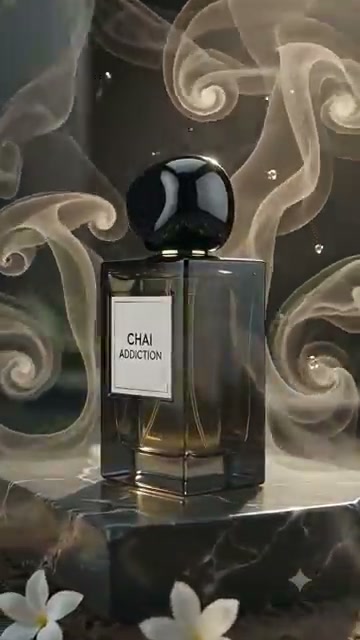
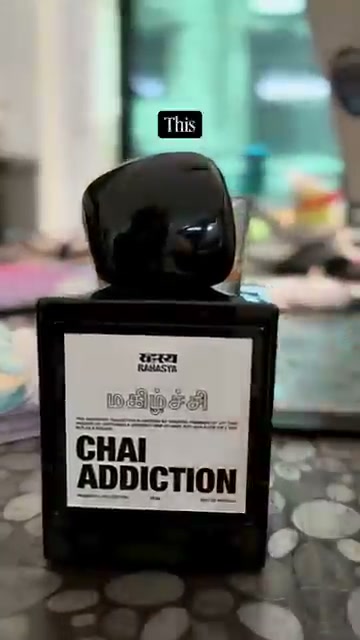
Not oud-for-the-Gulf and not another white floral for the West. They bottled specific, unglamorous, deeply recognisable South Asian memory: Chai Addiction, Cutting Rain, Rickshaw Rhythms, Hill Station, Love Marriage, Oud Mangifera, Chapter One. Seven fragrances, £132 for 50 ml.



How they got the room to look
A Soho pop-up for a few days in October 2025. Then a South Asian DJ-driven auto-rickshaw loose on the streets of London — less than a year after launch. It cost almost nothing next to a media buy and it did the one job a niche house must do: make a department-store buyer curious.



And then the shelf
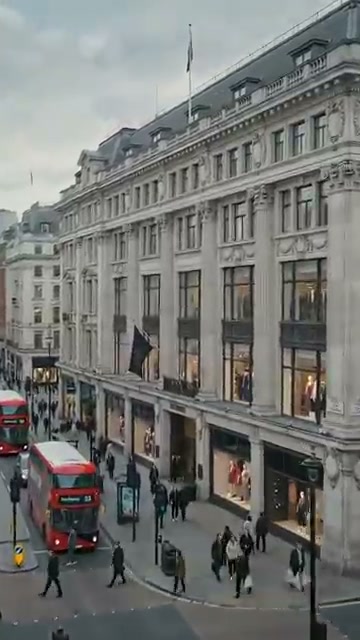
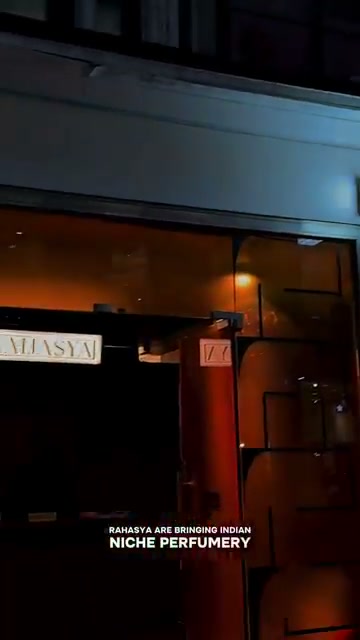
On 28 April 2026 Rahasya launched in Selfridges — London Oxford Street, Manchester Trafford, Manchester Exchange, Birmingham, and selfridges.com. Reported as the first home-grown Indian niche perfume house stocked in the chain’s Beauty Hall. They were advised early on not to say “Made in India”, on the theory that a premium Indian fragrance would not be trusted at the price. They said it anyway. That decision is the entire thesis.
First, separate the film from the file
A Short is a story engine. Before any of it becomes a business case, here is what is actually on the record — including the bits the video smooths over.
Rahasya founded by Sai Pogaru (32), Sachit Sood (33) and Utkarsh Vijayvargiya (34) — ex-Meta / TikTok, ex-BCG, and fintech-insurtech respectively. All three born in India, raised largely in Singapore.
~11 months of perfumery training before commercial creation. Perfumer Kajal Gujar (DSM-Firmenich, Singapore) onboarded; production runs at Firmenich’s Mumbai perfumery centre.
Soho pop-up, London — a few days only. First direct read on Western willingness to pay for an explicitly Indian scent story.
The DJ auto-rickshaw on London streets, under a year after launch. Earned-media stunt, negligible spend, national coverage.
Selfridges launch. All seven fragrances at £132 / 50 ml, in Oxford Street, Manchester Trafford, Manchester Exchange, Birmingham and selfridges.com. Beauty-hall neighbours include Loewe, Tom Ford, Amouage, Byredo, Nishane, Borntostandout.
Selfridges campaign shot by Pranoy Sarkar, using actual raw materials — saffron, black tea, florals — in the make-up and set.
India launch planned, deliberately last. Build Western credibility first, then come home. This ordering is a strategy choice, not a delay.
Rahasya is Singapore-registered. Singapore press called it the first Singapore fragrance brand in Selfridges; Indian press called it the first Indian niche house. Both are defensible — the founders are Indian, the juice is made in Mumbai, the story is entirely Indian, the cap table sits offshore. For a feasibility read this matters: the winning structure so far was Indian product, Indian story, foreign holding company, Western first market.
What India’s perfume market is actually worth
Every research house measures a different box — perfume alone, perfume plus deodorant, fragrance ingredients, retail value versus wholesale. The spread is enormous. Here is the honest range rather than the single flattering number.
India perfume / fragrance market — who says what (USD million)
Technavio’s widely quoted 23.7% CAGR (+USD 3,795.5mn over 2026–30) is a clear outlier against every other house and almost certainly reflects a broader scope definition. It is excluded from the modelling below rather than averaged in — averaging an outlier is how feasibility studies get to be wrong politely.
What is actually growing
Premium, not mass
Mass was still the largest revenue segment in 2024, but premium is the fastest-growing. In comparable Western data, prestige fragrance grows ~12% against ~4% for mass.
EDP over EDT
Eau de Parfum now holds ~61.5% of format share against 38.5% for Eau de Toilette — a straight premiumisation signal, higher oil load and higher ticket.
Deodorant money migrating
The old ₹200 deodorant P&L is losing wallet to ₹500–2,500 EDPs. Fogg-type incumbents are answering with more launches into narrower niches.
Digital discovery
300 million-plus online shoppers made fragrance discoverable in Tier-II and Tier-III cities where premium was never physically stocked.
The proof of the migration is in the operators, not the reports. Bella Vita Luxury crossed ₹450 crore revenue serving 10 million-plus consumers on affordable-luxury gifting, much of it under ₹800. Ajmal reported roughly 150% year-on-year e-commerce growth selling premium fragrance across 15+ platforms. Armaf built a business on designer-alike projection under ₹2,500. Every one of those is a bet that the Indian consumer has moved up a price band and is still moving.
The ingredient trap, in numbers
This is the single most important slide in any Indian fragrance business case, and it is the one the Short is gesturing at without quantifying.
India can double its ingredient exports and add perhaps a few hundred million dollars. India can take one percent of the global niche-fragrance shelf and add more than that — because the value it would be capturing is the 93–99% it currently gives away. Rahasya is not a perfume story. It is a value-capture-migration story that happens to smell nice.

Where the £132 actually goes
Modelled on Rahasya’s published price and standard department-store trade terms. Figures are illustrative — the brand does not publish its cost base — but the structure is the industry’s, not a guess.
| Line | £ per 50 ml bottle | % of shelf price | Basis |
|---|---|---|---|
| Shelf price at Selfridges | 132.00 | 100.0% | Published RRP, incl. UK VAT |
| less UK VAT @ 20% | (22.00) | −16.7% | Statutory |
| Net retail value | 110.00 | 83.3% | |
| less retailer margin @ 45% | (49.50) | −37.5% | Department stores typically take 40–60% of retail |
| Wholesale price to the brand | 60.50 | 45.8% | Consistent with 40–50% of RRP norm |
| less COGS — juice, glass, cap, carton, fill | (12.00) | −9.1% | Niche build; heavy glass, real naturals |
| less freight, duty, testers & discovery sets | (8.50) | −6.4% | Mumbai–UK, plus the sampling tax on niche |
| less retail media, staff training, launch support | (6.00) | −4.5% | The department-store obligations nobody quotes |
| Contribution per bottle | 34.00 | 25.8% | Before central overhead |
Contribution per bottle by channel (£) — same product, four routes to market
DTC assumes the same £132 incl-VAT price, £12 COGS, £6 fulfilment and payment, and CAC of £30 on a first order versus £6 blended on repeat. India marketplace assumes ₹6,500 incl. 18% GST, ~25% platform commission, ₹1,250 COGS and ₹450 logistics and returns, at an indicative ₹110–115 to the pound. Rates are illustrative, not quoted.
The department store is not the profit engine — it is the credential. It pays about 40p in the pound of what your own website pays you, and it demands testers, training and retail media on top. You take the shelf because it is the only thing that makes an unknown Indian house believable at £132, and then you monetise that belief on channels you own. Any Indian fragrance business plan that treats a Selfridges listing as the revenue line has the model upside down.
What a new Indian niche house could realistically take
| Layer | Size | Definition and why |
|---|---|---|
| TAM — India perfume market, 2026 | ~$2.5bn | Everything sold as perfume in India, mass to prestige |
| SAM (domestic) — premium + niche slice | $300–375mn | Assumes 12–15% of value sits above the ₹2,500 line, the fastest-growing band |
| SAM (export) — addressable niche doors | $150–250mn | Annual trade through the UK / EU / GCC niche doors an Indian house could realistically be listed in, within a $56–57bn luxury fragrance industry |
| SOM — year 3, well executed | $1.2–4.5mn | 12,000–35,000 bottles a year blended across export wholesale and owned DTC |
Break-even, stated plainly
A credible seven-SKU niche house carries roughly £0.9–1.2mn a year of fixed cost once you fund creation fees, moulds and packaging tooling across seven SKUs, samples and discovery sets, London PR and trade shows, and a team of six to eight. Against that:
~30,000 bottles a year
At £34 contribution. That is a lot of 50 ml bottles for a brand nobody has heard of, and it is why wholesale-only niche houses die.
~20,000–24,000 bottles
At roughly £50 blended contribution. Achievable in year three with one strong door and a working DTC engine.
~13,000–16,000 bottles
At £70–86 on a repeat-heavy base. Hardest to start, cheapest to sustain, and the only version that compounds.
What kills this
The Made-in-India price ceiling
The advice Rahasya was given — hide the origin — exists because the discount is real. A house that cannot hold £120–150 collapses into the ₹2,500 Armaf band, where the margin structure above does not work.
The department-store margin trap
40–60% of retail, plus testers, staff training and retail media. Scale wholesale before DTC works and you grow revenue into a loss.
Single-nose dependency
One perfumer at one house is the brand’s entire creative IP. Losing that relationship mid-collection is a two-year setback, not a hiring problem.
Naturals volatility
Sandalwood, oud and jasmine absolute are agricultural and regulated. A story built on real naturals cannot reformulate quietly when the crop moves.
The home-market price mismatch
£132 is roughly ₹14,000–15,000. India’s premium volume sits an order of magnitude below that. The 2027 India launch needs a genuinely different price architecture, not a translated one.
Story fatigue
Chai, monsoon and rickshaw are a finite well, and every Indian challenger brand is now drinking from it. Second collections are where narrative brands are actually judged.
Feasible — but only in one shape
GO, conditionally.
Indian niche perfumery is feasible as an export-first, story-led, DTC-anchored business. It is not feasible as a domestic premium launch, and it is not feasible as a wholesale-led one. The market is growing at a defensible 9–11% with premium outrunning mass, the structural value gap between what India supplies and what India captures is enormous, and Rahasya has now proved a Western beauty hall will stock an unapologetically Indian name at £132.

The first six moves

Sources
- The Brand SAGA — “India’s Secret Perfume Brand Took Over London” (13 Aug 2026) — source clip and all photography on this page.
- Homegrown India — Rahasya’s Selfridges campaign by Pranoy Sarkar; and the DJ-driven rickshaw on London’s streets.
- The Star (ASEAN+) — “Rahasya is first Singapore fragrance brand to launch in Britain’s Selfridges”, 24 Apr 2026.
- The Nod Mag; Sludge Mag; New Wave Magazine — founder profiles, collection, £132/50ml pricing, door list.
- The Straits Times — “Story of modern India through the scent of rainy days, musty bookstores”.
- Grand View Research — India Perfume Market Size & Outlook: USD 2,354.3mn (2024) → USD 4,079.1mn (2030), 9.6% CAGR; India = 4.1% of the global perfume market.
- Renub Research — India Perfume Market: USD 2.32bn (2025) → USD 4.18bn (2034), 6.73% CAGR.
- IMARC — India perfumes and deodorants: USD 2,601.2mn (2024) → USD 6,727.6mn (2033), 11.14% CAGR.
- Technavio — Perfume Market in India 2026–2030 (+USD 3,795.5mn, 23.7% CAGR) — treated as a scope outlier and excluded from modelling.
- Indian Retailer — India fragrance market ~₹12,500–14,500 crore (2025); Kotak forecast USD 2.12bn by 2028; Bella Vita ₹450+ crore; Ajmal ~150% YoY e-commerce growth.
- Grand View Research / Transparency Market Research / CHEMEXCIL — India essential-oils market and export values; India at 1.9% of global essential-oils revenue (2024).
- The Hind; Kannauj trade sources — 300+ distilleries, steam distillation in copper, sandalwood-base maceration, Gulf private-label demand.
- Business Research Insights / Global Growth Insights / industry trade commentary — niche perfume growth vs mass, EDP 61.5% format share, prestige +12% vs mass +4%, department-store margins of 40–60% of retail, juice at 1–7% of retail price.
Feasibility update prepared for azizsaif.com/blog, 18 August 2026. Market figures are third-party estimates and differ materially by research house and scope — ranges are given rather than single points wherever the sources disagree. The unit-economics and break-even models are illustrative structures built on published prices and standard trade terms; they are not Rahasya’s accounts and should not be read as such. Photographs are stills captured from the source video for commentary and analysis; scenes depicting the founders, the newspaper and the boutique interior are stylised reconstructions from that video, not documentary press images.