Where we start
Porter's primary activities
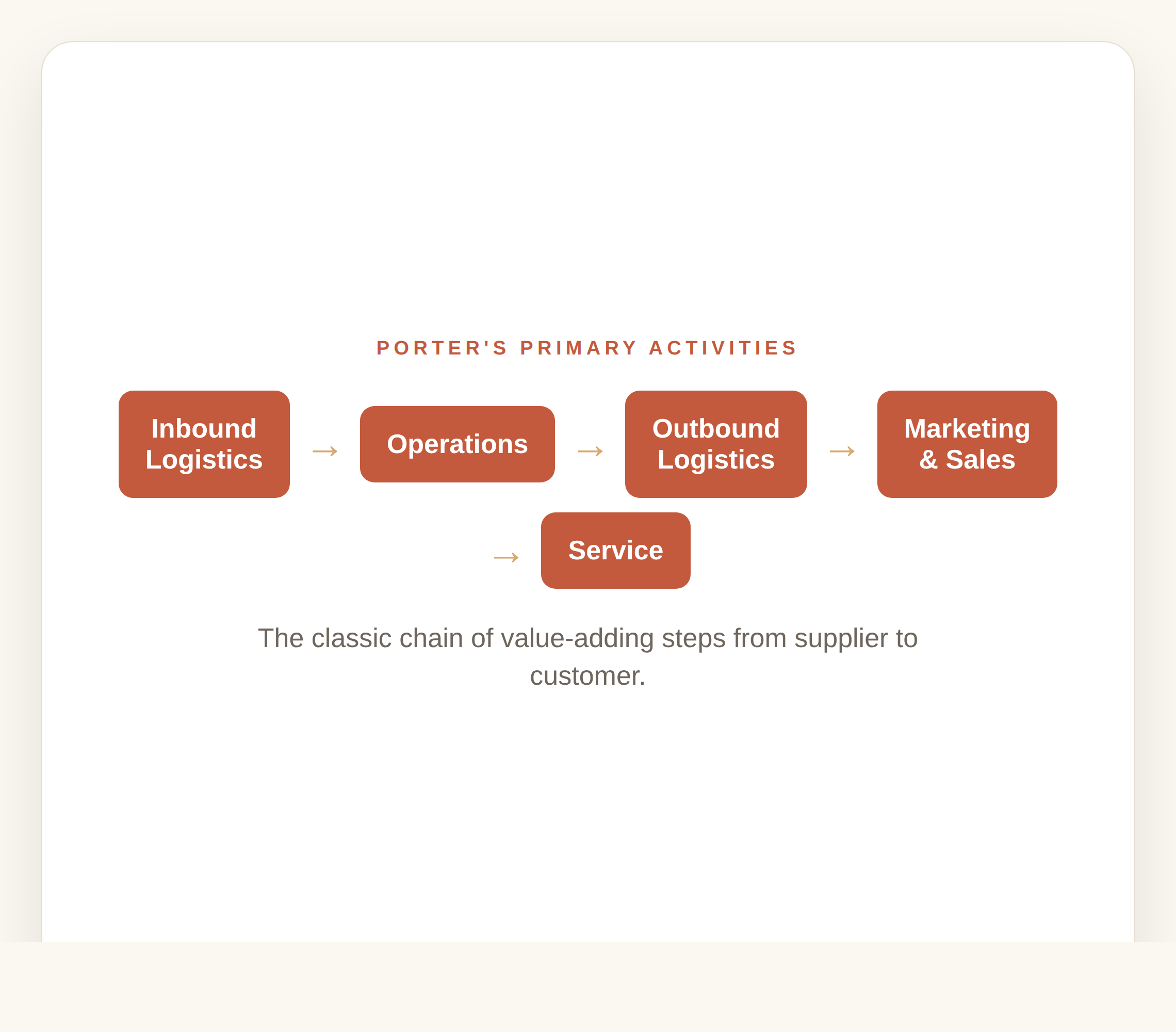
- Porter's value chain runs Inbound Logistics → Operations → Outbound Logistics → Marketing & Sales → Service.
- Each step adds value on the path from supplier to customer.
- For decades, strategy focused on optimising these five primary activities.
 🔗
🔗Underneath the chain
Infrastructure becomes strategic
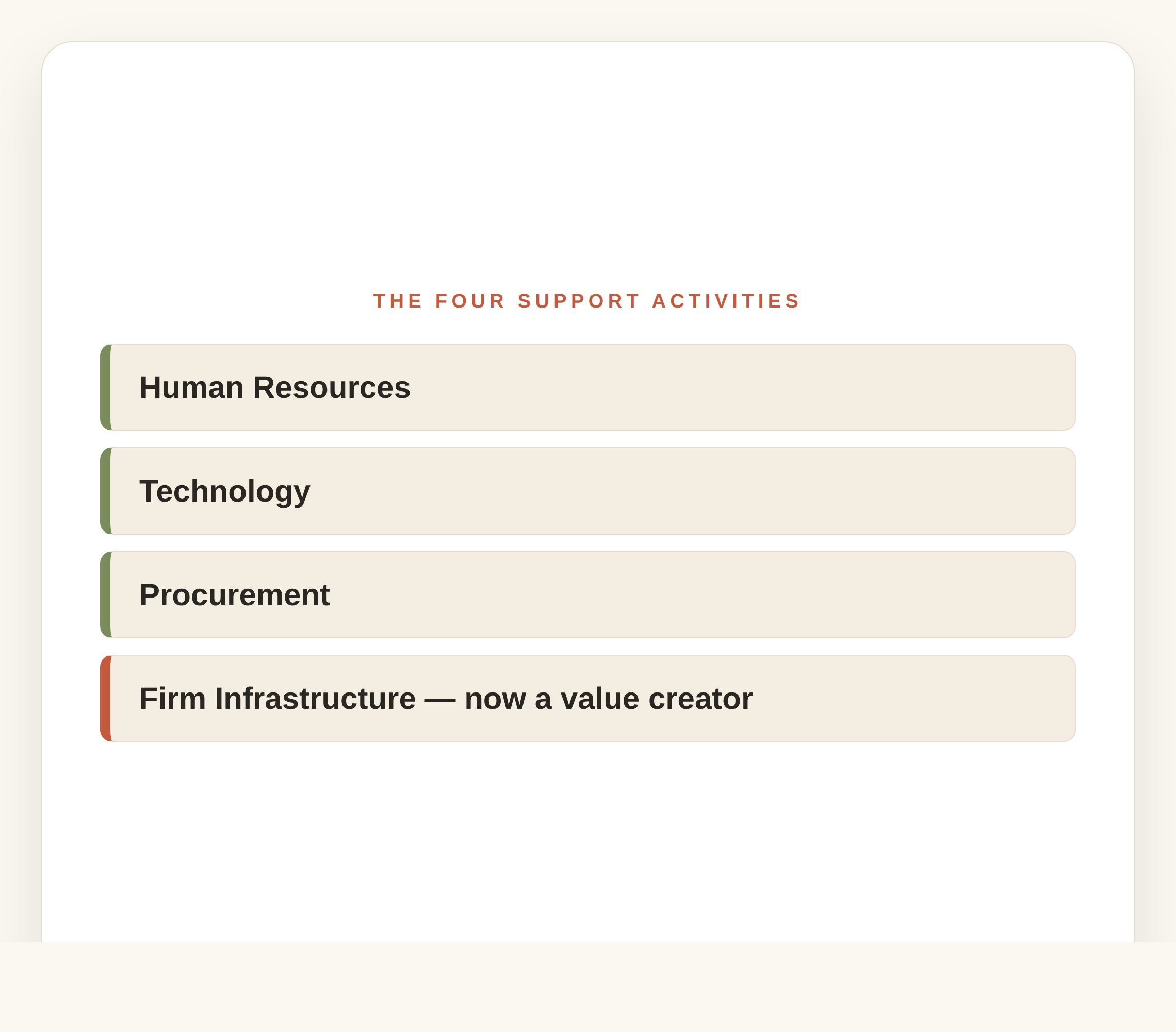
- Primary activities are supported by Human Resources, Technology, Procurement and Firm Infrastructure.
- MBA insight: the HBR article expands 'infrastructure' — the workplace itself is a strategic value-creating asset.
- The office is no longer an overhead cost; it is part of how value is made.
 🏛️
🏛️The shift
From cost centre to value creator
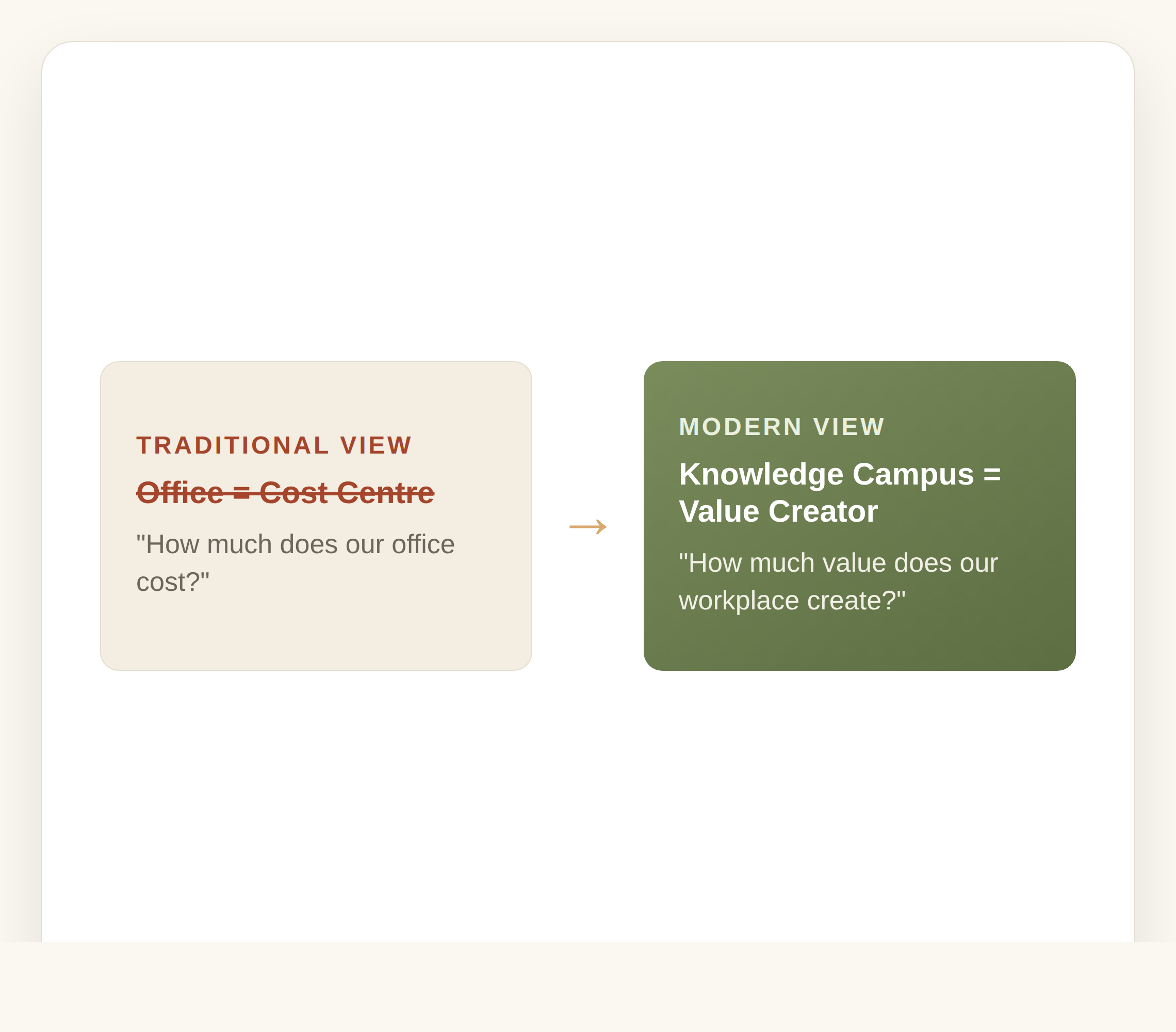
- Traditional view: Office = Cost Centre. Modern view: Knowledge Campus = Value Creator.
- Stop asking 'How much does our office cost?' — ask 'How much value does our workplace create?'
- The value shows up as faster innovation, better collaboration, wellbeing, faster decisions and better service.
 🏢
🏢The mechanism
Every activity gets stronger
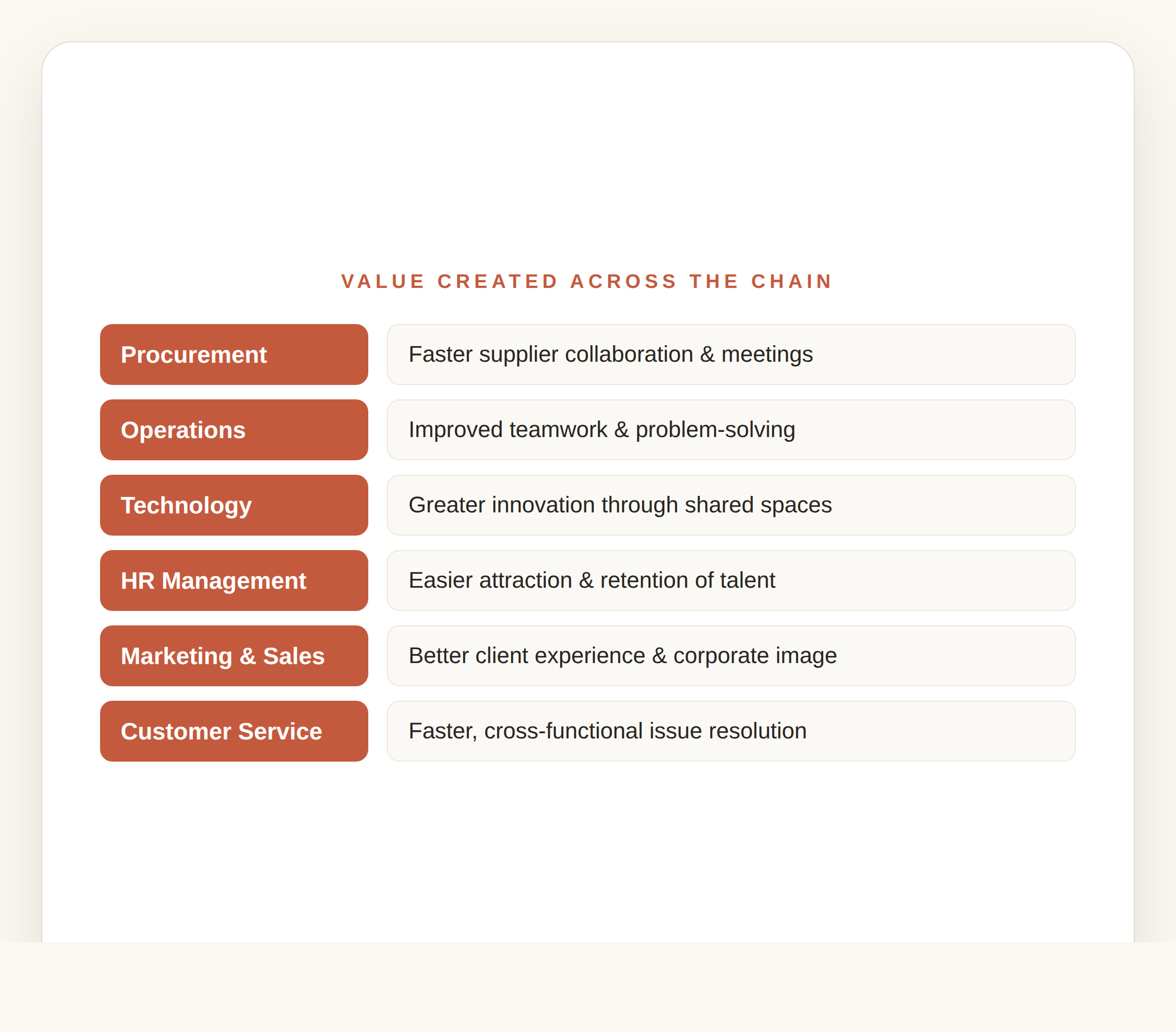
- Procurement → faster supplier collaboration; Operations → improved teamwork and problem-solving.
- Technology → more innovation in shared spaces; HR → easier attraction and retention of talent.
- Marketing & Service → stronger corporate image and faster, cross-functional issue resolution.
 ⚙️
⚙️The engine
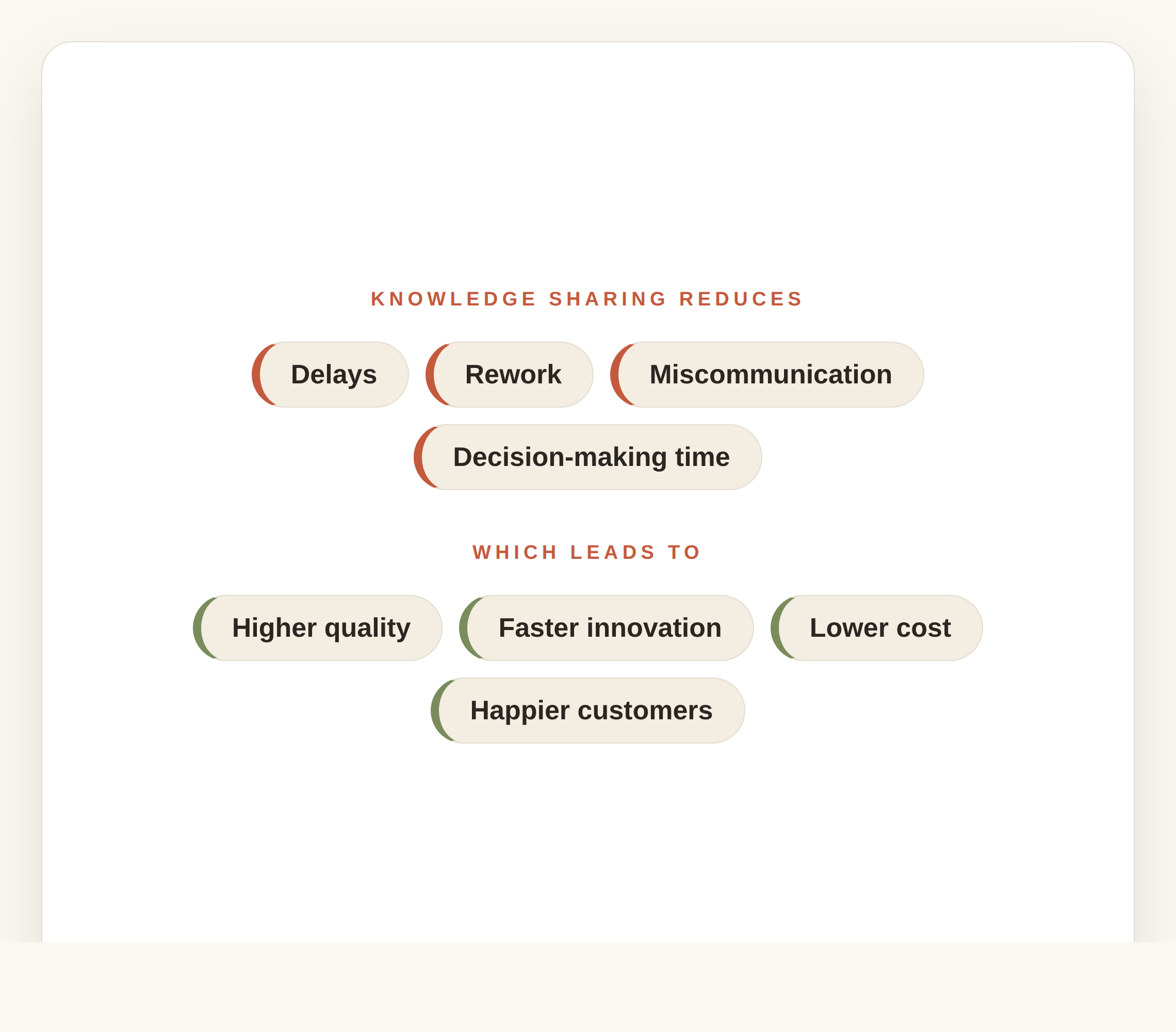
Knowledge sharing cuts waste
- It reduces delays, rework, miscommunication and decision-making time.
- That produces higher quality, faster innovation, lower operating cost and greater customer satisfaction.
- Proximity turns four sources of friction into four sources of advantage.
 🤝
🤝The logic
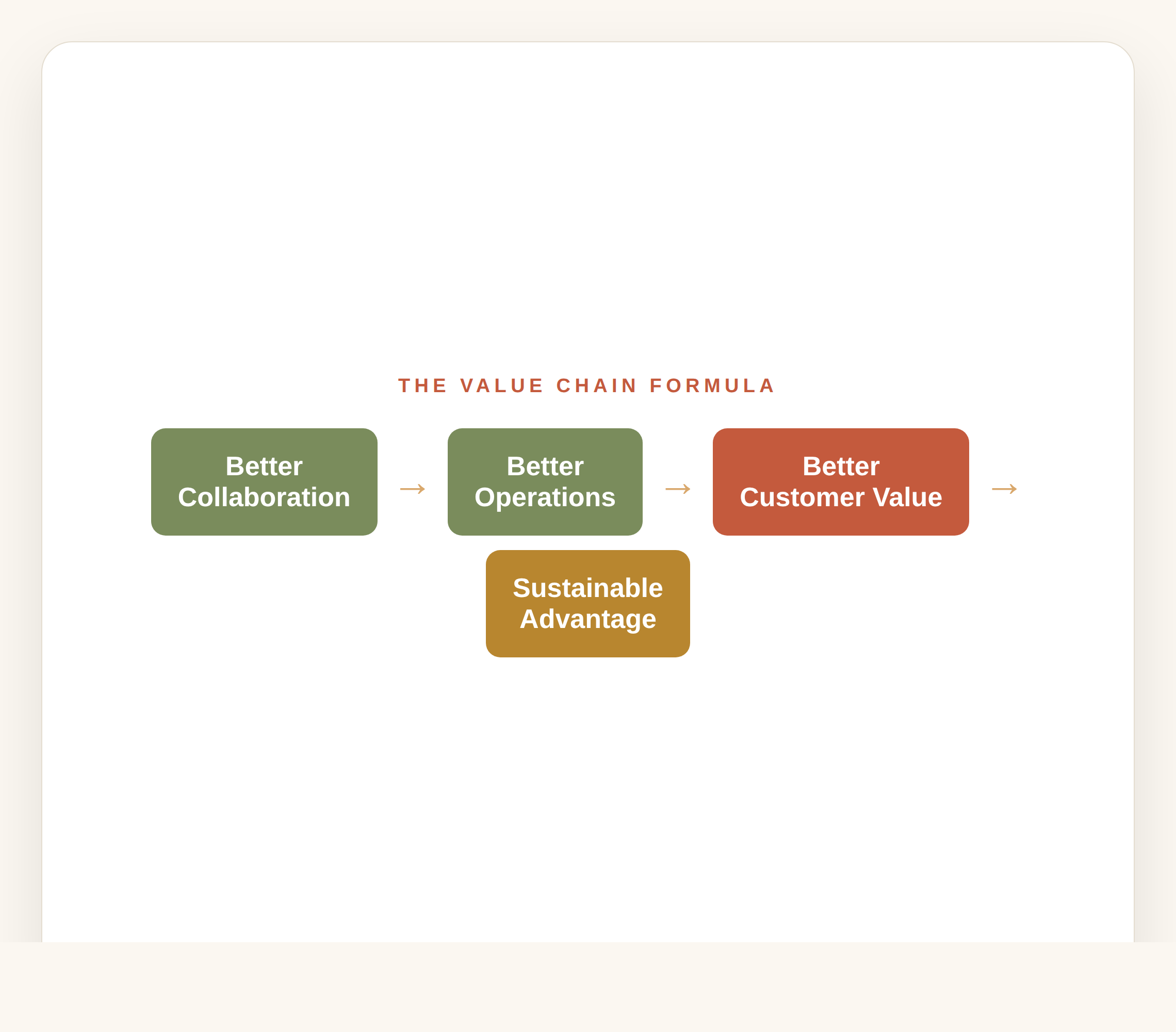
How collaboration compounds
- Better Collaboration → Better Operations → Better Customer Value → Sustainable Competitive Advantage.
- Each link strengthens the next, so gains compound along the chain.
- The campus is the environment that makes the first link happen.
 ➡️
➡️Case in point
One campus, not silos
- Traditional HQ: departments work in isolation.
- Campus approach: Flight Operations, Customer Experience, Digital, Engineering, Marketing and Sustainability share integrated workspaces and innovation hubs.
- Value created: faster service improvements, better coordination, quicker responses and continuous innovation.
 ✈️
✈️Ecosystem in action
An interconnected value chain
- Businesses, researchers, government entities and universities collaborate in one innovation ecosystem.
- Benefits: shared knowledge, joint innovation, faster technology adoption, stronger supplier partnerships and improved sustainability.
- Instead of isolated companies, Expo City creates an interconnected value chain.
 🌍
🌍Proximity pays
Microsoft · Oracle · IBM · Cisco · Google
- Home to global technology leaders and numerous startups in one hub.
- Benefits: knowledge spillovers, talent mobility, shared expertise and innovation partnerships.
- It reduces time to develop new products and services — proximity accelerates value creation.
 💻
💻Scale case
Engineers to planners, side by side
- Campuses bring together software engineers, supply-chain planners, procurement, data scientists and customer-service specialists.
- Working closely enables faster decisions, improved forecasting and better inventory management.
- More efficient logistics and an enhanced customer experience — every improvement strengthens the value chain.
 📦
📦New input
Knowledge joins materials and capital
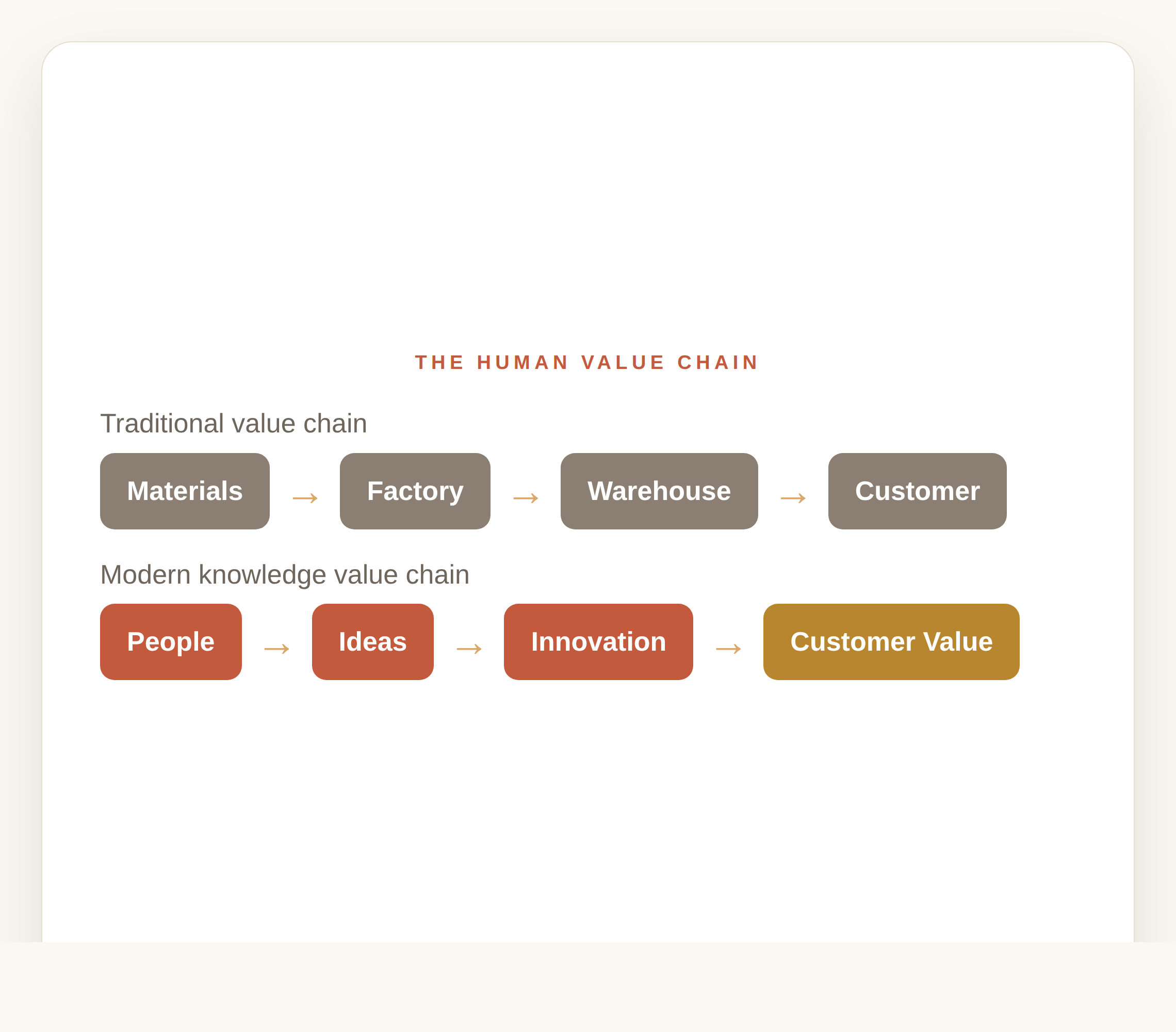
- Traditional chain: Materials → Factory → Warehouse → Customer.
- Modern knowledge chain: People → Ideas → Innovation → Better Processes → Better Products → Customer Value.
- Knowledge has become a critical value-chain input, alongside materials and capital.
 💡
💡Wellbeing = performance
People power the chain
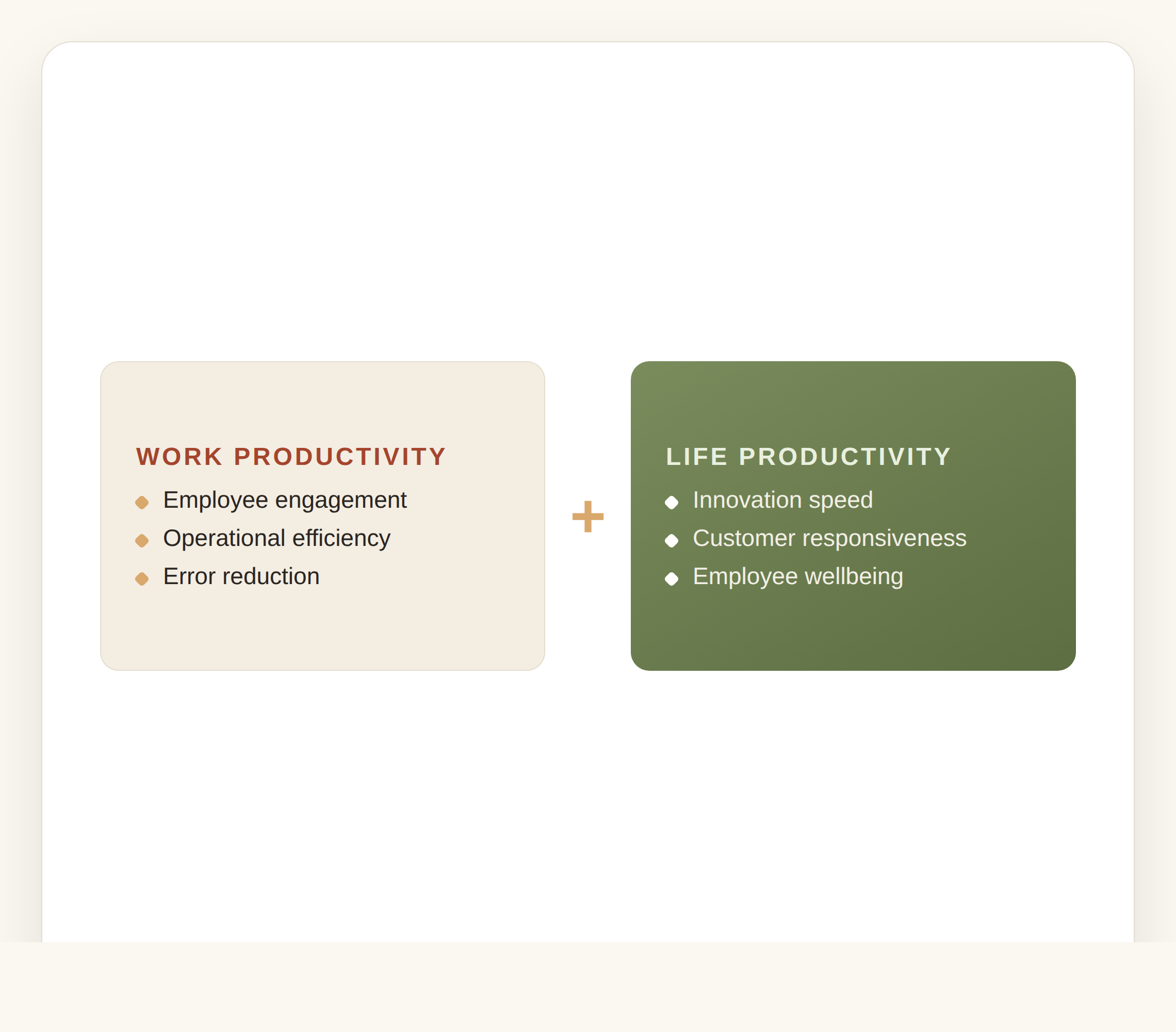
- The article distinguishes Work Productivity from Life Productivity.
- For value-chain managers both shape engagement, operational efficiency, error reduction, innovation speed and customer responsiveness.
- Better employee wellbeing often leads to better value-chain performance.
 🌿
🌿Measure what matters
Beyond cost per employee
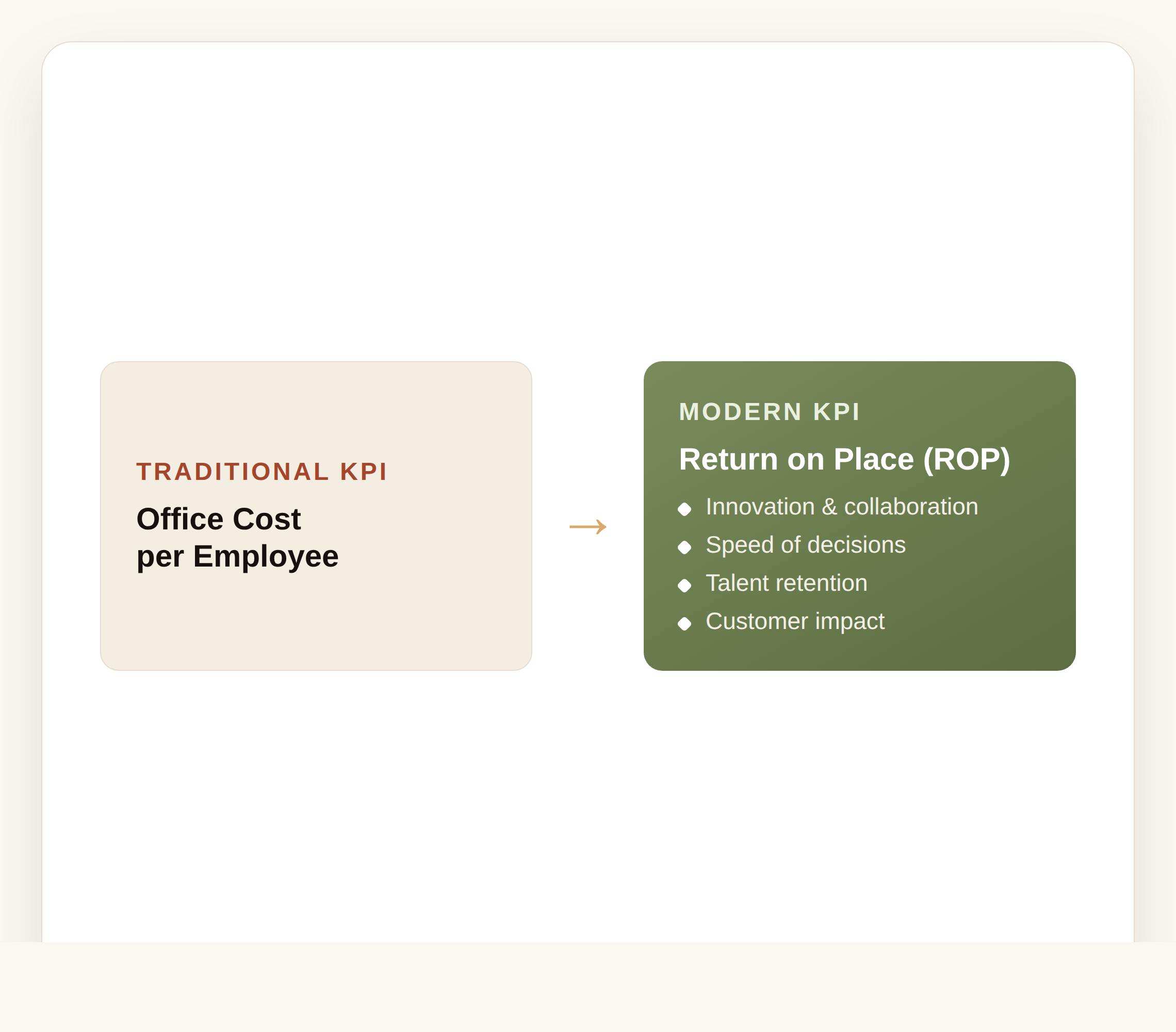
- Traditional KPI: office cost per employee. Modern KPI: Return on Place.
- ROP measures innovation generated, collaboration frequency, speed of decision-making and talent retention.
- It also tracks customer impact and operational improvements — the workplace becomes an investment in advantage.
 📈
📈Where it fits
Technology + humanity together
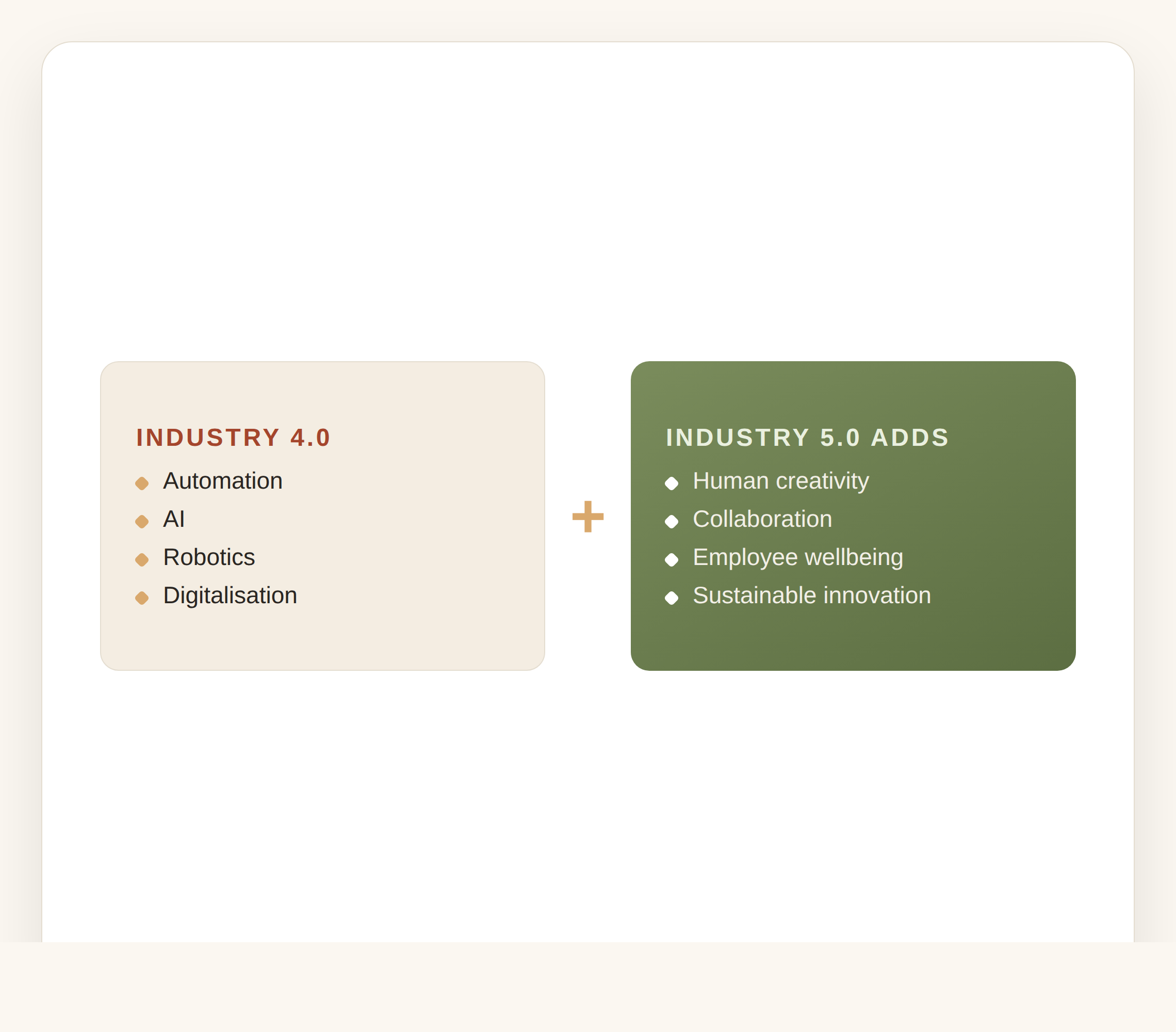
- Industry 4.0 focused on automation, AI, robotics and digitalisation.
- Industry 5.0 adds human creativity, collaboration, employee wellbeing and sustainable innovation.
- The Urban Knowledge Campus is a practical example of Industry 5.0 in action.
 🤖
🤖Your turn
Design a new Dubai HQ
- Imagine DP World is planning a new Dubai headquarters. As value-chain managers, which departments should be co-located?
- How could the campus improve logistics operations and supplier collaboration?
- What customer benefits might result — and which KPIs would demonstrate the value?
 🏗️
🏗️Debate
Defend your position
- Q1 (LO1): How can an Urban Knowledge Campus improve each stage of Porter's value chain?
- Q2 (LO2): Which UAE firm benefits most — Emirates, DP World, ADNOC or Careem? Explain your choice.
- Q3 (LO3): As a Dubai manufacturing CEO, would you invest AED 2 billion in a knowledge campus? Justify it.
 ❓
❓Why it matters here
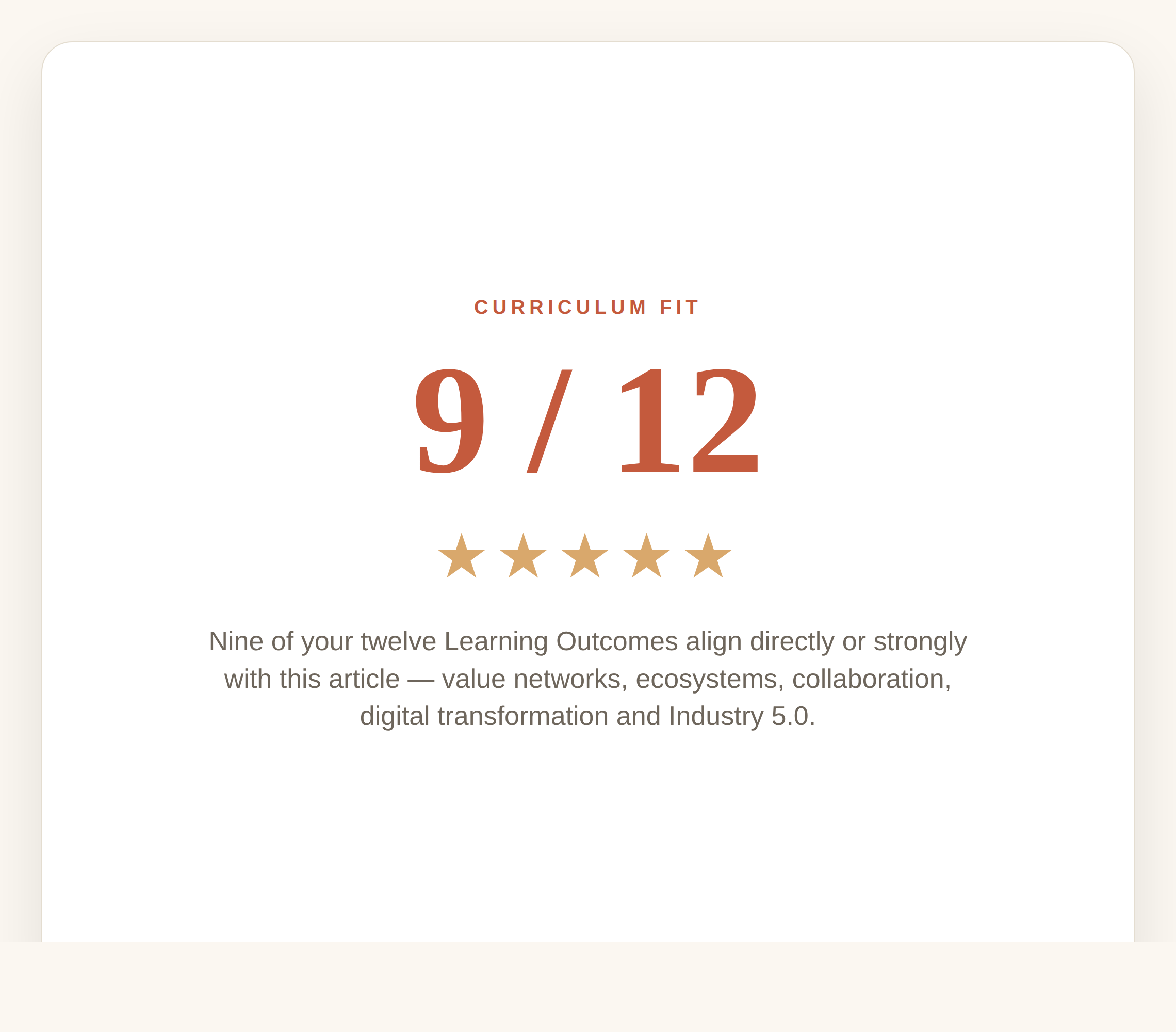
9 of 12 Learning Outcomes align
- Nine of your twelve LOs align directly or strongly with this article.
- Strongest fits: value networks and ecosystems, collaboration across organisations, and emerging global value-chain trends.
- It also connects to digital transformation, smart cities and Industry 5.0 thinking.
 🎯
🎯The bigger map
One connected strategic framework
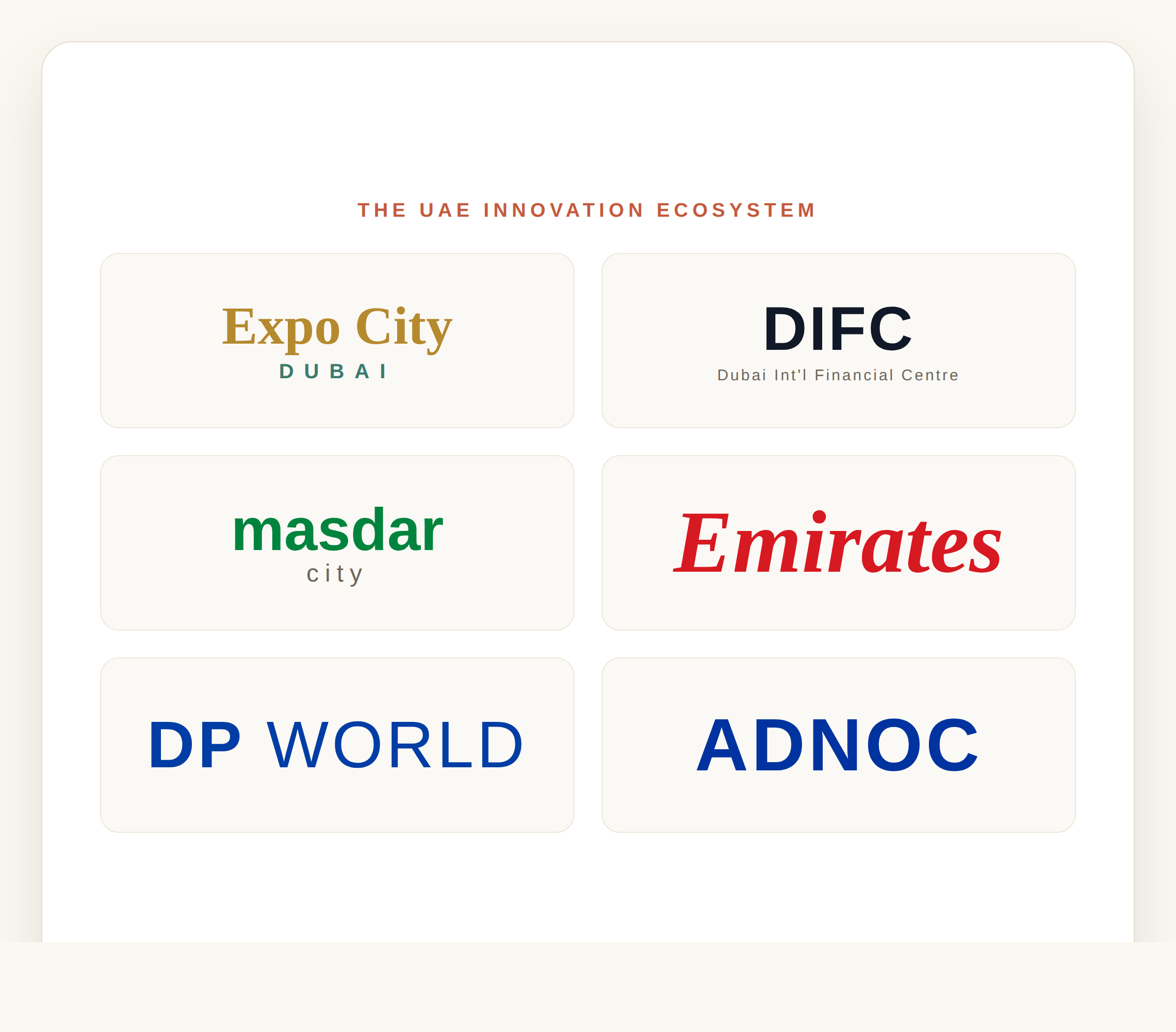
- Expo City Dubai, Dubai Internet City, DIFC and Masdar City act as connected knowledge campuses.
- Emirates, DP World and ADNOC anchor the country's value chains across aviation, logistics and energy.
- Together they turn Porter's value chain, Industry 5.0 and knowledge management into a single UAE framework.
 🕸️
🕸️Remember this
Compete through knowledge flow
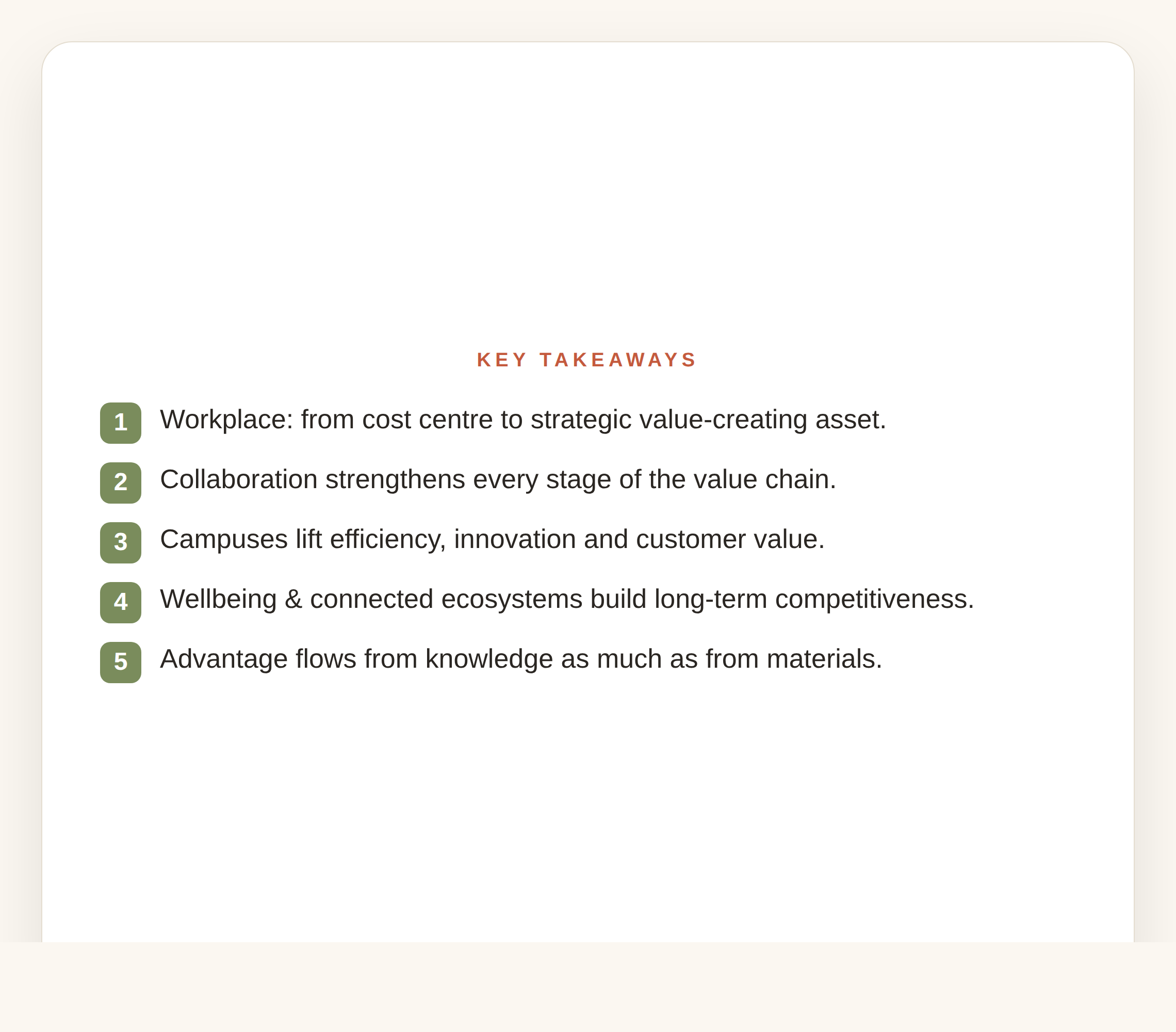
- The workplace has evolved from a cost centre into a strategic value-creating asset.
- Knowledge sharing and collaboration strengthen every stage of the value chain, lifting efficiency, innovation and customer value.
- Advantage increasingly comes from the flow of knowledge as much as the flow of materials.
 🏆
🏆Conclusion
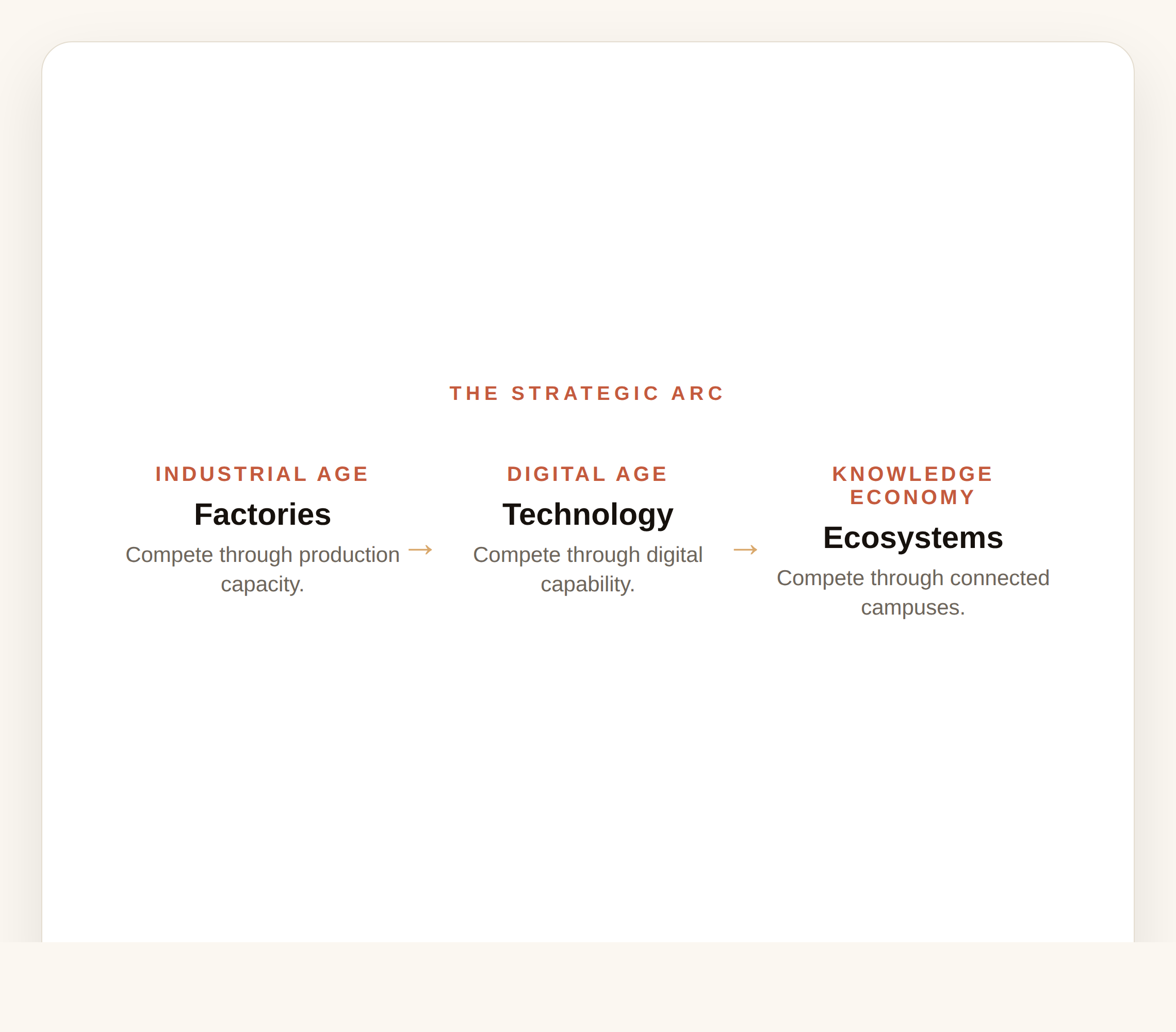
Factories → Technology → Ecosystems
- Industrial Age: companies competed through factories. Digital Age: through technology.
- Knowledge Economy: they compete through ecosystems.
- The Urban Knowledge Campus is where people, technology, partners and ideas create superior value together.
 🧭
🧭